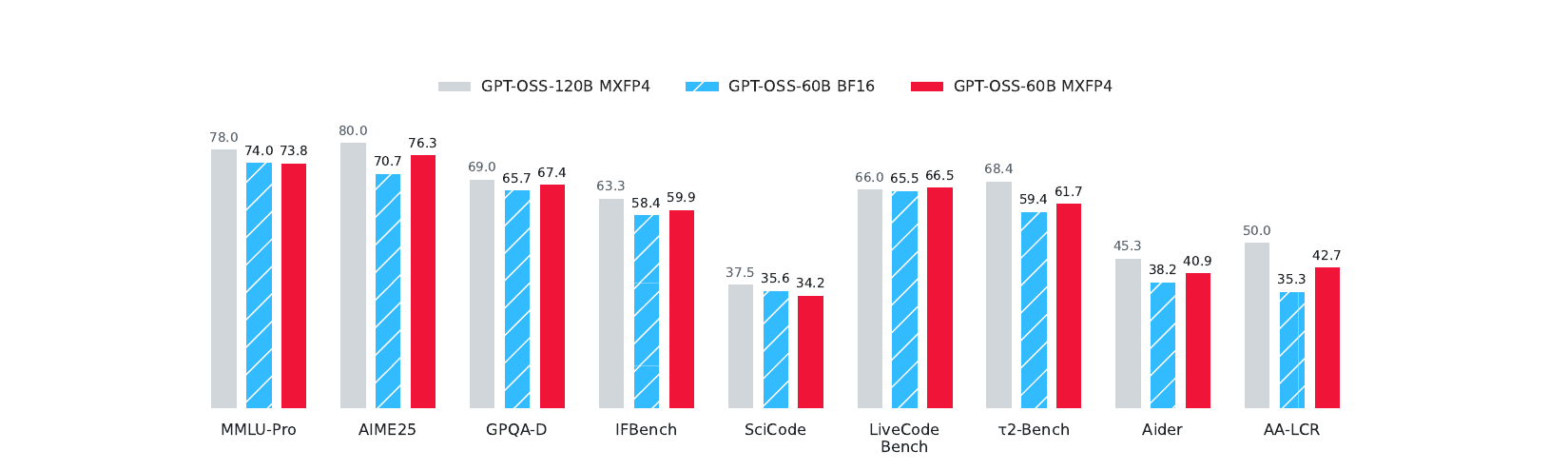
Quantization-Aware Healing: a compressed, 4-bit model that outperforms its full-precision original
A revolutionary 4-bit model surpasses full-precision versions, marking a new era in AI efficiency.
Hugging Face has unveiled a groundbreaking advancement in AI model efficiency with the introduction of a quantization-aware healing technique. This innovative approach allows for the creation of a compressed 4-bit model that not only retains but surpasses the performance of its full-precision counterparts. This development is poised to change the landscape of AI deployment, particularly in resource-constrained environments where computational efficiency is paramount. The implications of this breakthrough extend beyond mere performance metrics, suggesting a significant reduction in the energy and memory requirements typically associated with large-scale AI models.
The quantization-aware healing method leverages advanced techniques to optimize the model during training, ensuring that the lower precision does not compromise the quality of the outputs. By focusing on the essential features of the model and intelligently managing the quantization process, Hugging Face has demonstrated that it is possible to achieve high performance even with drastically reduced bit-width. This shift towards 4-bit models could democratize access to powerful AI tools, enabling smaller organizations and developers to utilize sophisticated models without the need for extensive computational resources.
Key facts
| Field | Detail |
|---|---|
| Model Type | 4-bit quantization-aware model |
| Performance | Outperforms full-precision counterparts |
| Developer | Hugging Face |
| Key Technique | Quantization-aware healing |
| Target Applications | Resource-constrained environments |
| Potential Impact | Reduced energy and memory requirements |
The significance of this development cannot be overstated. Traditionally, AI models have relied heavily on high-precision computations to deliver accurate results. However, as the demand for AI applications grows, so does the need for models that can operate efficiently in diverse environments. The introduction of quantization techniques has been a game-changer, allowing models to run on less powerful hardware without sacrificing performance. Hugging Face's latest innovation builds on this trend, pushing the boundaries of what is possible with low-precision models.
This advancement is particularly relevant in the context of the increasing focus on sustainability in AI. As organizations strive to reduce their carbon footprints, the ability to deploy efficient models that require less computational power is becoming essential. The success of the 4-bit model could encourage further research into low-precision techniques, potentially leading to even more efficient models in the future. The AI community is likely to watch closely as Hugging Face continues to refine this technology and explore its applications across various domains.
Looking ahead, the challenge will be to see how widely this 4-bit model can be adopted in real-world applications. While the initial results are promising, further testing and validation will be necessary to ensure that the model performs consistently across different tasks and datasets. Additionally, developers will need to adapt their workflows to incorporate this new approach, which may require changes in training and deployment strategies. The ongoing exploration of quantization techniques will undoubtedly shape the future of AI model development.
Source: Hugging Face Blog · Read original →
Discussion
Comment here after signing in, or share the story to continue the conversation elsewhere.
Instagram & TikTok: copy the link and paste into a Story, Reel, or post caption.
Log in or create an account to comment — Google / GitHub / X when those providers are configured.
No comments yet — start the thread.
