Fleet-wide computer vision lifecycle at the edge with SageMaker SDK v3
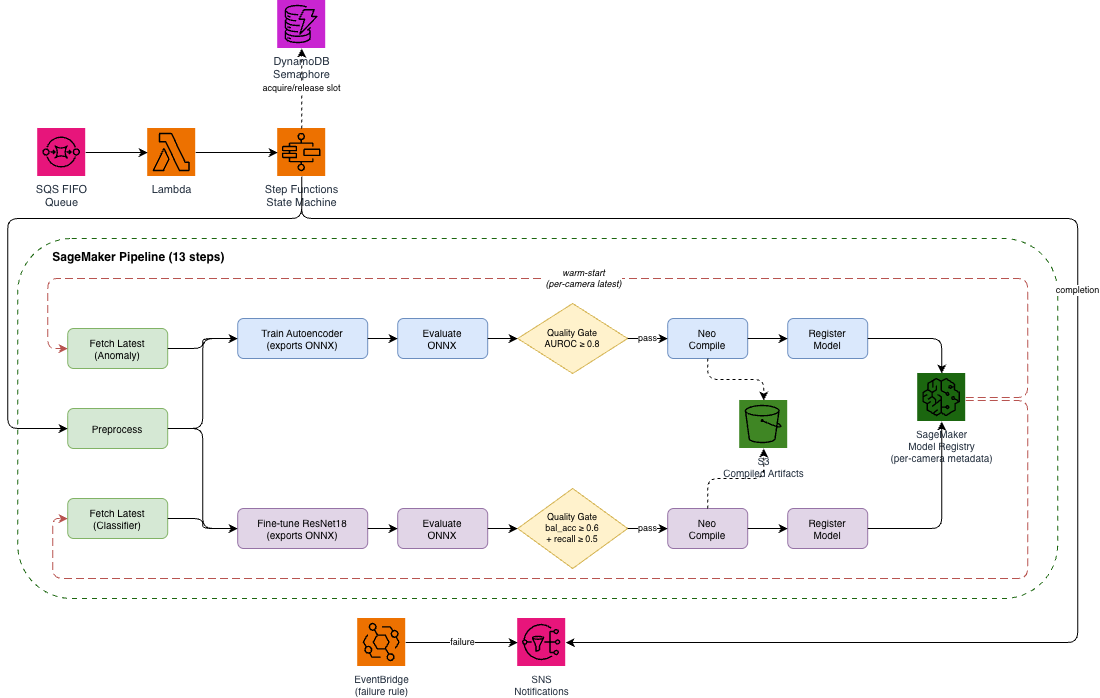
AWS unveils a comprehensive architecture for managing computer vision models across fleets using SageMaker SDK v3.
“The ability to train and deploy individual models for each camera could redefine operational efficiency in industries reliant on computer vision technology.”
Key takeaways
- AWS has launched a new architecture for managing computer vision models using SageMaker SDK v3.
- The framework allows for individual model training per camera, enhancing performance.
- Quality-gating processes ensure only effective models are deployed.
- AWS Step Functions facilitate systematic retraining while adhering to account quotas.
Amazon Web Services (AWS) has recently introduced a groundbreaking architecture designed to streamline the management of computer vision models across large fleets of cameras. This new framework, built on the capabilities of the Amazon SageMaker SDK v3, addresses a critical challenge in the field of computer vision: the need for individual models tailored to each camera rather than a single, monolithic model for an entire fleet. This innovation is particularly relevant as industries increasingly adopt computer vision technology for applications ranging from security surveillance to traffic monitoring and retail analytics.
The architecture presented by AWS not only facilitates the training of individual models for each camera but also incorporates quality-gating processes to ensure that only the most effective models are deployed. By leveraging SageMaker Neo, AWS allows for the compilation of these models, optimizing them for performance on edge devices. This is crucial for applications where latency and processing power are significant concerns. Furthermore, the integration of AWS Step Functions enables a systematic approach to retraining models, ensuring that they remain accurate and effective over time, all while adhering to account quotas.
Key facts
| Field | Detail |
|---|---|
| Product | Amazon SageMaker SDK v3 |
| Focus | Fleet-wide computer vision lifecycle |
| Key Feature | Per-camera model training |
| Technology | SageMaker Neo for model compilation |
| Process | Quality-gating and versioning of models |
| Integration | AWS Step Functions for retraining |
| Application Areas | Security, traffic monitoring, retail analytics |
| Scalability | Designed for large fleets of cameras |
| Deployment | Edge devices optimization |
| Compliance | Adheres to AWS account quotas |
Who's involved
The key players in this initiative include Amazon Web Services, which is spearheading the development of the SageMaker SDK v3 and its associated architecture. Additionally, various industries utilizing computer vision technology, such as retail, transportation, and security, are integral to the practical application of this framework. The collaboration between AWS and its user base is vital for refining and enhancing the capabilities of the SDK to meet real-world demands.
The introduction of this architecture marks a significant evolution in the way computer vision models are managed and deployed. Traditionally, organizations faced the challenge of deploying a single model across multiple cameras, which often led to suboptimal performance due to varying environmental conditions and camera specifications. The new approach allows for a tailored solution, where each camera can utilize a model specifically trained to optimize its unique input, thereby enhancing overall system performance.
In the past, organizations often relied on generic models that could not adapt to the specific nuances of different camera feeds. This led to a one-size-fits-all approach that frequently resulted in inaccuracies and inefficiencies. With the advent of AWS’s fleet-wide computer vision lifecycle, companies can now create a more robust and adaptable system, ensuring that each camera operates at peak efficiency.
How to read the numbers
While the article does not provide specific numerical benchmarks, the implications of the new architecture suggest significant improvements in model performance and operational efficiency. Organizations can expect enhanced accuracy rates and reduced latency in model inference, particularly as they scale operations across large fleets of cameras. The ability to retrain models systematically and adhere to account quotas is expected to lead to more sustainable and effective use of resources.
What you can do with it
- Implement the SageMaker SDK v3 for tailored model training per camera.
- Utilize SageMaker Neo to optimize models for edge deployment.
- Set up AWS Step Functions for automated model retraining processes.
- Monitor and maintain model performance through quality-gating practices.
- Scale your computer vision applications efficiently across multiple devices.
What we're watching
As AWS continues to refine the SageMaker SDK v3, we will be monitoring the adoption rates of this new architecture among various industries. Additionally, the effectiveness of the quality-gating and retraining processes will be crucial in determining the long-term viability of this approach. The response from the developer community and feedback from early adopters will provide valuable insights into the practical challenges and successes of implementing this system.
The introduction of the fleet-wide computer vision lifecycle represents a significant leap forward in the management of computer vision applications. By allowing for individual model training and deployment, AWS is addressing a fundamental limitation in the current landscape of computer vision technology. This architecture not only enhances the performance of individual cameras but also provides a scalable solution for organizations looking to expand their use of computer vision across multiple locations and applications.
In conclusion, the AWS SageMaker SDK v3 offers a transformative approach to managing computer vision models at scale. As industries increasingly rely on advanced analytics and real-time data processing, the ability to deploy tailored models for each camera will become a critical factor in the success of computer vision initiatives. The implications of this architecture extend beyond mere efficiency; they pave the way for more intelligent and responsive systems that can adapt to the dynamic environments in which they operate. As AWS continues to innovate, the future of computer vision at the edge looks promising, with the potential for even more sophisticated applications on the horizon.
Source: AWS Machine Learning · Read original →
Instagram & TikTok: copy the link or quote and paste into a Story, Reel, or caption.
Digest
AI news by email
Weekly Friday briefings plus midweek notes when models or research drop. Sources included — unsubscribe anytime.
Discussion
Comment here after signing in, or share the story to continue the conversation elsewhere.
Instagram & TikTok: copy the link and paste into a Story, Reel, or caption.
Log in or create an account to comment — Google / GitHub / X when those providers are configured.
No comments yet — start the thread.