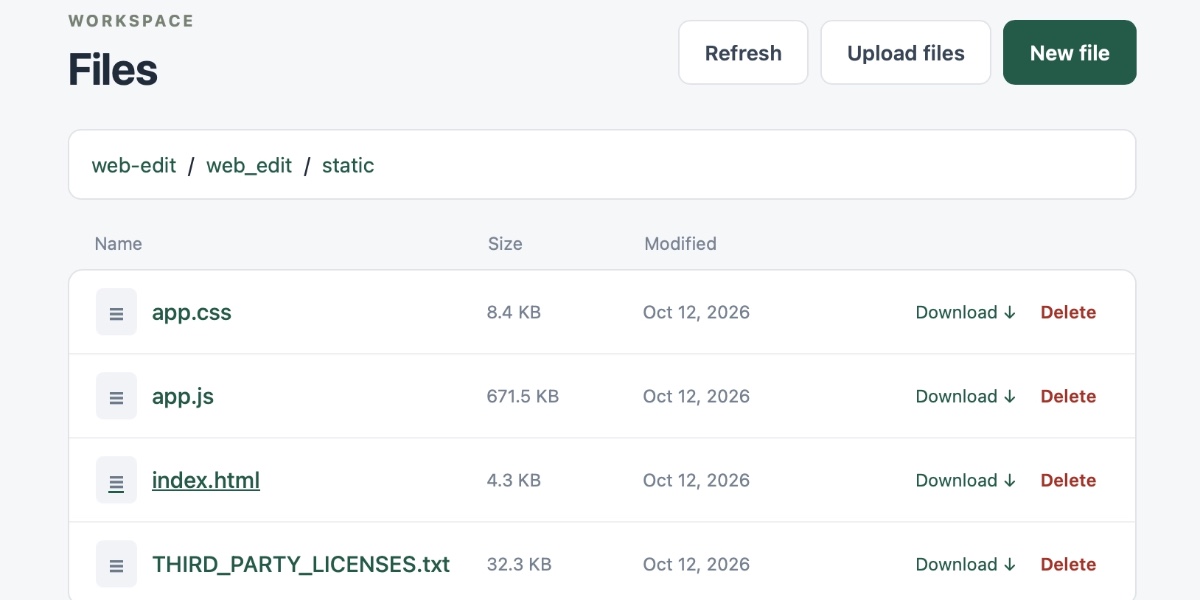
web-edit 0.1a0
Simon Willison has released web-edit 0.1a0, a groundbreaking tool for real-time web editing that promises to transform collaborative online content creation.
Key takeaways
- web-edit 0.1a0 enables real-time collaborative editing for web content.
- Built using JavaScript and WebSockets for efficient performance.
- Targeted at both developers and non-technical users.
- Open-source availability encourages community involvement and support.
- Lightweight integration allows for easy addition to existing projects.
The recent launch of web-edit 0.1a0 by Simon Willison marks a significant advancement in the realm of collaborative web editing tools. This innovative application allows multiple users to edit web content in real-time, enhancing the efficiency and interactivity of online content creation. With a focus on simplicity and ease of use, web-edit aims to streamline the process of editing web pages, making it accessible for both developers and non-technical users alike. This release is particularly timely as the demand for collaborative tools has surged, driven by the increasing number of remote teams and the need for seamless online collaboration.
Web-edit 0.1a0 is built on a foundation of modern web technologies, leveraging the capabilities of JavaScript and WebSockets to facilitate real-time communication between users. This means that changes made by one user are instantly reflected on the screens of all other collaborators, eliminating the frustrations often associated with traditional editing methods. The tool is designed to be lightweight, ensuring that it can be easily integrated into existing web projects without requiring extensive setup or configuration. As more organizations recognize the value of collaborative editing, tools like web-edit are poised to become essential components of the web development toolkit.
Key facts
| Field | Detail |
|---|---|
| Release Version | 0.1a0 |
| Developer | Simon Willison |
| Technology | JavaScript, WebSockets |
| Focus | Real-time collaborative editing |
| Target Users | Developers and non-technical users |
| Integration | Lightweight, easy to incorporate into existing projects |
| Launch Date | October 2023 |
| Accessibility | Open-source availability |
| Documentation | Comprehensive guides provided |
| Community Support | Active user community expected |
Who's involved
Simon Willison, a prominent figure in the web development community, is the driving force behind web-edit 0.1a0. Known for his contributions to various open-source projects and his expertise in web technologies, Willison has a track record of creating tools that enhance the web development experience. His latest project reflects his commitment to fostering collaboration and innovation within the tech community.
Background
The concept of real-time collaborative editing is not new; however, existing solutions often come with limitations that can hinder user experience. Tools like Google Docs and Microsoft Office Online have set a high standard for collaborative editing, but they are primarily focused on document creation rather than web content. Willison's web-edit 0.1a0 seeks to fill this gap by providing a dedicated solution for web developers and content creators who need to work together on web pages.
In recent years, the rise of remote work has accelerated the demand for tools that facilitate collaboration across distances. As teams become more distributed, the ability to edit and manage web content in real-time has become increasingly important. Willison's approach with web-edit combines the best aspects of existing collaborative tools while tailoring the experience specifically for web development, making it a unique offering in the market.
How to read the numbers
While specific performance metrics for web-edit 0.1a0 are not yet available, the tool's architecture suggests it will perform efficiently in real-time scenarios. The use of WebSockets allows for low-latency communication, which is crucial for maintaining a smooth editing experience. As the user base grows, performance benchmarks will likely emerge, providing insights into the tool's capabilities under various conditions.
What you can do with it
- Integrate web-edit into your existing projects: The lightweight nature of web-edit makes it easy to add to current web applications.
- Collaborate in real-time: Invite team members to edit web content simultaneously, enhancing productivity and creativity.
- Leverage open-source resources: Take advantage of the comprehensive documentation and community support to maximize the tool's potential.
- Experiment with features: Explore the various functionalities offered by web-edit to find the best fit for your workflow.
What we're watching
As web-edit 0.1a0 gains traction, the community will be keenly observing user feedback and performance metrics. The next milestone will be the release of updates based on initial user experiences, which could introduce new features or enhancements. Additionally, the potential for integrations with other web development tools will be a key area of interest, as users seek to create a more cohesive workflow.
The launch of web-edit 0.1a0 represents a pivotal moment for collaborative web editing, with the potential to reshape how teams approach content creation. As the tool evolves, it will be essential to monitor its adoption and the ways in which it influences the broader landscape of web development tools. With its open-source nature, web-edit invites contributions from the community, which could lead to a rapid expansion of its capabilities and features. The future of collaborative web editing is bright, and web-edit 0.1a0 is at the forefront of this transformation.
Source: Simon Willison's Weblog · Read original →
Instagram & TikTok: copy the link and paste into a Story, Reel, or caption.
Digest
AI news by email
Weekly Friday briefings plus midweek notes when models or research drop. Sources included — unsubscribe anytime.
Discussion
Comment here after signing in, or share the story to continue the conversation elsewhere.
Instagram & TikTok: copy the link and paste into a Story, Reel, or caption.
Log in or create an account to comment — Google / GitHub / X when those providers are configured.
No comments yet — start the thread.