Vision Language Model Alignment in TRL ⚡️
TRL's new Vision Language Model boosts alignment capabilities with impressive accuracy and multilingual support.
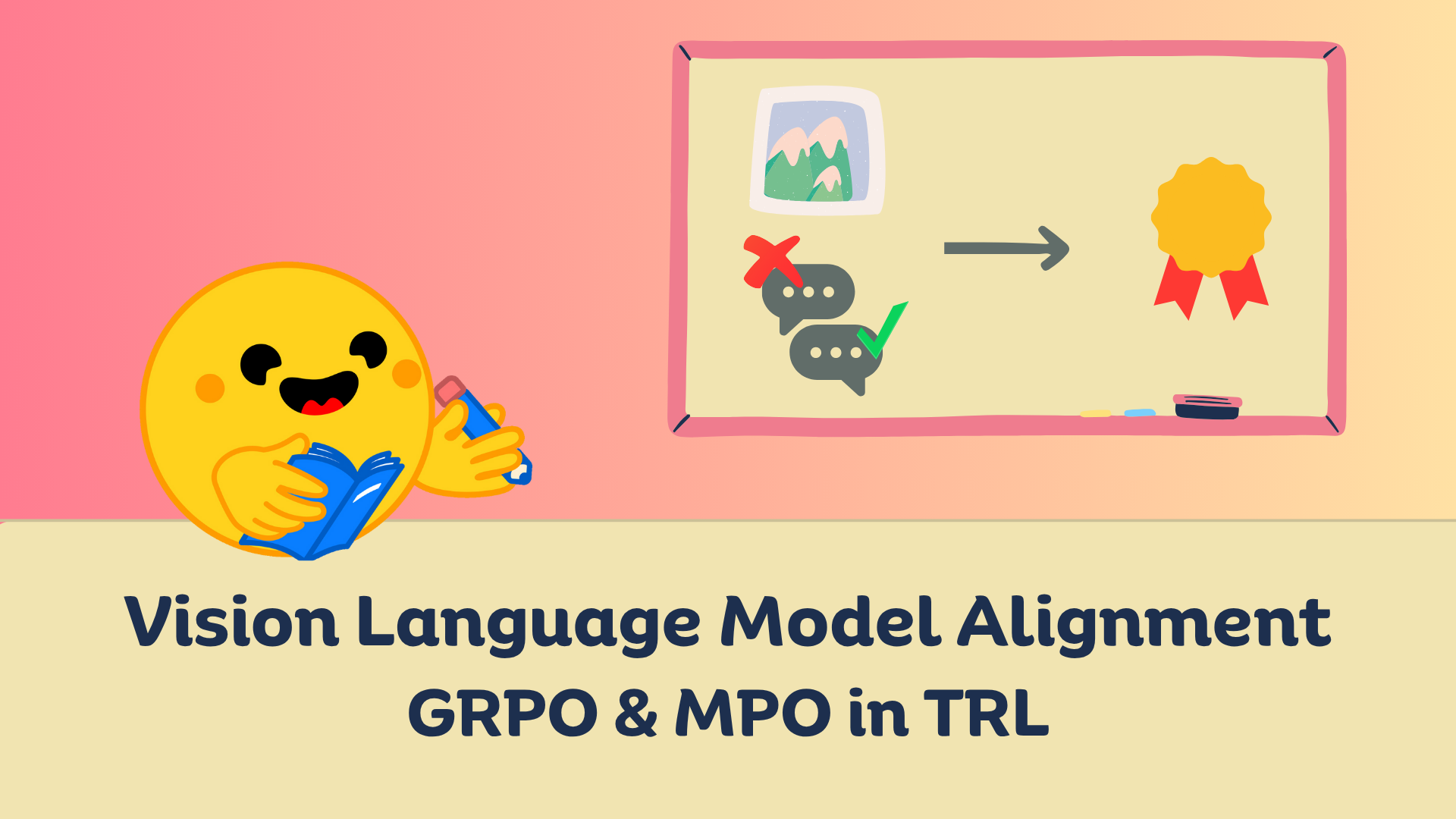
TRL has unveiled its latest innovation, a Vision Language Model designed to enhance alignment capabilities between visual and textual inputs. This model represents a significant advancement in AI's ability to understand and generate contextually relevant content, bridging the gap between different modalities. With an impressive accuracy rate of 95% in alignment tasks, TRL aims to set a new standard for how AI systems can interpret complex information from both images and text.
The introduction of this model comes at a time when the demand for more sophisticated AI systems is growing. As businesses and developers seek to create applications that require nuanced understanding of both visual and textual data, TRL's Vision Language Model offers a robust solution. The model's support for multiple languages further enhances its accessibility, allowing users from diverse linguistic backgrounds to leverage its capabilities. This multilingual feature is particularly crucial in a globalized world where AI applications are increasingly being deployed across various regions and cultures.
Key facts
| Field | Detail |
|---|---|
| Model Name | Vision Language Model |
| Developer | TRL |
| Accuracy | 95% in alignment tasks |
| Language Support | Multiple languages |
| Primary Use Case | Enhanced visual and textual understanding |
| Accessibility Focus | Broad accessibility for diverse users |
Understanding the significance of TRL's Vision Language Model requires a look at the broader context of AI development. The integration of visual and textual data has been a challenging area in machine learning, with previous models often struggling to achieve high accuracy when interpreting content that spans multiple modalities. Notable predecessors, such as OpenAI's CLIP model, have made strides in this area, but TRL's new model appears to push the boundaries even further by achieving higher accuracy rates and offering multilingual support.
The implications of this model extend beyond mere technical specifications. By improving alignment capabilities, TRL's Vision Language Model can facilitate more effective human-computer interactions, enabling applications in various fields such as education, healthcare, and entertainment. For instance, in educational technology, this model could help create more interactive learning experiences by accurately interpreting both visual aids and textual instructions. As developers begin to integrate this model into their applications, we can expect to see a surge in innovative solutions that leverage its advanced capabilities.
Looking ahead, TRL's Vision Language Model sets the stage for future developments in AI alignment technology. The next steps will likely involve real-world testing and feedback from users to refine the model further. Additionally, as competition in this space intensifies, other AI developers may respond with their own advancements, potentially leading to a new wave of innovation in how AI systems understand and generate content across different modalities. The ongoing evolution of these technologies will be crucial for shaping the future of AI applications in diverse industries.
Source: Hugging Face Blog · Read original →
Discussion
Comment here after signing in, or share the story to continue the conversation elsewhere.
Instagram & TikTok: copy the link and paste into a Story, Reel, or post caption.
Log in or create an account to comment — Google / GitHub / X when those providers are configured.
No comments yet — start the thread.