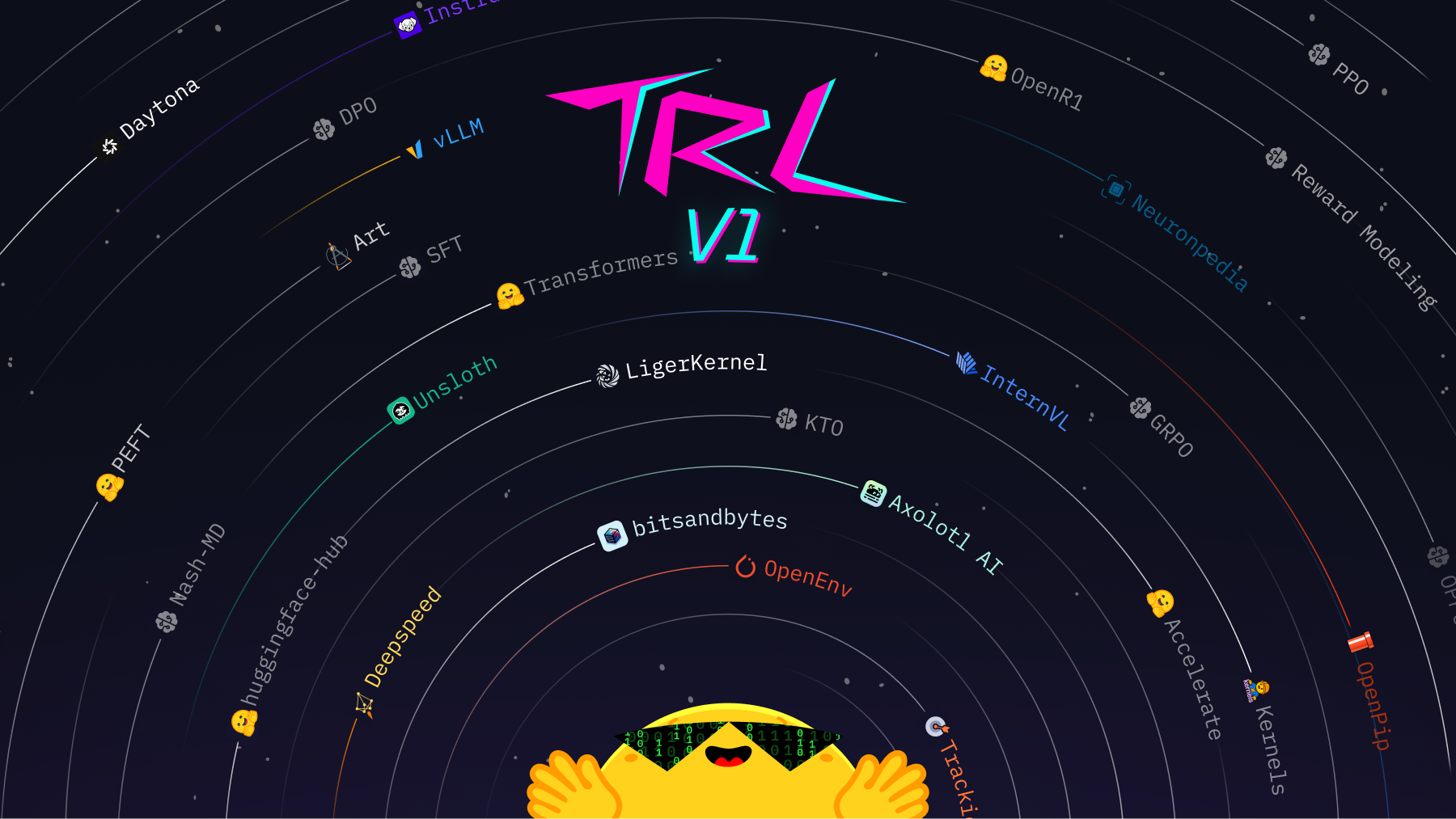
TRL v1.0: Post-Training Library Built to Move with the Field
Hugging Face launches TRL v1.0 to boost post-training efficiency for AI models.
Hugging Face has officially launched TRL v1.0, a new library aimed at enhancing the efficiency of AI models after their initial training phase. This innovative tool is designed to optimize models for real-world applications, allowing developers to leverage existing frameworks while improving adaptability and performance. With TRL v1.0, Hugging Face aims to address the challenges developers face when deploying AI models in dynamic environments, where adaptability is crucial for success.
The launch of TRL v1.0 comes at a time when the demand for efficient AI solutions is growing rapidly. As organizations increasingly adopt AI technologies, the need for models that can perform well in varied and unpredictable conditions has never been more pressing. Hugging Face, known for its contributions to the AI community, has developed this library to provide a streamlined approach for developers looking to enhance their models post-training. The focus on real-world applications signifies a shift towards practical usability in AI, moving beyond theoretical capabilities.
Key facts
| Field | Detail |
|---|---|
| Library Name | TRL v1.0 |
| Purpose | Enhance post-training model efficiency |
| Integration | Seamless with existing AI frameworks |
| Key Features | Improves adaptability and performance |
| Target Users | AI developers and researchers |
The introduction of TRL v1.0 aligns with a broader trend in the AI landscape where post-training optimization is becoming increasingly important. Historically, the focus has often been on the training phase of models, with less emphasis on how they perform once deployed. The emergence of libraries like TRL v1.0 indicates a growing recognition of the need for tools that can help bridge this gap. By enhancing post-training capabilities, Hugging Face is not only providing a valuable resource for developers but also contributing to the overall maturation of AI technologies.
Looking ahead, the implications of TRL v1.0 could be significant for the future of AI model deployment. As developers begin to adopt this library, it will be interesting to observe how it influences the performance of AI applications across various industries. The ongoing evolution of AI frameworks suggests that we may see further enhancements and integrations that build on the foundation laid by TRL v1.0, potentially leading to even more efficient and adaptable AI solutions in the near future.
Source: Hugging Face Blog · Read original →
Discussion
Comment here after signing in, or share the story to continue the conversation elsewhere.
Instagram & TikTok: copy the link and paste into a Story, Reel, or post caption.
Log in or create an account to comment — Google / GitHub / X when those providers are configured.
No comments yet — start the thread.

