Transformers.js v3: WebGPU Support, New Models & Tasks, and More…
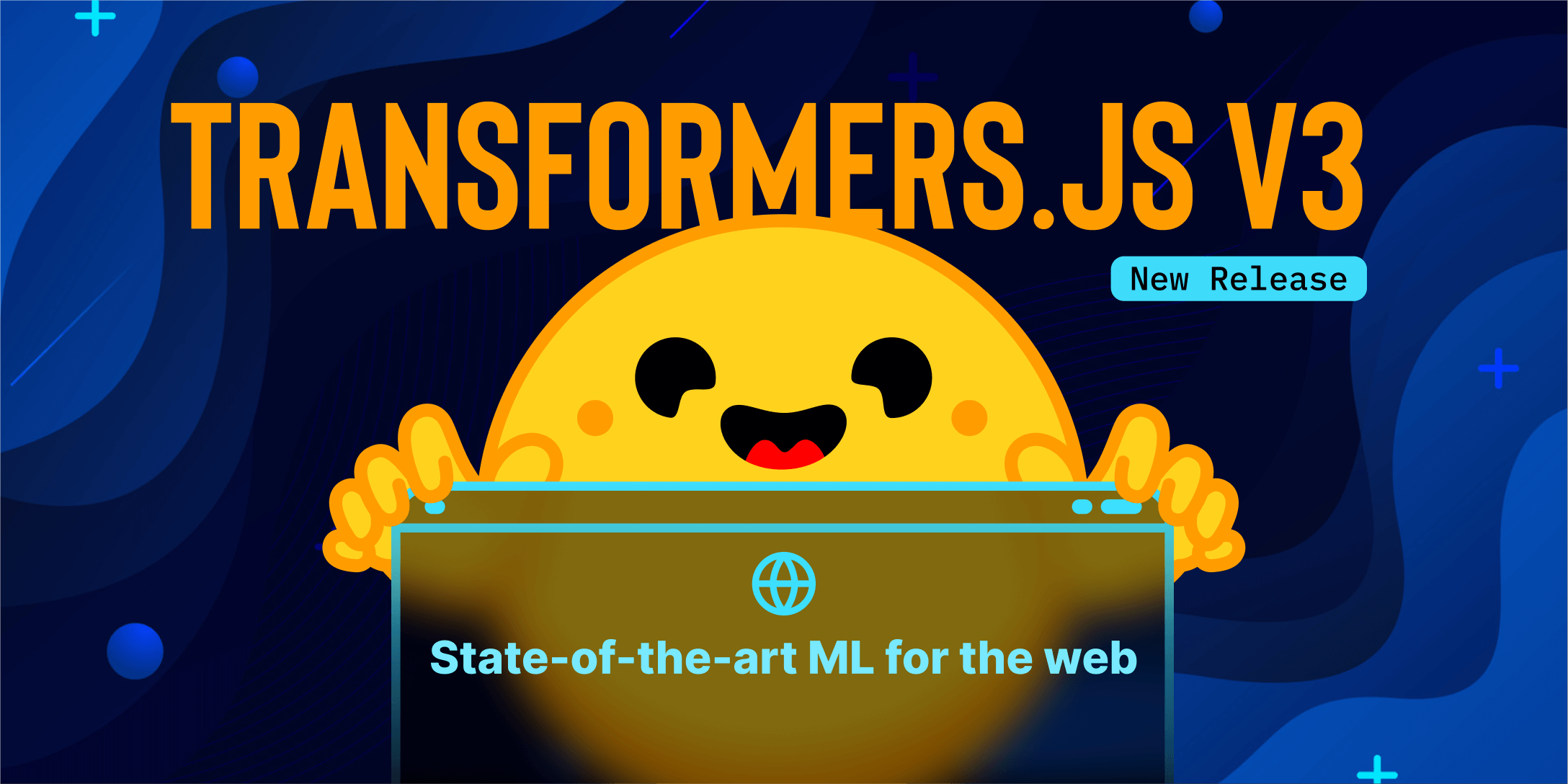
Transformers.js v3 brings WebGPU support and new models, enhancing web-based AI applications.
Transformers.js has officially launched its third version, introducing significant enhancements that promise to elevate the performance of AI applications in web environments. One of the standout features in this update is the integration of WebGPU support, which allows developers to leverage the power of modern graphics processing units (GPUs) for rendering and computation directly in web browsers. This advancement is expected to improve the efficiency and responsiveness of applications, making it easier for developers to build sophisticated AI models that can run seamlessly in real-time.
In addition to WebGPU support, Transformers.js v3 has rolled out a suite of new models designed to tackle a broader range of tasks in natural language processing (NLP) and computer vision. These models are not only more advanced but also optimized for performance, enabling developers to deploy applications that require less computational power while achieving higher accuracy. The expanded capabilities mean that developers can create more versatile applications, from chatbots to image recognition systems, all within a web-based framework.
Key facts
| Feature | Detail |
|---|---|
| WebGPU Support | Enhances rendering and performance for web apps |
| New Models | Advanced NLP and vision capabilities |
| Expanded Tasks | More versatile AI applications |
| Performance Focus | Optimized for efficiency and lower computational needs |
| Developer Benefits | Enables faster, more efficient AI application development |
The introduction of WebGPU support is particularly noteworthy as it represents a shift in how web applications can utilize hardware acceleration. WebGPU is a new web standard that provides a more direct way to access GPU capabilities, which can lead to significant performance improvements over traditional WebGL. This is crucial for AI applications that often require heavy computations, as it allows for more complex models to run smoothly in the browser without relying on server-side processing. As developers increasingly turn to web technologies for AI solutions, this capability could redefine the landscape of web-based AI applications.
The advancements in Transformers.js v3 also align with a broader trend in the AI community towards making powerful models more accessible. By enabling these models to run efficiently in web environments, Hugging Face is lowering the barrier to entry for developers who may not have access to high-end hardware. This democratization of AI technology is essential for fostering innovation and encouraging experimentation, particularly among smaller teams and individual developers.
Looking ahead, the implications of these updates are vast. As more developers adopt WebGPU and the new models provided by Transformers.js v3, we may see a surge in innovative applications that leverage the enhanced performance capabilities. The challenge will be ensuring that developers have the resources and knowledge to fully utilize these advancements, particularly as the complexity of AI models continues to grow. The future of web-based AI applications is bright, and the ongoing evolution of tools like Transformers.js will play a pivotal role in shaping this landscape.
Source: Hugging Face Blog · Read original →
Discussion
Comment here after signing in, or share the story to continue the conversation elsewhere.
Instagram & TikTok: copy the link and paste into a Story, Reel, or post caption.
Log in or create an account to comment — Google / GitHub / X when those providers are configured.
No comments yet — start the thread.