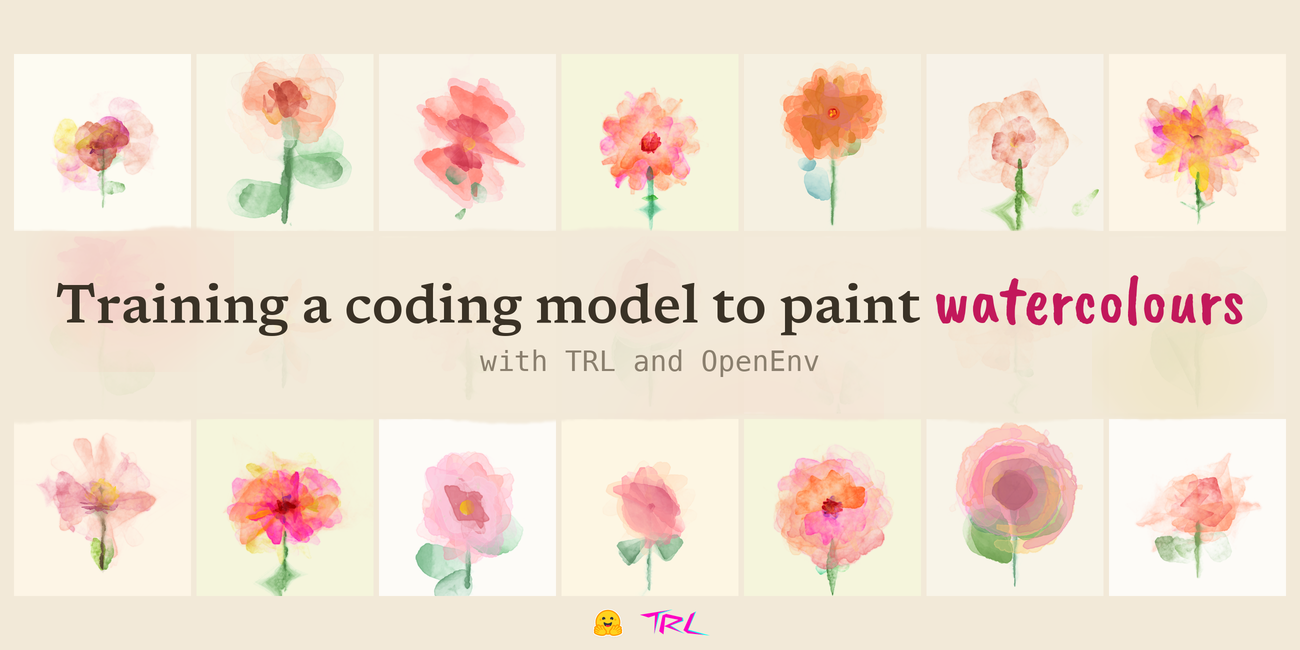
Training a coding model to paint watercolours with TRL and OpenEnv
A new coding model combines AI and artistic expression, enabling the creation of watercolor art through innovative training techniques.
Hugging Face has unveiled an innovative coding model that merges artificial intelligence with artistic expression, specifically focusing on the creation of watercolor art. This model leverages advanced training techniques, including TRL (Training Reinforcement Learning) and OpenEnv, to teach AI how to replicate the delicate and nuanced style of watercolor painting. The initiative represents a significant step forward in the intersection of technology and creativity, showcasing how machine learning can be applied in unconventional domains such as art.
The project is a collaboration between Hugging Face and various contributors in the AI community, aiming to push the boundaries of what AI can achieve in creative fields. By employing TRL, the model learns from both successes and failures, refining its ability to produce aesthetically pleasing watercolor images. OpenEnv, on the other hand, provides a flexible environment for the model to experiment with different techniques and styles, allowing it to adapt and evolve its artistic capabilities over time.
Key facts
| Field | Detail |
|---|---|
| Model Name | Watercolor Coding Model |
| Training Techniques | TRL and OpenEnv |
| Focus Area | Artistic expression through watercolor art |
| Collaboration | Hugging Face and AI community contributors |
| Purpose | To merge AI with creative processes |
The development of this coding model is not just a technical achievement; it also raises questions about the role of AI in creative industries. Historically, AI has been utilized primarily for tasks like data analysis and automation. However, projects like this one illustrate a shift towards using AI as a tool for artistic expression. This aligns with a growing trend where artists and technologists collaborate to explore new mediums, blurring the lines between human creativity and machine-generated art. The implications of such advancements could reshape how art is created and perceived in society.
As the project progresses, it will be interesting to see how artists respond to this new tool. Will they embrace it as a partner in the creative process, or will there be resistance to the idea of AI-generated art? The success of the watercolor coding model could pave the way for further exploration of AI in various artistic domains, potentially leading to an entirely new genre of art that combines human intuition with machine learning. Future iterations of the model may also incorporate feedback from artists, enhancing its ability to produce works that resonate with human audiences. The ongoing development and refinement of this model will undoubtedly contribute to the broader conversation about the future of creativity in an increasingly automated world.
Source: Hugging Face Blog · Read original →
Discussion
Comment here after signing in, or share the story to continue the conversation elsewhere.
Instagram & TikTok: copy the link and paste into a Story, Reel, or post caption.
Log in or create an account to comment — Google / GitHub / X when those providers are configured.
No comments yet — start the thread.
