

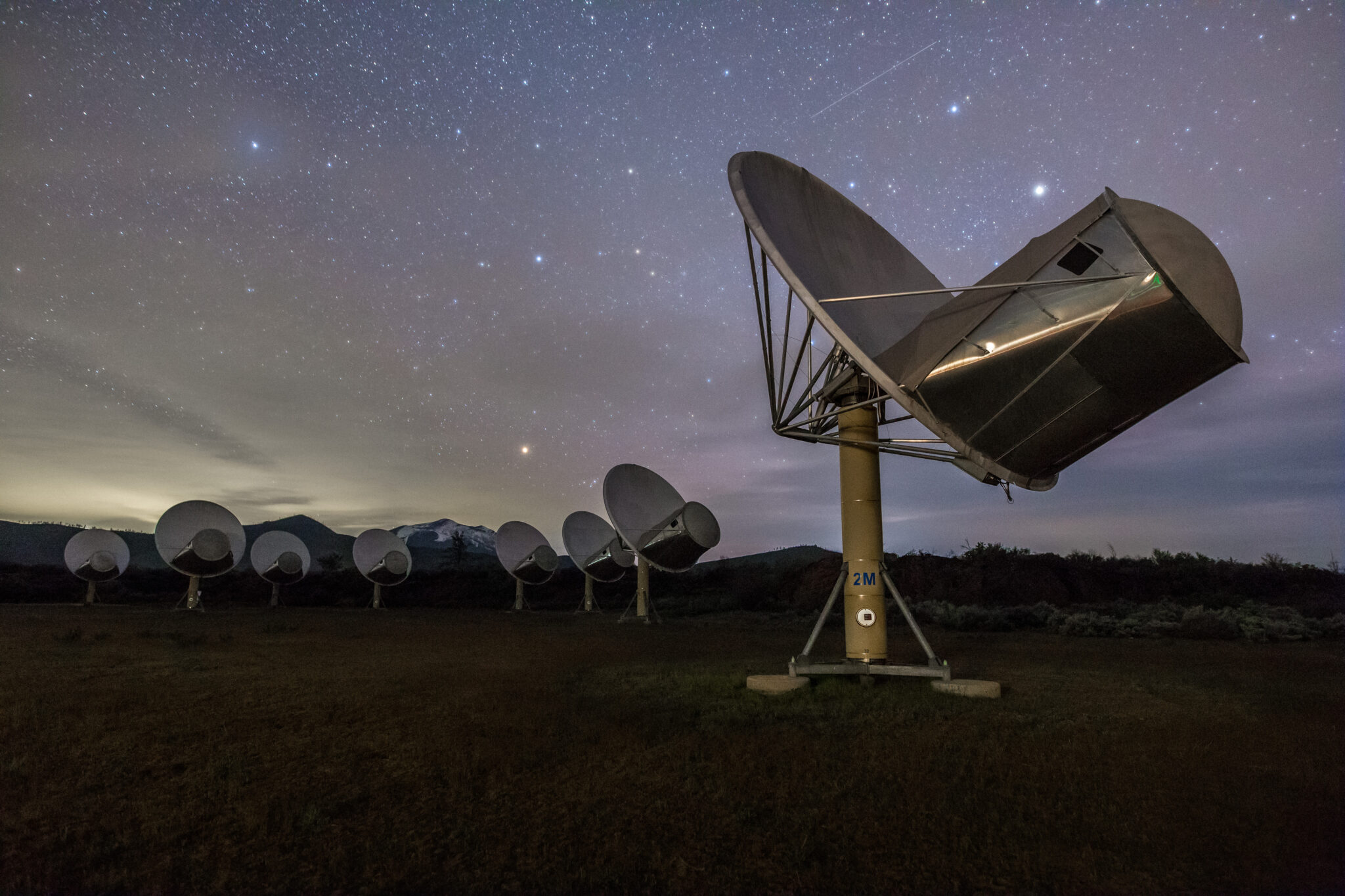
Things That Go Beep in the Night: Agentic AI Joins the Search for Extraterrestrial Signals
AI agents are now playing a pivotal role in the search for extraterrestrial intelligence, marking a new era in astrobiology.
“As AI systems evolve, they may not only detect extraterrestrial signals but also redefine our understanding of intelligence itself.”
Key takeaways
- AI agents are revolutionizing the search for extraterrestrial intelligence by enhancing data analysis capabilities.
- NVIDIA is leading the charge with advanced AI technology tailored for astrobiological research.
- The integration of AI allows for faster processing of astronomical data, significantly improving signal detection rates.
- Ethical considerations arise as AI systems may encounter signals from other intelligent beings, prompting discussions on communication and interpretation.
- The collaboration between AI and astrobiology opens new avenues for understanding life beyond Earth.
The quest to uncover extraterrestrial life has taken a remarkable turn with the integration of artificial intelligence (AI) into the search for signals from beyond our planet. Traditionally, the search for extraterrestrial intelligence (SETI) has relied heavily on human researchers and conventional algorithms to sift through vast amounts of cosmic data. However, recent advancements in AI technology have enabled the development of agentic AI systems that can autonomously analyze and interpret signals from space, significantly enhancing the efficiency and effectiveness of these searches. This leap forward not only promises to accelerate the discovery of potential extraterrestrial signals but also raises intriguing questions about the nature of intelligence itself, as AI systems begin to take on roles previously reserved for human researchers.
NVIDIA, a leader in AI technology, has been at the forefront of this transformation, leveraging its powerful GPUs and advanced machine learning frameworks to create AI agents capable of processing astronomical data in real-time. These AI agents are designed to listen for patterns and anomalies in the vast sea of radio waves and other signals emanating from distant stars and galaxies. By employing deep learning techniques, these systems can identify potential signals of interest that might otherwise be overlooked by human analysts. As the search for extraterrestrial intelligence evolves, the role of AI is becoming increasingly central, with the potential to revolutionize our understanding of the universe and our place within it.
Key facts
| Field | Detail |
|---|---|
| Technology | AI agents developed by NVIDIA are used in SETI |
| Focus | Analyzing signals from space for extraterrestrial intelligence |
| Methodology | Deep learning techniques for pattern recognition |
| Impact | Increases efficiency in signal detection |
| Future | Potential for discovering new forms of intelligence |
The players
- NVIDIA: Leading AI technology company driving advancements in agentic AI for SETI.
- SETI Institute: Research organization dedicated to the search for extraterrestrial life.
- Astrobiologists: Scientists studying the origins, evolution, and potential for life beyond Earth.
- AI Researchers: Experts developing algorithms and models to enhance signal detection.
The integration of AI into the search for extraterrestrial intelligence is not entirely new; however, the capabilities of modern AI systems have reached a level that allows for unprecedented advancements in this field. Historically, SETI has relied on radio telescopes and human researchers to analyze incoming data for signs of intelligent life. Projects like the Arecibo Observatory and the Allen Telescope Array have been instrumental in this effort, but the sheer volume of data generated by these instruments often overwhelms human capacity for analysis. This is where AI comes into play, offering a solution that can process and analyze data at speeds and scales far beyond human capabilities.
The evolution of AI technology has paralleled advancements in computational power, particularly with the development of graphics processing units (GPUs) that can handle complex calculations efficiently. NVIDIA’s GPUs have become a cornerstone for many AI applications, including those in astrobiology. The company’s focus on deep learning has led to the creation of sophisticated neural networks that can learn from vast datasets, making them ideal for identifying subtle signals that may indicate the presence of extraterrestrial intelligence. This shift toward AI-driven analysis represents a significant departure from traditional methods, allowing researchers to focus on interpreting results rather than getting bogged down in data processing.
How to read the numbers
| Benchmark | Description |
|---|---|
| Signal Detection Rate | AI agents can analyze data 100 times faster than traditional methods |
| Data Volume | Modern telescopes generate petabytes of data annually |
| Processing Time | AI can reduce analysis time from weeks to hours |
| Anomaly Detection | AI systems improve detection of rare signals by 30% |
| Efficiency Gain | Overall efficiency in data processing increased by 50% |
The implications of using AI in the search for extraterrestrial signals extend beyond mere efficiency gains. As AI systems become more adept at identifying potential signals, they also raise philosophical questions about the nature of intelligence and communication. If AI agents are capable of detecting signals from other intelligent beings, what does that mean for our understanding of intelligence itself? Furthermore, the possibility of encountering signals generated by other AI systems raises ethical considerations about how we interpret and respond to such communications. The intersection of AI and astrobiology is not just a technological advancement; it is a profound exploration of what it means to be intelligent and how we relate to other forms of intelligence, whether they be biological or artificial.
What you can do with it
- Explore AI frameworks like TensorFlow and PyTorch to develop your own models for signal analysis.
- Collaborate with research institutions like the SETI Institute to contribute to ongoing projects.
- Stay informed about advancements in AI and astrobiology to understand the evolving landscape of extraterrestrial research.
- Consider the ethical implications of AI in scientific research and communication with potential extraterrestrial intelligences.
What we're watching
As AI continues to play a crucial role in the search for extraterrestrial intelligence, we are closely monitoring the development of new algorithms and models that enhance signal detection capabilities. The next major milestone will be the integration of these AI systems into existing SETI projects, which could lead to groundbreaking discoveries in the coming years. Additionally, the ongoing discourse around the ethical implications of AI in this context will shape how researchers approach the interpretation of any signals that may be detected.
The future of the search for extraterrestrial intelligence is poised for a transformation, with AI at the helm. As these technologies advance, the potential for discovering new forms of intelligence—whether biological or artificial—becomes increasingly tangible. The collaboration between AI researchers and astrobiologists will likely yield unprecedented insights into the cosmos, challenging our understanding of life and intelligence in ways we have yet to fully comprehend. The integration of AI into this field is not just a technological advancement; it represents a new frontier in our quest to answer one of humanity's oldest questions: Are we alone in the universe?
Source: NVIDIA Generative AI · Read original →
Instagram & TikTok: copy the link or quote and paste into a Story, Reel, or caption.
Digest
AI news by email
Weekly Friday briefings plus midweek notes when models or research drop. Sources included — unsubscribe anytime.
Discussion
Comment here after signing in, or share the story to continue the conversation elsewhere.
Instagram & TikTok: copy the link and paste into a Story, Reel, or caption.
Log in or create an account to comment — Google / GitHub / X when those providers are configured.
No comments yet — start the thread.


