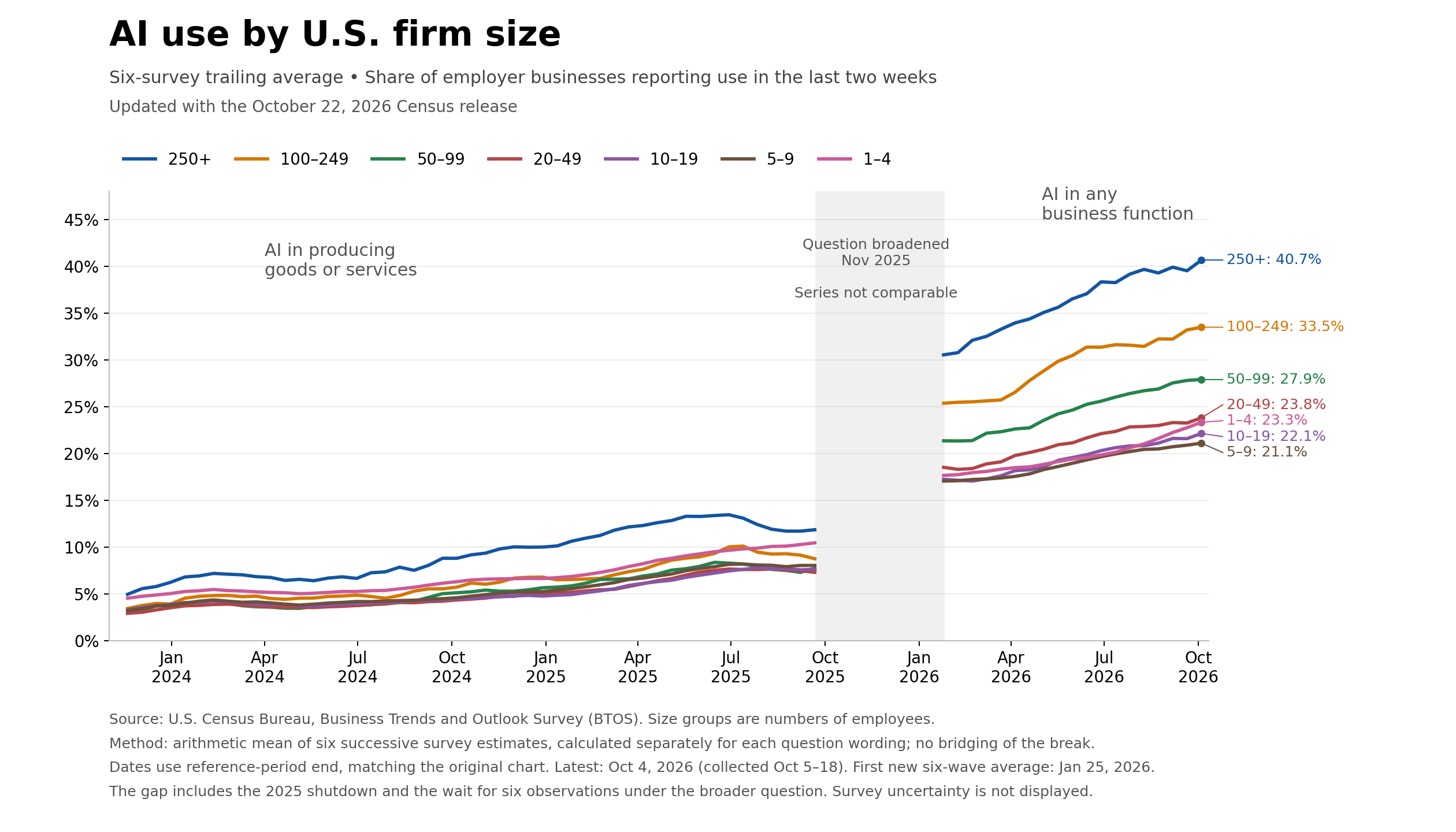
The U.S. Census Bureau and “Super Intelligence”
The U.S. Census Bureau is exploring the potential of AI-driven 'super intelligence' to enhance data collection and analysis.
“The Census Bureau aims to leverage AI to not only improve accuracy but also to redefine how demographic data is understood and utilized.”
Key takeaways
- The U.S. Census Bureau is exploring AI-driven super intelligence for data collection.
- The initiative aims to enhance accuracy in population counts and resource allocation.
- The Bureau has a history of adopting technology for demographic research.
- Ethical considerations will play a crucial role in the implementation of AI systems.
The U.S. Census Bureau is embarking on an ambitious initiative to harness the power of artificial intelligence, particularly focusing on what is being termed as 'super intelligence.' This endeavor aims to revolutionize the way data is collected, analyzed, and utilized, potentially transforming the landscape of demographic research and public policy. The Bureau's interest in advanced AI technologies comes at a time when data-driven decision-making is more critical than ever, especially in the context of the ongoing challenges posed by the COVID-19 pandemic and the increasing complexity of societal issues.
The concept of super intelligence refers to a form of AI that surpasses human cognitive abilities in virtually every field, from problem-solving to creativity. The Census Bureau's exploration of this technology is not merely theoretical; it involves practical applications that could lead to more accurate population counts, better resource allocation, and enhanced predictive modeling. By integrating advanced AI systems into their operations, the Bureau hopes to address the limitations of traditional data collection methods, which often struggle to keep pace with the rapid changes in population dynamics and social behaviors.
Key facts
| Field | Detail |
|---|---|
| Organization | U.S. Census Bureau |
| Initiative | Exploration of AI-driven super intelligence |
| Purpose | Enhance data collection and analysis |
| Focus | Population counts, resource allocation, predictive modeling |
| Context | Ongoing challenges from COVID-19 and societal issues |
| Technology | Advanced AI systems |
| Expected Outcome | More accurate demographic insights |
| Current Status | Early exploration phase |
Who's involved
The U.S. Census Bureau is the primary organization involved in this initiative. Additionally, various AI research institutions and technology companies may collaborate with the Bureau to develop and implement these advanced systems. While specific partners have not yet been disclosed, the Bureau's openness to collaboration suggests a broad interest in leveraging external expertise in AI.
Background
The U.S. Census Bureau has a long history of utilizing technology to improve its data collection processes. From the introduction of electronic data collection methods in the 2000 Census to the use of online surveys in the 2020 Census, the Bureau has continually sought innovative solutions to enhance its operations. However, the challenges posed by the last census, particularly the disruptions caused by the pandemic, have underscored the need for even more advanced methodologies.
In previous decades, demographic data collection relied heavily on manual processes and traditional statistical methods. As society becomes increasingly complex, with rapid changes in migration patterns, birth rates, and social structures, these methods are proving inadequate. The introduction of AI, particularly in its more advanced forms, offers the potential to analyze vast datasets quickly and accurately, providing insights that were previously unattainable.
How to read the numbers
While specific performance metrics for the Census Bureau's AI initiative are not yet available, the potential impact of AI on data accuracy and efficiency can be inferred from existing AI applications in other fields. For instance, AI has been successfully employed in sectors such as healthcare and finance, where predictive analytics have led to improved outcomes and resource management. The Census Bureau aims to replicate this success by applying similar methodologies to demographic data.
What you can do with it
- Stay Informed: Follow updates from the U.S. Census Bureau regarding their AI initiatives and potential partnerships.
- Engage with Data: Utilize the enhanced data insights that may emerge from this initiative for research, policy-making, or business strategies.
- Explore AI Applications: Investigate how AI can be integrated into your own data collection and analysis processes.
- Advocate for Transparency: Encourage open discussions about the ethical implications of using AI in public data collection.
What we're watching
As the U.S. Census Bureau moves forward with its exploration of super intelligence, a key area to watch will be the partnerships it forms with technology companies and research institutions. These collaborations could significantly influence the development and implementation of AI systems. Additionally, the Bureau's approach to addressing ethical concerns surrounding AI in data collection will be crucial, as public trust in the accuracy and fairness of demographic data is paramount.
The implications of this initiative extend beyond mere data collection; they touch on fundamental issues of representation, privacy, and the role of technology in society. As the Bureau seeks to implement these advanced AI systems, it will be essential to monitor how they balance innovation with ethical considerations and public accountability.
In conclusion, the U.S. Census Bureau's foray into super intelligence represents a pivotal moment for demographic research and public policy. By leveraging advanced AI technologies, the Bureau aims to enhance its data collection capabilities, ultimately leading to more accurate insights into the American population. As this initiative unfolds, it will be vital for stakeholders across various sectors to engage with the developments and consider the broader implications of AI in public data collection.
Source: Simon Willison's Weblog · Read original →
Instagram & TikTok: copy the link or quote and paste into a Story, Reel, or caption.
Digest
AI news by email
Weekly Friday briefings plus midweek notes when models or research drop. Sources included — unsubscribe anytime.
Discussion
Comment here after signing in, or share the story to continue the conversation elsewhere.
Instagram & TikTok: copy the link and paste into a Story, Reel, or caption.
Log in or create an account to comment — Google / GitHub / X when those providers are configured.
No comments yet — start the thread.