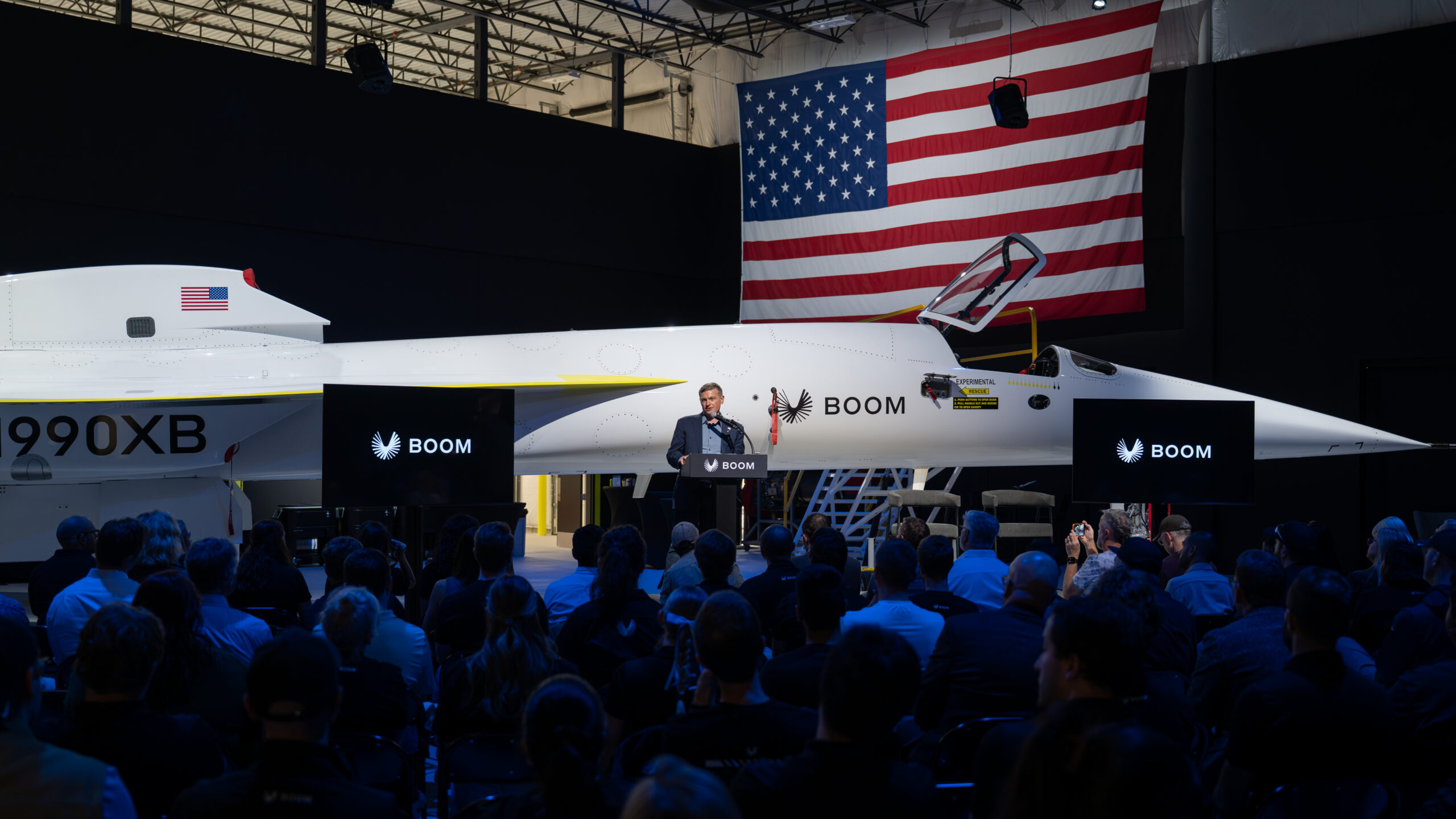
Supersonic airliner in doubt as company shifts to powering AI data centers
Boom Supersonic's ambitions for a supersonic airliner face uncertainty as the company pivots to AI data center power solutions.
“Boom's shift from aviation to AI data centers raises questions about the future of supersonic travel and the viability of its flagship Overture airliner.”
Key takeaways
- Boom Supersonic is shifting focus from supersonic airliners to AI data center power solutions.
- The Overture airliner may face delays due to this strategic pivot.
- The company has lost a significant customer for its data center business.
- CEO Blake Scholl emphasizes the need to adapt to changing market conditions.
- The AI infrastructure market is projected to grow significantly, influencing Boom's new direction.
Boom Supersonic, the aerospace startup known for its ambitious plans to revive supersonic passenger travel, is facing significant challenges that may delay its flagship airliner, the Overture. The company has recently announced a strategic shift towards providing power solutions for AI data centers, a move that has raised eyebrows among aviation enthusiasts and investors alike. This pivot comes on the heels of losing a major customer for its data center power business, which adds to the uncertainty surrounding its future in both the aviation and AI sectors.
The Overture, designed to carry passengers at speeds exceeding Mach 1.7, has been touted as a game-changer in air travel, promising to cut transatlantic flight times in half. However, the company’s recent announcements suggest that the timeline for its first commercial flights is becoming increasingly tenuous. Boom's CEO, Blake Scholl, has emphasized the need for the company to adapt to changing market conditions, which now appear to favor AI and data processing over traditional aviation projects. This shift not only reflects broader trends in the tech industry but also hints at the financial pressures Boom is facing as it seeks to secure funding and partnerships.
Key facts
| Field | Detail |
|---|---|
| Company | Boom Supersonic |
| Product | Overture supersonic airliner |
| New focus | AI data center power solutions |
| Customer loss | Significant client for data center business |
| CEO | Blake Scholl |
| Speed capability | Over Mach 1.7 |
| Market focus | Transitioning from aviation to tech |
| Timeline impact | Potential delays in Overture's launch |
| Industry trend | Increased demand for AI infrastructure |
| Financial status | Seeking new funding sources |
Who's involved
Boom Supersonic is the primary player in this story, with its CEO Blake Scholl at the helm of the company's strategic decisions. The company has previously partnered with various aerospace and technology firms to develop its supersonic aircraft. However, the recent pivot towards AI data centers indicates a shift in focus that may involve new partnerships or collaborations within the tech industry.
Background
The concept of supersonic travel has long captivated the aviation industry, with the Concorde being the most famous example of a supersonic passenger aircraft. However, the Concorde was retired in 2003 due to high operational costs and environmental concerns. Boom Supersonic emerged in 2014 with the goal of creating a more efficient and environmentally friendly supersonic airliner. The Overture was designed with modern technology in mind, aiming to address the shortcomings of its predecessors.
Despite the excitement surrounding the Overture, Boom has faced numerous hurdles, including regulatory challenges, funding issues, and technological setbacks. The company had initially planned to conduct test flights in the coming years, but the recent shift towards AI data centers suggests that these plans may be delayed indefinitely. This pivot is particularly notable given the current boom in AI technologies, where companies are scrambling to build the necessary infrastructure to support the increasing demand for data processing and machine learning capabilities.
The decision to focus on AI data centers is not entirely surprising, as many companies in the tech sector are investing heavily in AI capabilities. The market for AI infrastructure is expected to grow exponentially, driven by advancements in machine learning, natural language processing, and data analytics. By shifting its focus, Boom may be positioning itself to capitalize on this growth, although it raises questions about the future of its aviation projects.
How to read the numbers
While specific performance metrics for Boom's Overture are not available due to the ongoing development and strategic shift, the following table outlines the key aspects of the company's current focus and future potential:
| Metric | Detail |
|---|---|
| Expected speed | Over Mach 1.7 |
| Target passenger capacity | 65-88 passengers |
| Estimated range | 4,250 nautical miles |
| AI data center market growth | Projected to exceed $100 billion by 2025 |
| Estimated operational cost of Overture | TBD |
| Timeline for AI pivot | Immediate focus |
| Regulatory hurdles for Overture | Ongoing |
| Funding needs for Overture | Significant |
| Current partnerships | Limited in aviation, exploring tech collaborations |
| Customer retention in data centers | Challenging |
What you can do with it
For those involved in the tech and aviation industries, the following practical takeaways can be gleaned from Boom Supersonic's recent developments:
- Monitor industry trends: Keep an eye on the evolving landscape of AI infrastructure and supersonic travel, as shifts in demand can impact investment opportunities.
- Explore partnerships: Companies in the tech sector may consider exploring partnerships with Boom as it pivots towards AI data centers, potentially leading to innovative solutions.
- Stay informed on regulatory developments: Understanding the regulatory environment for both AI and aviation can provide insights into potential challenges and opportunities for growth.
- Evaluate investment risks: Investors should assess the risks associated with Boom's dual focus on aviation and AI, particularly in light of its recent customer loss and funding needs.
What we're watching
As Boom Supersonic navigates this transition, the next critical milestone will be securing new partnerships or customers for its AI data center business. Additionally, the company must address the challenges posed by the loss of a significant client, which could impact its financial stability. The aviation community will also be closely monitoring any updates regarding the Overture's development timeline, as delays could have ripple effects throughout the industry.
Looking ahead, the future of Boom Supersonic hinges on its ability to balance its ambitions in both the aviation and tech sectors. The company must demonstrate that it can innovate in the rapidly evolving AI landscape while also keeping its supersonic dreams alive. With the right strategy and partnerships, Boom could emerge as a key player in both fields, but the path forward remains fraught with uncertainty.
Source: Ars Technica - AI · Read original →
Instagram & TikTok: copy the link or quote and paste into a Story, Reel, or caption.
Digest
AI news by email
Weekly Friday briefings plus midweek notes when models or research drop. Sources included — unsubscribe anytime.
Discussion
Comment here after signing in, or share the story to continue the conversation elsewhere.
Instagram & TikTok: copy the link and paste into a Story, Reel, or caption.
Log in or create an account to comment — Google / GitHub / X when those providers are configured.
No comments yet — start the thread.