

Stream low-latency speech from AI agents using Kokoro TTS on Amazon SageMaker AI
AWS introduces low-latency speech streaming with Kokoro TTS on SageMaker, enhancing real-time voice interactions for AI agents.
“With Kokoro TTS, AWS is setting a new standard for voice interactions, enabling real-time audio feedback that transforms user engagement.”
Key takeaways
- Amazon Web Services has launched low-latency speech streaming using the Kokoro TTS model on SageMaker.
- The Kokoro-82M model allows sentences to be streamed as they are generated, reducing user wait times.
- Developers can utilize Server-Sent Events and unified binary transport for efficient audio delivery.
- This technology targets applications in virtual assistants, customer service bots, and interactive voice response systems.
- Enhanced user experience is expected as businesses adopt these capabilities in their AI solutions.
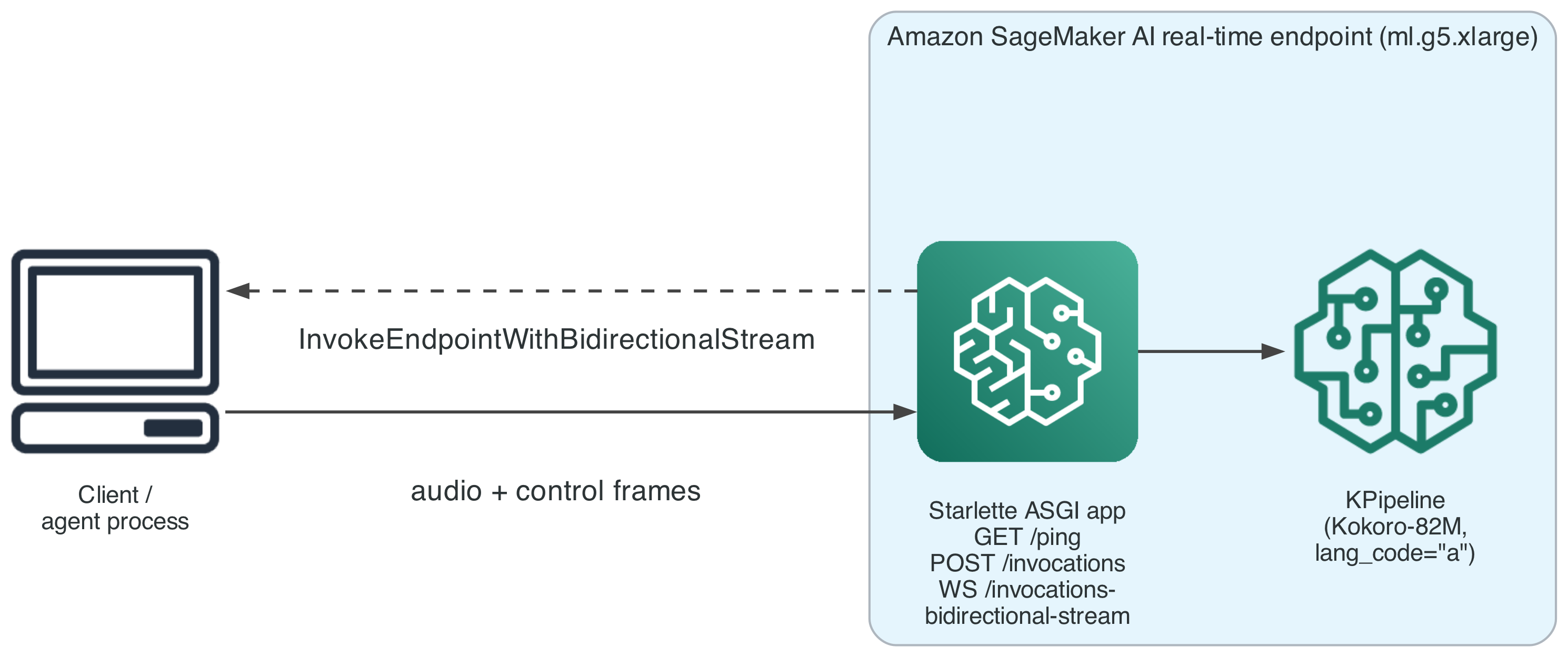
In a groundbreaking move for the field of artificial intelligence and voice technology, Amazon Web Services (AWS) has unveiled a new capability that allows developers to stream low-latency speech from AI agents using the Kokoro text-to-speech (TTS) model on Amazon SageMaker. This innovation addresses a significant pain point in voice interactions, where users often experience delays as agents wait to synthesize speech after generating a full response. By enabling the streaming of each sentence as it is produced, AWS aims to create a more seamless and responsive user experience, particularly in applications such as virtual assistants, customer service bots, and interactive voice response systems.
The Kokoro TTS model, specifically the Kokoro-82M variant, is designed to produce high-quality, natural-sounding speech. With this update, developers can leverage the capabilities of Kokoro to provide immediate audio feedback to users, thereby reducing the perceived latency in conversations. This is achieved through a combination of advanced machine learning techniques and efficient data transmission methods, including Server-Sent Events (SSE) and unified binary transport protocols. The result is a more engaging and fluid interaction between users and AI agents, making the technology more appealing for businesses and consumers alike.
Key facts
| Field | Detail |
|---|---|
| Technology | Kokoro TTS model on Amazon SageMaker |
| Model Size | Kokoro-82M |
| Key Feature | Low-latency speech streaming |
| Transmission Methods | Server-Sent Events, Unified Binary Transport |
| Use Cases | Virtual assistants, Customer service bots, Interactive voice response systems |
| Release Date | October 2023 |
| Target Audience | Developers, Businesses, AI researchers |
| Expected Impact | Enhanced user experience, Reduced latency in voice interactions |
Who's involved
- Amazon Web Services (AWS)
- Developers utilizing the Kokoro TTS model
- Businesses implementing voice agents and AI solutions
- AI researchers focusing on speech synthesis and interaction
The introduction of low-latency speech streaming is particularly significant in the context of growing demand for real-time interactions in various applications. Traditional TTS systems often require the entire response to be generated before any audio is produced, leading to frustrating delays for users. This can be especially problematic in high-stakes environments such as customer support, where timely responses are crucial. By allowing each sentence to be streamed as it is generated, AWS is not only improving the user experience but also setting a new standard for voice interaction technology.
Historically, text-to-speech systems have evolved from simple robotic voices to more sophisticated models capable of producing human-like speech. The Kokoro TTS model represents a significant leap forward in this evolution, utilizing advanced neural network architectures to create more natural intonations and rhythms in speech. This is particularly important as businesses increasingly rely on voice agents to handle customer interactions, where the quality of the voice can greatly influence user satisfaction.
Moreover, the integration of streaming capabilities with existing frameworks like Amazon SageMaker simplifies the development process for engineers. SageMaker provides a robust platform for building, training, and deploying machine learning models, and the addition of Kokoro TTS enhances its functionality. Developers can now easily implement low-latency speech features without needing to build complex systems from scratch, allowing them to focus on creating innovative applications that leverage this technology.
How to read the numbers
While specific performance metrics for the Kokoro TTS model have not been disclosed, the emphasis on low-latency streaming suggests a focus on optimizing response times. Developers should consider the following aspects when evaluating the performance of the Kokoro model:
| Benchmark | Expected Focus |
|---|---|
| Latency | Minimizing delay between input and audio output |
| Audio Quality | Naturalness and clarity of synthesized speech |
| Scalability | Ability to handle multiple simultaneous requests |
| Integration Ease | Compatibility with existing systems and frameworks |
What you can do with it
- Implement low-latency speech features in customer service bots to improve user satisfaction.
- Stream audio responses in real-time for virtual assistants, enhancing interactivity.
- Utilize Server-Sent Events for efficient data transmission in web applications.
- Experiment with the Kokoro TTS model in research projects focused on speech synthesis.
The introduction of Kokoro TTS on Amazon SageMaker represents a significant advancement in the capabilities of AI-driven voice agents. As businesses increasingly adopt AI technologies, the demand for real-time, responsive interactions will only grow. This development not only enhances the functionality of voice agents but also opens up new possibilities for applications in various sectors, including healthcare, finance, and entertainment.
What we're watching
As AWS continues to refine its TTS offerings, the next milestones will likely include further enhancements to the Kokoro model, such as improved voice customization options and expanded language support. Additionally, the response from developers and businesses will be crucial in determining the long-term impact of this technology on the market. The ability to create more engaging and responsive voice interactions could lead to a paradigm shift in how consumers interact with AI agents.
Looking ahead, the integration of low-latency speech streaming into broader AI applications could redefine user expectations for voice interactions. As more companies adopt this technology, we may see a competitive landscape where the quality of voice synthesis becomes a key differentiator in the market. The implications of this advancement extend beyond mere convenience; they could fundamentally change the way users perceive and interact with AI, making it an integral part of daily life. As developers explore the full potential of Kokoro TTS, the future of voice technology looks promising, with endless possibilities for innovation and improvement.
Source: AWS Machine Learning · Read original →
Instagram & TikTok: copy the link or quote and paste into a Story, Reel, or caption.
Digest
AI news by email
Weekly Friday briefings plus midweek notes when models or research drop. Sources included — unsubscribe anytime.
Discussion
Comment here after signing in, or share the story to continue the conversation elsewhere.
Instagram & TikTok: copy the link and paste into a Story, Reel, or caption.
Log in or create an account to comment — Google / GitHub / X when those providers are configured.
No comments yet — start the thread.


