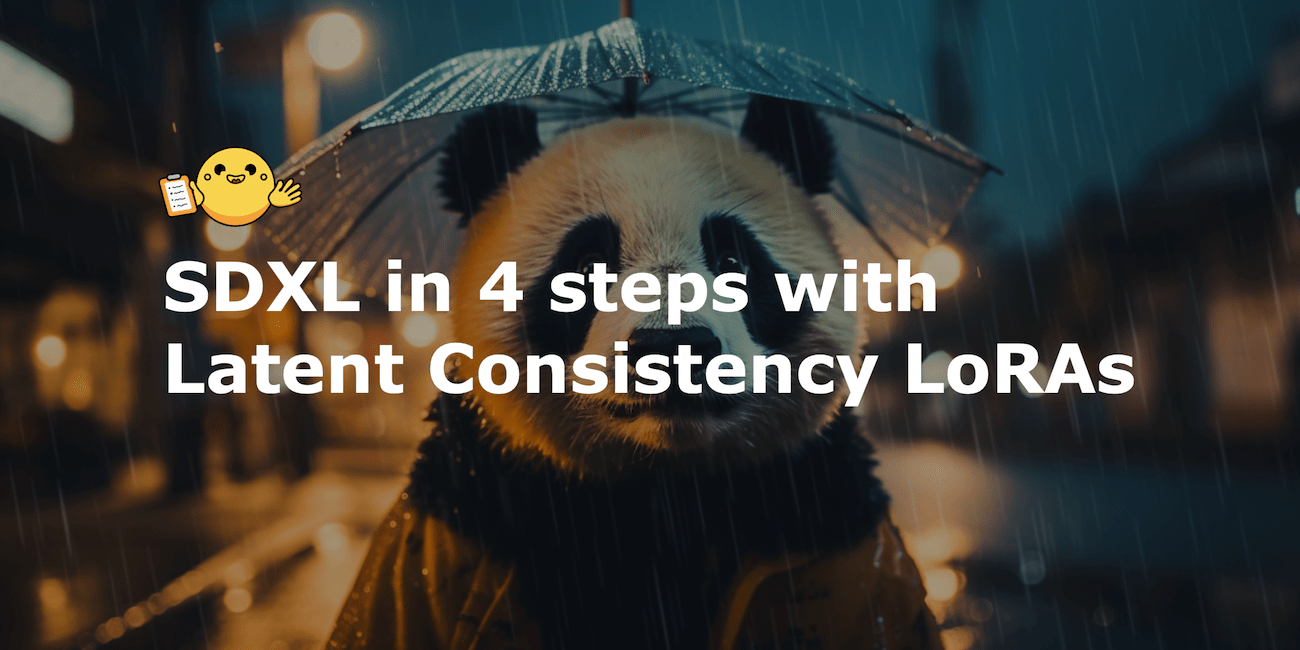
SDXL in 4 steps with Latent Consistency LoRAs
Enhance SDXL's performance effortlessly with Latent Consistency LoRAs in just four steps.
The Hugging Face Blog has unveiled a new methodology for optimizing the SDXL model through the use of Latent Consistency LoRAs. This innovative approach promises to significantly enhance the performance of SDXL, a popular model in the generative AI landscape, by introducing a streamlined process that users can implement in just four simple steps. The announcement is particularly exciting for developers and researchers who rely on SDXL for tasks such as image generation and other creative applications, as it offers a practical way to improve model output without extensive technical overhead.
Latent Consistency LoRAs, or Low-Rank Adaptations, are designed to refine the latent space of the SDXL model, allowing for more coherent and contextually relevant outputs. The four-step implementation process detailed in the blog post is aimed at making this enhancement accessible to a broad audience, from seasoned AI practitioners to newcomers in the field. By following these steps, users can expect to see a marked improvement in the quality of the results generated by SDXL, making it a compelling option for various applications.
Key facts
| Field | Detail |
|---|---|
| Model | SDXL |
| Enhancement Method | Latent Consistency LoRAs |
| Implementation Steps | Four straightforward steps |
| Expected Outcome | Improved performance and output quality |
| Target Audience | Developers and researchers using SDXL |
The introduction of Latent Consistency LoRAs aligns with a broader trend in AI development where efficiency and accessibility are prioritized. As AI models become increasingly complex, the need for methods that simplify enhancements while maintaining or improving performance is critical. This approach is reminiscent of other advancements in model optimization, such as fine-tuning techniques that allow users to adapt pre-trained models to specific tasks with minimal additional training. The ease of integrating these LoRAs into existing workflows could set a new standard for how enhancements are approached in the AI community.
Moreover, the focus on latent space adjustments speaks to a growing understanding of how models learn and generate outputs. By refining the latent representations, developers can create more nuanced and contextually aware outputs, which is particularly valuable in creative applications such as art generation, text-to-image synthesis, and more. This method not only enhances the quality of the results but also encourages experimentation and innovation among users, as they can achieve better outcomes with less effort.
Looking ahead, the real test will be how widely this method is adopted within the community and whether it leads to further innovations in model optimization. As more users implement Latent Consistency LoRAs, we may see a shift in best practices for enhancing generative models like SDXL. The implications of this approach could extend beyond just SDXL, potentially influencing how other models are optimized in the future, paving the way for more accessible AI advancements.
Source: Hugging Face Blog · Read original →
Discussion
Comment here after signing in, or share the story to continue the conversation elsewhere.
Instagram & TikTok: copy the link and paste into a Story, Reel, or post caption.
Log in or create an account to comment — Google / GitHub / X when those providers are configured.
No comments yet — start the thread.


