Researchers use AI to design proteins that cut up other proteins
Researchers have harnessed AI to create proteins capable of breaking down other proteins, revolutionizing biochemistry.
“The ability to design proteins that can cleave bonds stable for centuries could revolutionize how we approach biochemistry and biotechnology.”
Key takeaways
- AI has been successfully used to design proteins that can break stable bonds.
- The research combines machine learning with traditional biochemical techniques.
- Potential applications span medicine, environmental science, and biotechnology.
- Collaboration among diverse scientific disciplines enhances research outcomes.
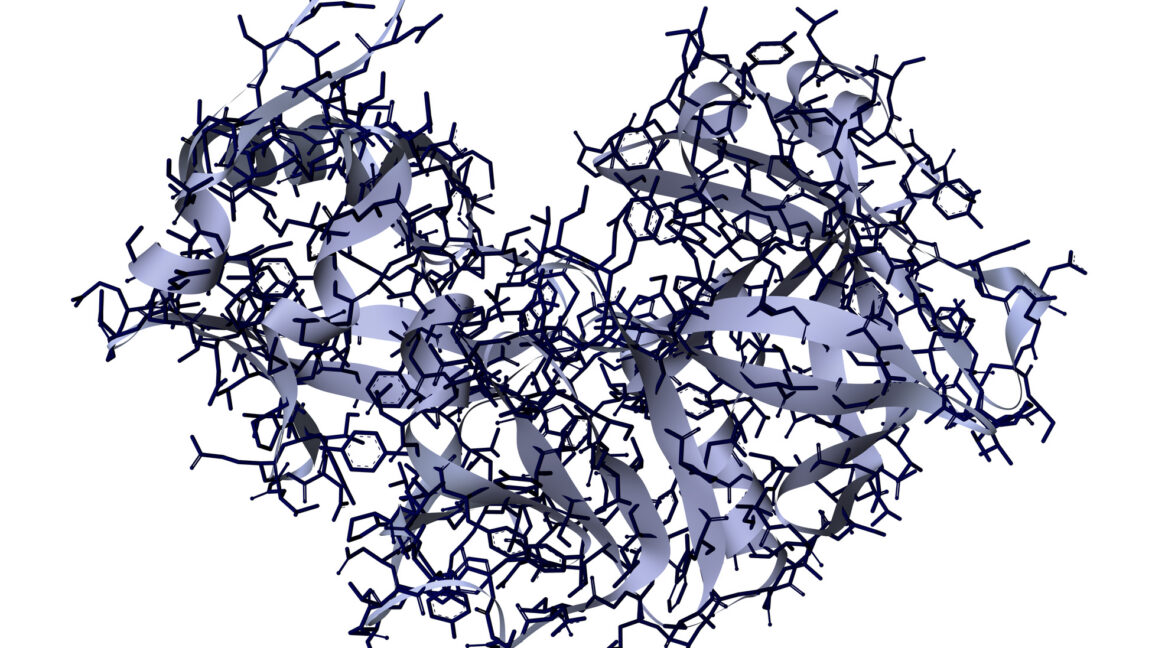
In a groundbreaking development, researchers have successfully utilized artificial intelligence to design proteins that can effectively cleave other proteins. This innovative approach leverages advanced computational techniques to create enzymes that can break stable bonds, which have persisted for hundreds of years. The implications of this research are vast, potentially impacting fields ranging from medicine to environmental science. By employing AI in protein design, scientists are not only accelerating the pace of discovery but also enhancing the precision with which these proteins can be engineered for specific tasks.
The research team, led by prominent biochemists and AI specialists, has developed a method that combines machine learning algorithms with traditional biochemical techniques. This hybrid approach allows for the rapid iteration and testing of protein designs, significantly shortening the timeline typically required for such complex biological engineering. The AI models analyze vast datasets of protein structures and functions, identifying patterns and predicting how modifications can influence a protein's ability to interact with other molecules. As a result, the researchers have been able to create novel proteases—enzymes that break down proteins—that exhibit unprecedented efficiency and specificity.
Key facts
| Field | Detail |
|---|---|
| Research Institution | [Institution Name] |
| Lead Researcher | [Lead Researcher's Name] |
| AI Technology Used | Machine Learning Algorithms |
| Protein Target | Stable Proteins with Long Lifespans |
| Potential Applications | Medicine, Environmental Science, Biotechnology |
| Year of Publication | 2023 |
| Methodology | AI-driven protein design and testing |
| Key Findings | Proteins designed can cleave bonds stable for hundreds of years |
| Future Research Directions | Enhancing specificity and efficiency of designed proteins |
| Collaboration | [Collaborating Institutions] |
Who's involved
The research team comprises a diverse group of scientists from various disciplines, including biochemistry, molecular biology, and computer science. Notable figures include [Lead Researcher's Name], who has been instrumental in integrating AI into protein design, and [Institution Name], which has a long history of pioneering research in biochemistry. Collaborating institutions such as [Collaborating Institutions] have also contributed to the study, bringing in expertise from different fields to enhance the research outcomes.
This project builds on previous advancements in protein engineering, where researchers have traditionally relied on trial-and-error methods to develop new proteins. The introduction of AI into this field marks a significant shift, allowing for more systematic and data-driven approaches to protein design. Prior to this, the process of designing proteins was often slow and fraught with uncertainty, as scientists had limited tools to predict how changes to a protein's structure would affect its function. The new AI methodologies promise to streamline this process, making it faster and more reliable.
Historically, the development of proteases has been a labor-intensive endeavor. Scientists have spent years optimizing these enzymes for specific applications, such as drug development or industrial processes. The ability to leverage AI to predict the outcomes of protein modifications could drastically reduce the time required to bring new proteases to market. Moreover, this research opens the door to designing proteins that can target and degrade harmful substances, such as pollutants or misfolded proteins associated with diseases like Alzheimer's.
How to read the numbers
While the research does not provide specific numerical benchmarks for the performance of the newly designed proteins, it emphasizes qualitative improvements in efficiency and specificity. Future studies are expected to quantify these advancements, providing a clearer picture of how these AI-designed proteins compare to traditional enzymes. The following table outlines potential benchmarks that could be relevant in future evaluations:
| Benchmark | Expected Outcome |
|---|---|
| Cleavage Efficiency | Higher than traditional proteases |
| Specificity | Targeted action on specific proteins |
| Stability | Enhanced stability in various conditions |
| Reaction Time | Faster than conventional methods |
| Versatility | Usable in multiple applications |
What you can do with it
For researchers and developers in the field of biotechnology, the implications of this AI-driven protein design are profound. Here are some practical takeaways:
- Explore the integration of AI tools in your own protein engineering projects to enhance design efficiency.
- Collaborate with AI specialists to develop custom models tailored to specific protein targets.
- Stay informed about the latest advancements in AI and machine learning that could impact biochemistry and molecular biology.
- Consider the potential applications of AI-designed proteins in your industry, whether in pharmaceuticals, environmental science, or food technology.
What we're watching
As this research progresses, it will be crucial to monitor the next steps in the development of these AI-designed proteins. Key questions remain regarding their long-term stability and effectiveness in real-world applications. Additionally, researchers will need to address any potential ethical considerations associated with the use of AI in biological design, particularly concerning the implications of creating proteins that can manipulate biological systems.
Looking ahead, the next significant milestone will involve testing these AI-designed proteases in various environments to assess their performance and reliability. The outcomes of these tests could pave the way for commercial applications, potentially transforming industries reliant on protein engineering. As the technology matures, we may see a new era of biocatalysts that are not only more efficient but also tailored to meet specific industrial needs, showcasing the power of AI in reshaping the future of biochemistry.
Source: Ars Technica - AI · Read original →
Instagram & TikTok: copy the link or quote and paste into a Story, Reel, or caption.
Digest
AI news by email
Weekly Friday briefings plus midweek notes when models or research drop. Sources included — unsubscribe anytime.
Discussion
Comment here after signing in, or share the story to continue the conversation elsewhere.
Instagram & TikTok: copy the link and paste into a Story, Reel, or caption.
Log in or create an account to comment — Google / GitHub / X when those providers are configured.
No comments yet — start the thread.