

Push-based KV transfer to improve TTFT and TPOT for disaggregated inference in vLLM
AWS introduces a push-based KV transfer method that significantly enhances the efficiency of large language model inference.
In a groundbreaking update for large language model (LLM) inference, AWS has unveiled a push-based KV (key-value) transfer mechanism designed to improve the performance of disaggregated inference in its vLLM framework. This innovative approach addresses a critical bottleneck in the inference process by decoupling the transfer coordination from the main computational path. As a result, AWS claims that this new method can deliver up to three times better Time to First Token (TTFT) and a 30% improvement in Throughput Per Operation Time (TPOT) when benchmarked on Amazon EC2 P5en instances utilizing AWS Elastic Fabric Adapter (EFA). This advancement not only enhances the performance of LLMs but also opens the door for more efficient resource utilization in cloud environments, which is crucial for scaling AI applications effectively.
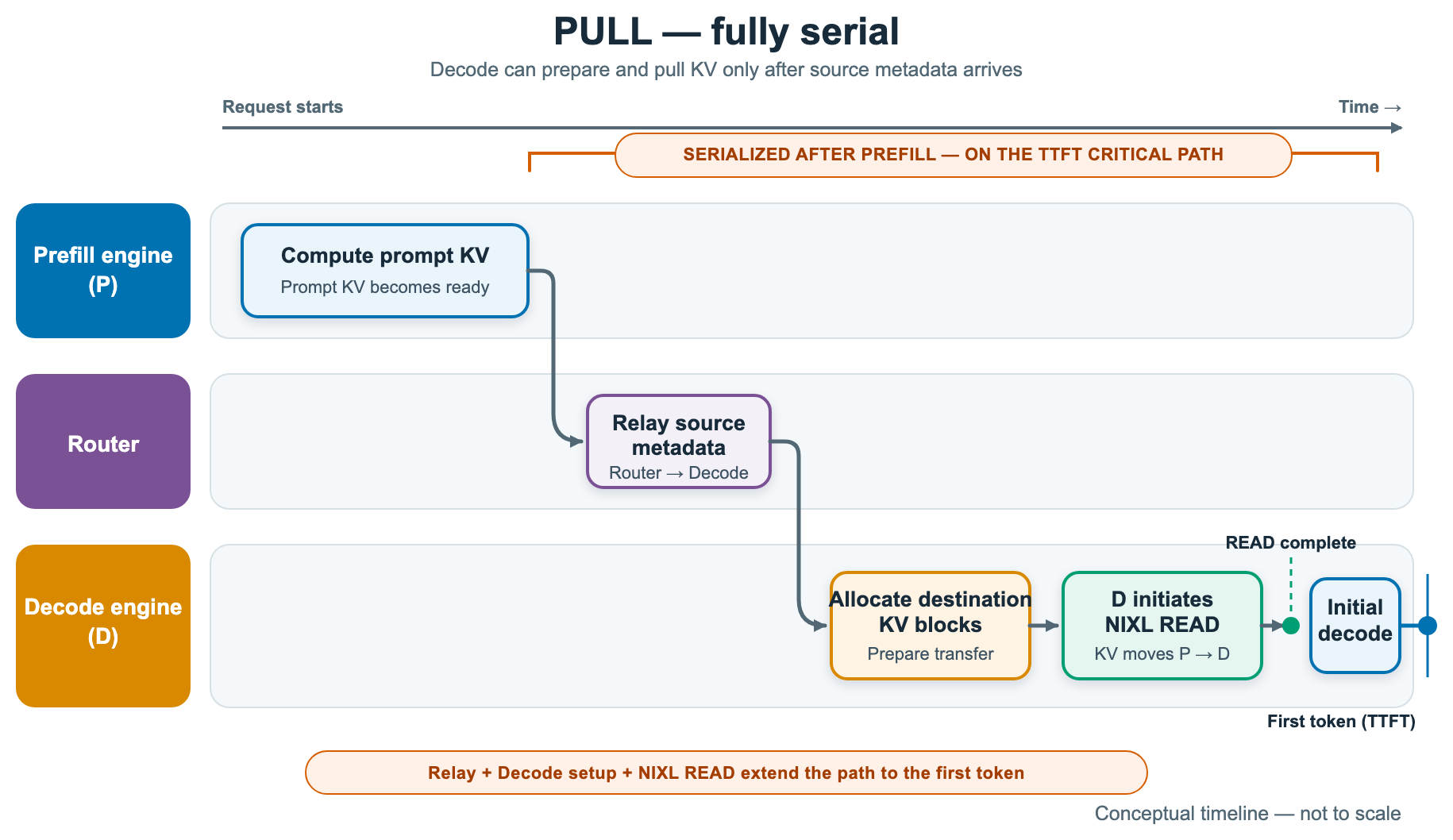
The vLLM framework, which stands for versatile Large Language Model, has been designed to optimize the inference process by allowing the splitting of tasks across multiple engine instances. However, this disaggregation has historically required a significant amount of time and resources to transfer the KV cache between instances. The introduction of the NIXL (Network Interface eXtension for LLM) connector marks a pivotal shift in how these transfers are managed. By offloading the coordination of KV cache transfers, the NIXL connector minimizes delays and maximizes throughput, ensuring that the inference process remains agile and responsive. This is particularly important for applications that demand real-time processing, such as chatbots, virtual assistants, and other interactive AI systems.
Key facts
| Field | Detail |
|---|---|
| Technology | Push-based KV transfer method |
| Framework | vLLM (versatile Large Language Model) |
| Performance Improvement | Up to 3x better TTFT, 30% better TPOT |
| Benchmark Environment | Amazon EC2 P5en instances with AWS EFA |
| Release Date | October 2023 |
| Target Users | AI developers, cloud service providers |
| Key Feature | Offloads transfer coordination from critical path |
| Application Areas | Real-time AI applications, disaggregated inference |
| Competitive Edge | Enhanced resource utilization in cloud environments |
| Expected Impact | Improved performance for large-scale AI deployments |
The players
The primary players in this development include Amazon Web Services (AWS), which is at the forefront of cloud computing and AI services. The vLLM framework is a product of AWS's continuous efforts to enhance machine learning capabilities on its platform. Additionally, the introduction of the NIXL connector represents a collaborative effort among AWS engineers and researchers who are focused on optimizing AI inference processes. This innovation positions AWS as a leader in the cloud AI space, particularly in the context of LLMs, where performance and efficiency are paramount.
To understand the significance of this advancement, it's essential to consider the evolution of LLMs and their deployment in cloud environments. Traditionally, LLMs have been resource-intensive, requiring substantial computational power and memory to deliver high-quality outputs. As these models have grown in complexity and size, the challenges associated with their deployment have also increased. Previous generations of LLMs often struggled with latency issues, particularly when deployed in disaggregated architectures where multiple instances are used to handle different parts of the inference process.
The introduction of disaggregated inference was a game-changer, allowing for greater flexibility and scalability in how LLMs are utilized. However, the need to transfer KV caches between instances created a bottleneck that hindered the overall performance of these systems. The NIXL connector addresses this issue head-on by streamlining the transfer process, thereby reducing the time it takes for models to respond to queries. This is particularly relevant in scenarios where users expect immediate feedback, such as in conversational AI applications.
How to read the numbers
| Benchmark | Score |
|---|---|
| TTFT Improvement | Up to 3x |
| TPOT Improvement | 30% |
| Instance Type | Amazon EC2 P5en |
| Network Technology | AWS EFA |
| Transfer Coordination | Offloaded |
The performance metrics associated with the new push-based KV transfer method are particularly noteworthy. The reported improvements in TTFT and TPOT are indicative of the potential impact this technology could have on real-world applications. For developers and businesses relying on LLMs for their operations, these enhancements could translate into faster response times and more efficient processing of large volumes of data. This is especially critical for applications that require real-time interactions, such as customer service chatbots or real-time translation services.
Practical takeaways
- Evaluate the integration of the NIXL connector into existing LLM deployments to enhance performance.
- Consider the implications of improved TTFT and TPOT on user experience in AI applications.
- Explore the potential for scaling AI applications more effectively using AWS's vLLM framework.
- Stay informed about future updates from AWS that may further enhance LLM capabilities.
What we're watching
As AWS continues to refine its machine learning offerings, the next milestones to watch include potential updates to the vLLM framework and the introduction of additional features that could further enhance inference performance. Additionally, the competitive landscape in cloud AI services is rapidly evolving, with other major players likely to respond to AWS's advancements. Developers and businesses should keep an eye on how these changes may influence their own strategies for deploying AI solutions.
Looking ahead, the push-based KV transfer method could redefine how LLMs are utilized in cloud environments, particularly as the demand for real-time AI applications continues to grow. The ability to efficiently manage resource allocation and minimize latency will be crucial for organizations aiming to leverage AI for competitive advantage. As AWS leads the charge in optimizing LLM inference, it will be interesting to see how other cloud providers adapt and innovate in response to these developments.
Source: AWS Machine Learning · Read original →
Instagram & TikTok: copy the link and paste into a Story, Reel, or caption.
Digest
AI news by email
Weekly Friday briefings plus midweek notes when models or research drop. Sources included — unsubscribe anytime.
Discussion
Comment here after signing in, or share the story to continue the conversation elsewhere.
Instagram & TikTok: copy the link and paste into a Story, Reel, or caption.
Log in or create an account to comment — Google / GitHub / X when those providers are configured.
No comments yet — start the thread.


