Preference Optimization for Vision Language Models
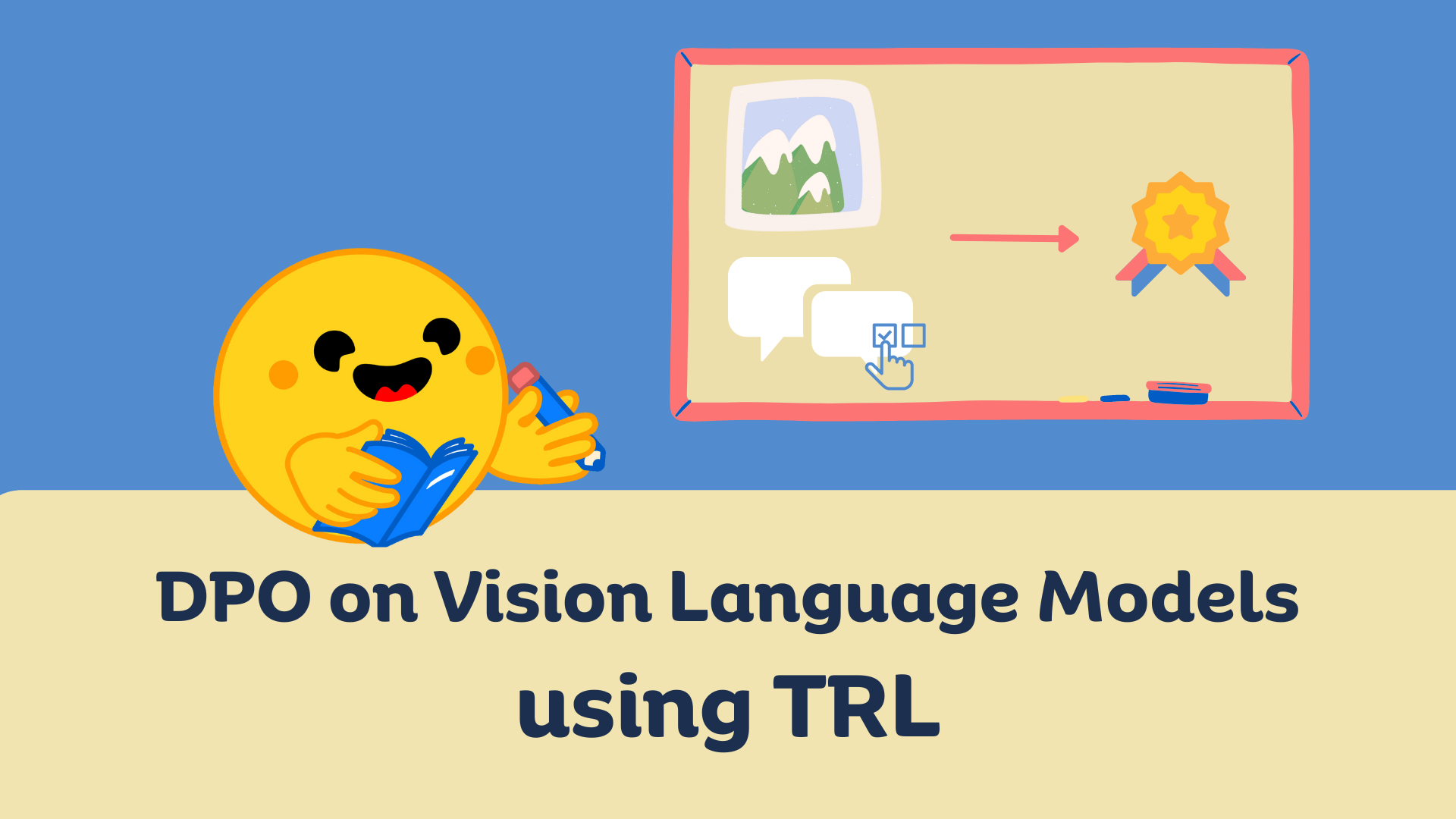
New techniques in preference optimization are set to enhance vision-language models, improving multimodal task performance.
Hugging Face has announced the introduction of new techniques aimed at enhancing preference optimization in vision-language models. This development is significant as it promises to improve the alignment between visual and textual data, which is crucial for tasks that require understanding and interpreting information from both modalities. By refining how these models process and relate visual inputs to textual descriptions, Hugging Face aims to boost the overall performance of AI systems in multimodal tasks, which have become increasingly important in various applications, from content generation to interactive AI systems.
The improvements in preference optimization are expected to have a direct impact on user experience in AI-driven applications. As users increasingly rely on AI to interpret complex data, the ability of these models to accurately align visual and textual information will enhance the relevance and accuracy of outputs. This means that applications powered by these models could provide more contextually appropriate responses, making them more useful in real-world scenarios. The advancements are particularly timely, as the demand for sophisticated AI solutions continues to grow across industries such as education, healthcare, and entertainment.
Key facts
| Field | Detail |
|---|---|
| Technique | New preference optimization methods |
| Focus | Vision-language model alignment |
| Expected Outcome | Improved performance on multimodal tasks |
| User Impact | Enhanced experience in AI-driven applications |
| Developer | Hugging Face |
The landscape of AI and machine learning has been rapidly evolving, particularly in the realm of multimodal models that integrate both visual and textual data. Prior to this announcement, models like CLIP and DALL-E have set benchmarks in how machines can understand and generate content that combines images and text. However, challenges remained in ensuring that these models could consistently deliver accurate and contextually relevant outputs. The new techniques from Hugging Face represent a step forward in addressing these challenges, potentially leading to a new generation of AI systems that are better equipped to handle the complexities of human communication and perception.
Looking ahead, the implications of these advancements extend beyond just improved model performance. As preference optimization techniques continue to evolve, there is potential for even more sophisticated applications that could redefine how users interact with AI. Future developments may include more personalized AI experiences, where models adapt to individual user preferences based on their interactions. This could lead to a more intuitive and engaging user experience, making AI tools not only more effective but also more enjoyable to use in everyday tasks.
Source: Hugging Face Blog · Read original →
Discussion
Comment here after signing in, or share the story to continue the conversation elsewhere.
Instagram & TikTok: copy the link and paste into a Story, Reel, or post caption.
Log in or create an account to comment — Google / GitHub / X when those providers are configured.
No comments yet — start the thread.