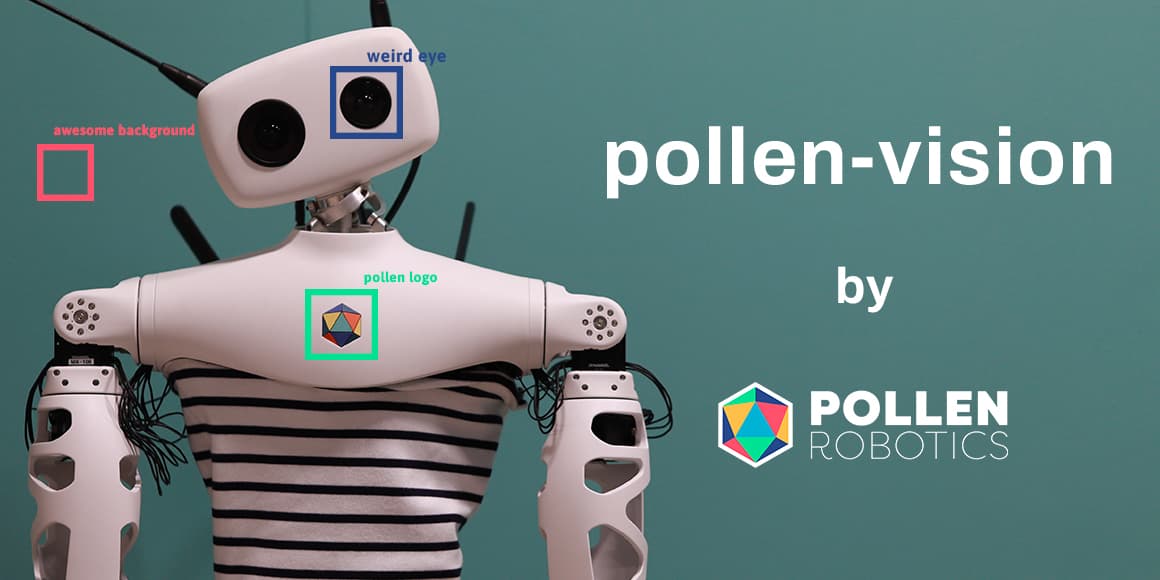
Pollen-Vision: Unified interface for Zero-Shot vision models in robotics
Pollen-Vision streamlines the integration of zero-shot vision models for robotics, enhancing capabilities with minimal training data.
Hugging Face has unveiled Pollen-Vision, a groundbreaking tool designed to simplify the integration of zero-shot vision models in robotics. This unified interface allows developers to leverage various vision models without the need for extensive training datasets, making it easier to implement advanced visual capabilities in robotic systems. By providing a seamless experience across multiple vision tasks, Pollen-Vision aims to enhance the functionality and adaptability of robots in diverse applications, from industrial automation to service robots.
The introduction of Pollen-Vision comes at a time when the demand for intelligent robotic solutions is on the rise. With industries increasingly looking to automate processes and improve efficiency, the ability to deploy sophisticated vision models without extensive training data represents a significant advancement. This tool not only reduces the barriers to entry for developers but also accelerates the pace at which robotics can evolve. By enabling zero-shot learning, Pollen-Vision allows robots to interpret and understand visual information in real-time, adapting to new tasks and environments on the fly.
Key facts
| Field | Detail |
|---|---|
| Product Name | Pollen-Vision |
| Developed By | Hugging Face |
| Main Functionality | Unified interface for zero-shot vision models |
| Target Users | Robotics developers and researchers |
| Key Benefit | Minimal training data required |
| Supported Tasks | Multiple vision tasks |
Zero-shot learning has gained traction in the AI community as a method that allows models to generalize knowledge from seen to unseen tasks without retraining. Pollen-Vision builds on this concept by providing a framework that supports various vision models, making it easier for developers to create versatile robotic applications. This approach is particularly beneficial in scenarios where labeled training data is scarce or expensive to obtain, a common challenge in the robotics field. The ability to quickly adapt to new tasks without the need for extensive retraining can significantly reduce development time and costs.
As robotics technology continues to advance, tools like Pollen-Vision are crucial for keeping pace with the growing complexity of tasks that robots are expected to perform. The integration of advanced vision capabilities not only enhances the operational efficiency of robots but also opens new avenues for innovation across various sectors. Looking ahead, the challenge will be to ensure that these tools remain accessible and user-friendly, allowing developers of all skill levels to harness the power of zero-shot learning in their robotic systems. With the potential for widespread adoption, Pollen-Vision could very well set a new standard in the integration of AI-driven vision capabilities in robotics.
Source: Hugging Face Blog · Read original →
Discussion
Comment here after signing in, or share the story to continue the conversation elsewhere.
Instagram & TikTok: copy the link and paste into a Story, Reel, or post caption.
Log in or create an account to comment — Google / GitHub / X when those providers are configured.
No comments yet — start the thread.


