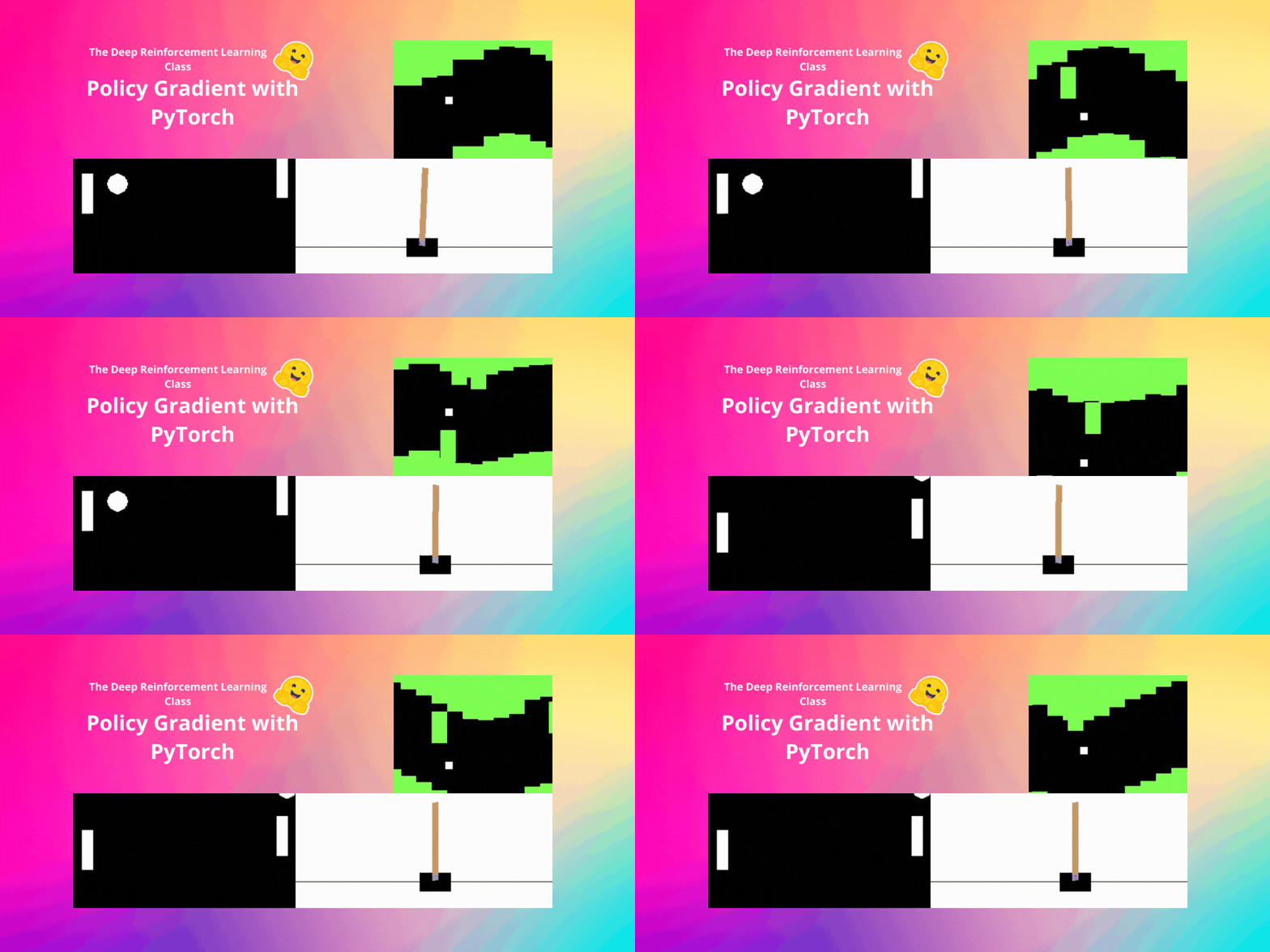
Policy Gradient with PyTorch
A new guide on implementing policy gradient methods in PyTorch is now available for developers at all skill levels.
Hugging Face has released a comprehensive guide on implementing policy gradient methods using PyTorch, aimed at both beginners and experienced developers in the field of reinforcement learning. This resource provides a detailed exploration of key concepts related to policy gradients, offering practical coding examples that facilitate understanding and application. By leveraging PyTorch's capabilities, developers can enhance their projects with sophisticated reinforcement learning techniques, making this guide a timely addition to the AI and machine learning community.
The guide is structured to cater to a wide audience, ensuring that even those new to reinforcement learning can grasp the fundamental principles of policy gradients. For seasoned developers, the practical coding examples serve as a valuable reference, allowing them to quickly implement these methods in their own projects. Hugging Face, known for its contributions to the AI landscape, continues to support the community with educational resources that bridge the gap between theory and practical application.
Key facts
| Field | Detail |
|---|---|
| Guide Title | Policy Gradient with PyTorch |
| Focus | Reinforcement learning techniques |
| Target Audience | Beginners and experienced developers |
| Content Type | Key concepts and practical coding examples |
| Platform | PyTorch |
The significance of policy gradient methods in reinforcement learning cannot be overstated. These techniques allow agents to learn optimal behaviors by directly optimizing the policy that dictates their actions, rather than relying solely on value functions. This approach has been instrumental in various applications, from game playing to robotics, where the environment is complex and dynamic. The release of this guide aligns with a growing trend in the AI community towards making advanced techniques more accessible through user-friendly frameworks like PyTorch.
As the field of reinforcement learning continues to expand, resources like this guide are essential for fostering innovation and experimentation. Developers looking to integrate reinforcement learning into their applications will find the practical examples particularly useful, as they can adapt the provided code to suit their specific needs. The guide not only demystifies policy gradients but also encourages developers to explore the broader implications of their work in AI.
Looking ahead, the adoption of policy gradient methods is likely to increase as more developers become familiar with the concepts and tools available. The ongoing advancements in frameworks like PyTorch will continue to support this trend, enabling more sophisticated implementations and applications of reinforcement learning techniques. As the community engages with these resources, we can expect to see a surge in innovative projects that leverage the power of policy gradients in real-world scenarios.
Source: Hugging Face Blog · Read original →
Discussion
Comment here after signing in, or share the story to continue the conversation elsewhere.
Instagram & TikTok: copy the link and paste into a Story, Reel, or post caption.
Log in or create an account to comment — Google / GitHub / X when those providers are configured.
No comments yet — start the thread.