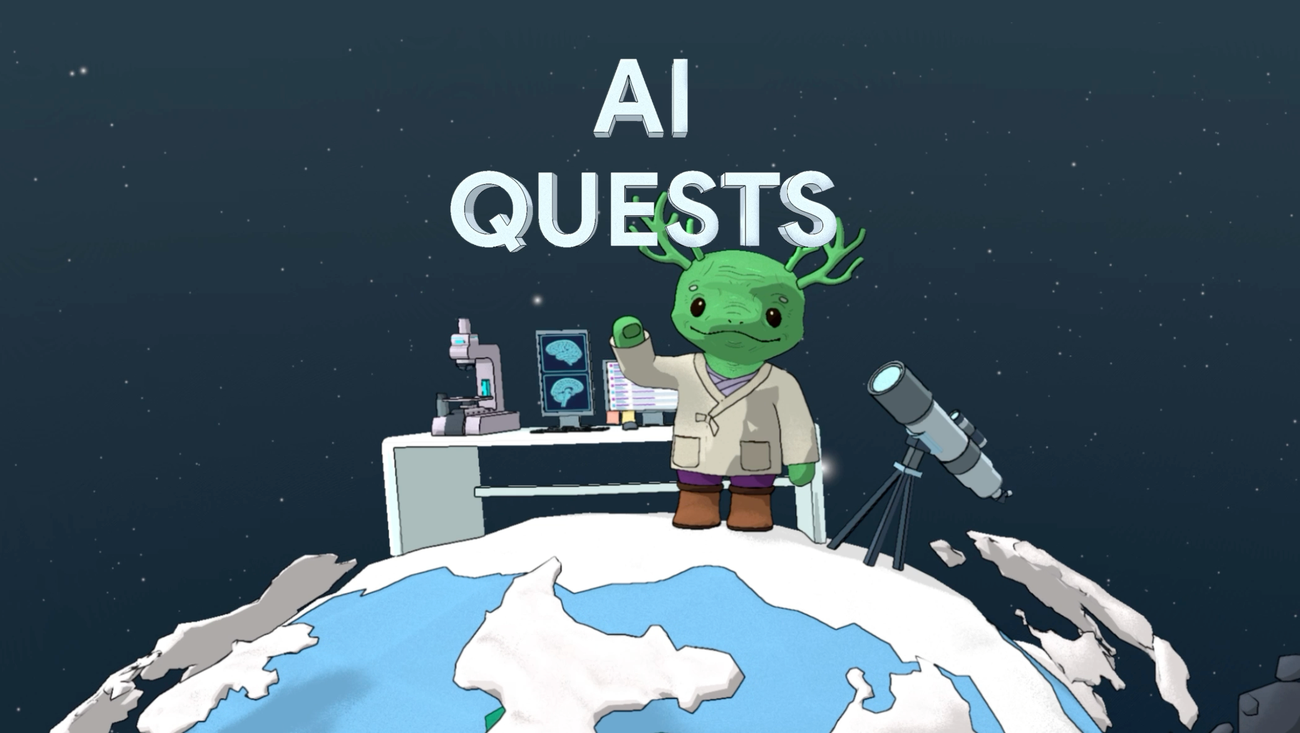
Our newest AI Quest: Mapping the human brain
Google AI launches 'Polar Peaks,' a new lesson aimed at enhancing AI literacy through neuroscience.
“The Polar Peaks initiative uniquely combines neuroscience with AI education, offering learners a chance to explore the cognitive processes that inspire machine learning.”
Key takeaways
- Google AI has launched Polar Peaks, an interactive lesson on neuroscience and AI literacy.
- The initiative aims to make AI concepts more accessible to the general public.
- Polar Peaks features multimedia content designed to engage learners in exploring human cognition.
- Understanding neuroscience can enhance critical thinking about AI technologies and their ethical implications.
In an innovative move to enhance AI literacy, Google AI has unveiled its latest educational module titled "Polar Peaks." This new lesson focuses on the intricate workings of the human brain and aims to bridge the gap between neuroscience and artificial intelligence. By integrating complex scientific concepts with engaging learning experiences, Google seeks to empower users with a deeper understanding of how AI models can mimic or draw inspiration from human cognitive processes. This initiative is part of a broader effort to make AI more accessible and comprehensible to a wider audience, particularly those who may not have a technical background.
The launch of Polar Peaks is timely, as the demand for AI literacy continues to rise across various sectors. With AI technologies increasingly influencing everyday life, from personal assistants to advanced data analytics, understanding the foundational principles behind these technologies is crucial. Google’s approach not only aims to educate users about AI but also encourages them to think critically about the ethical implications and potential applications of AI in society. The lesson is designed to be interactive, featuring multimedia content that engages learners in exploring the parallels between human cognition and machine learning.
Key facts
| Field | Detail |
|---|---|
| Initiative Name | Polar Peaks |
| Focus Area | Neuroscience and AI literacy |
| Launch Date | October 2023 |
| Target Audience | General public, educators, and students |
| Learning Format | Interactive multimedia lessons |
| Objective | Enhance understanding of AI through neuroscience concepts |
| Accessibility | Free online access |
| Developer | Google AI |
| Related Fields | Cognitive science, machine learning, ethics in AI |
| Educational Approach | Engaging, hands-on learning experiences |
Who's involved
Google AI is the primary developer behind the Polar Peaks initiative. The project is part of a larger suite of educational resources aimed at fostering AI literacy among diverse audiences. Google has been at the forefront of AI research and development, leveraging its vast resources and expertise to create tools and platforms that make AI more understandable and applicable to everyday life. The initiative also collaborates with educators and neuroscientists to ensure that the content is accurate and pedagogically sound.
Background on AI Literacy and Neuroscience
AI literacy has emerged as a critical competency in the 21st century, akin to reading and mathematics in previous generations. As AI technologies become more integrated into various aspects of life, understanding their workings, limitations, and ethical considerations is essential. Google’s previous educational efforts, such as AI Experiments and the AI for Everyone course, have laid the groundwork for initiatives like Polar Peaks, which aim to provide a more specialized focus on the intersection of neuroscience and AI.
Neuroscience, the study of the nervous system and brain, offers valuable insights into how humans process information, learn, and make decisions. By drawing parallels between neural processes and AI algorithms, learners can gain a more nuanced understanding of how AI systems operate. This approach not only demystifies AI but also encourages users to think critically about the implications of AI technologies in real-world scenarios. The integration of neuroscience into AI education is a relatively new concept, yet it holds the potential to revolutionize how we teach and understand artificial intelligence.
How to read the numbers
While Polar Peaks does not present traditional numerical benchmarks, it emphasizes qualitative learning outcomes. The effectiveness of AI literacy initiatives like this can be gauged through user engagement metrics, feedback from participants, and the broader impact on public understanding of AI technologies. Metrics such as completion rates, user satisfaction scores, and the number of active participants can provide insights into the program's success and areas for improvement.
What you can do with it
- Explore the content: Engage with the interactive lessons to understand the connections between neuroscience and AI.
- Share with others: Encourage friends, family, and colleagues to participate in the Polar Peaks initiative to foster a community of informed AI users.
- Apply insights: Use the knowledge gained to critically evaluate AI technologies encountered in daily life, considering their ethical implications.
- Educate others: Leverage the lessons learned to educate peers or students about AI and its relationship with human cognition.
What we're watching
As Google AI continues to develop and expand its educational offerings, we will be monitoring the reception of Polar Peaks among users and educators. Key questions include how effectively the initiative enhances AI literacy and whether it inspires further exploration of neuroscience in the context of AI. Additionally, the potential for partnerships with educational institutions to integrate these lessons into formal curricula could significantly impact the future of AI education.
Looking ahead, the success of Polar Peaks may pave the way for more specialized educational modules that explore other intersections of technology and science. As AI continues to evolve, the need for comprehensive educational resources will only grow, making initiatives like Polar Peaks essential in preparing society for the challenges and opportunities that lie ahead. By fostering a deeper understanding of AI through the lens of neuroscience, Google AI is not just teaching about technology; it is shaping the future of informed and responsible AI usage.
Source: Google AI Blog · Read original →
Instagram & TikTok: copy the link or quote and paste into a Story, Reel, or caption.
Digest
AI news by email
Weekly Friday briefings plus midweek notes when models or research drop. Sources included — unsubscribe anytime.
Discussion
Comment here after signing in, or share the story to continue the conversation elsewhere.
Instagram & TikTok: copy the link and paste into a Story, Reel, or caption.
Log in or create an account to comment — Google / GitHub / X when those providers are configured.
No comments yet — start the thread.