

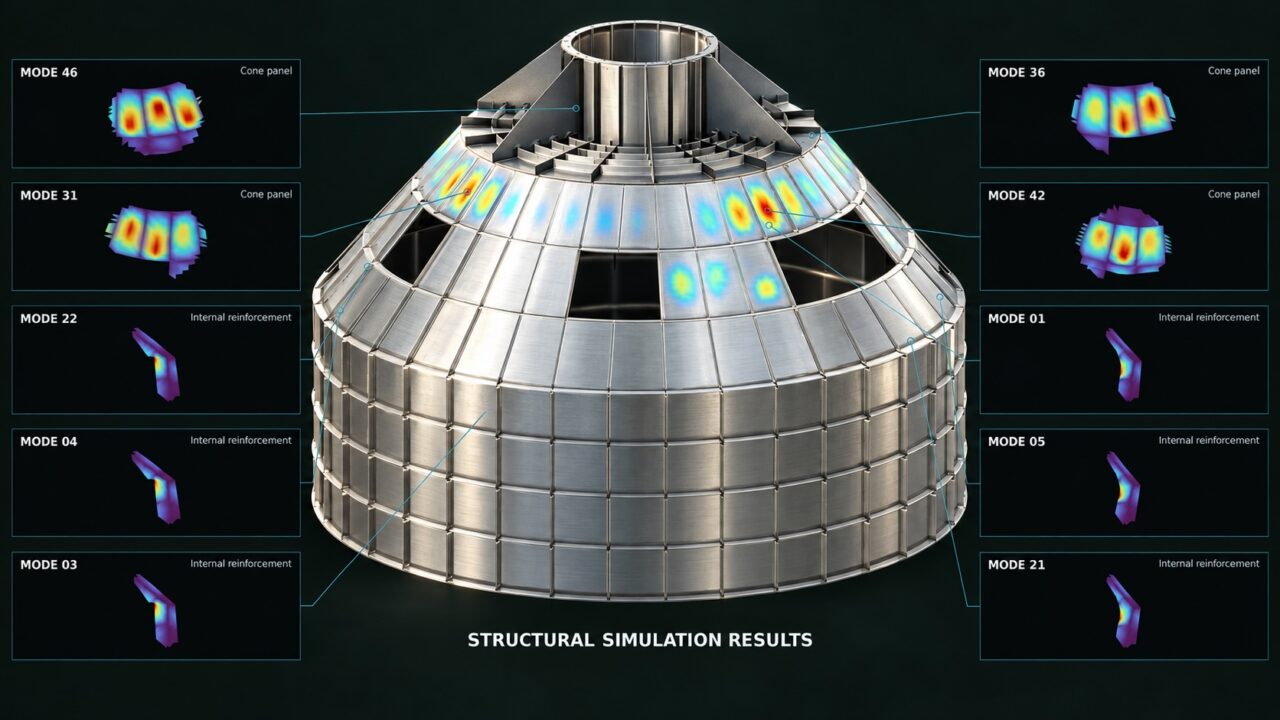
NVIDIA cuDSS Now Generally Available to Accelerate Engineering and Scientific Simulations
NVIDIA's cuDSS is now available, enhancing GPU capabilities for engineering and scientific simulations.
“With cuDSS, NVIDIA is not just enhancing simulation speed; it's redefining the boundaries of what's possible in engineering design and analysis.”
Key takeaways
- NVIDIA has launched cuDSS, a CUDA-X library for accelerating simulations.
- The library is designed for complex engineering and scientific applications.
- cuDSS integrates seamlessly with existing CUDA applications.
- Industries such as aerospace and semiconductor manufacturing will benefit significantly.
- The shift to GPU acceleration is crucial for handling increasingly complex designs.
NVIDIA has officially launched cuDSS, a CUDA-X library designed to accelerate engineering and scientific simulations by leveraging the power of GPUs. This new tool aims to address the increasing complexity of simulations that are critical for various engineering applications, from designing advanced microchips to optimizing aircraft performance. As industries continue to innovate and push the boundaries of design, the need for faster and more efficient simulation tools has never been more pressing. cuDSS promises to deliver significant performance improvements, allowing engineers and scientists to run simulations that were previously too resource-intensive or time-consuming.
The introduction of cuDSS comes at a pivotal moment in the engineering and scientific communities. As designs become more intricate, traditional CPU-based simulation methods struggle to keep pace with the demands of modern engineering. The shift to GPU-based simulations is not just a trend but a necessity, as GPUs can handle parallel processing tasks more efficiently than CPUs. This capability allows for the simulation of complex systems in a fraction of the time, enabling quicker iterations and more robust designs. NVIDIA's cuDSS aims to fill this gap by providing a dedicated library that integrates seamlessly with existing CUDA applications, making it easier for developers to adopt GPU acceleration in their workflows.
Key facts
| Field | Detail |
|---|---|
| Product | NVIDIA cuDSS |
| Launch Date | October 2023 |
| Type | CUDA-X library |
| Primary Use | Engineering and scientific simulations |
| Key Benefit | Accelerates simulation performance by leveraging GPUs |
| Target Users | Engineers, scientists, researchers |
| Integration | Compatible with existing CUDA applications |
| Performance Focus | Complex designs in various industries |
| Industry Applications | Aerospace, semiconductor, industrial systems |
| Development Environment | NVIDIA CUDA ecosystem |
Who's involved
NVIDIA is the primary player behind cuDSS, a company renowned for its advancements in GPU technology and parallel computing. The launch of cuDSS is part of NVIDIA's broader strategy to enhance computational capabilities across various sectors, particularly in engineering and scientific research. This initiative aligns with the company's commitment to providing tools that empower developers and researchers to push the boundaries of innovation.
In addition to NVIDIA, various industries stand to benefit from the capabilities of cuDSS. Companies involved in aerospace, semiconductor manufacturing, and industrial systems are particularly poised to leverage the accelerated simulation capabilities that cuDSS offers. These sectors often rely on complex simulations to predict performance and optimize designs before physical prototypes are created.
The evolution of simulation technology has been marked by significant milestones, with each generation of tools offering enhanced capabilities. In the past, engineers relied heavily on CPU-based simulations, which, while effective, often fell short in terms of speed and efficiency. The introduction of GPUs into the simulation landscape marked a turning point, allowing for parallel processing and significantly faster computation times. However, the integration of GPU acceleration into existing workflows has often been a challenge, requiring substantial re-engineering of software and processes. cuDSS aims to simplify this transition, providing a library that can be easily integrated into existing CUDA applications, thereby lowering the barrier to entry for GPU-accelerated simulations.
Historically, NVIDIA has been at the forefront of GPU technology, with products like CUDA revolutionizing how developers approach parallel computing. The introduction of cuDSS is a natural progression in this journey, as it specifically targets the needs of engineers and scientists who require robust simulation tools. By focusing on the unique challenges posed by complex designs, NVIDIA is positioning cuDSS as an essential tool for modern engineering workflows.
How to read the numbers
While specific performance metrics for cuDSS have not yet been disclosed, the expectations are high based on NVIDIA's track record with GPU acceleration. The following table outlines key benchmarks that are often used to evaluate simulation performance in engineering contexts:
| Benchmark | Expected Impact |
|---|---|
| Simulation Speed | Significant reduction in time required for complex simulations |
| Resource Utilization | Improved efficiency in GPU resource allocation |
| Scalability | Ability to handle larger and more complex simulations |
| Integration Time | Reduced time for developers to integrate GPU acceleration |
| Performance Gains | Anticipated improvements over traditional CPU-based methods |
What you can do with it
- Integrate cuDSS into existing CUDA applications to enhance simulation performance.
- Leverage GPU acceleration to reduce simulation times for complex engineering designs.
- Utilize cuDSS for real-time simulations in industries such as aerospace and semiconductor manufacturing.
- Experiment with advanced simulation scenarios that were previously computationally prohibitive.
- Collaborate with teams to streamline workflows and improve design iteration cycles.
What we're watching
As cuDSS gains traction in the engineering and scientific communities, we will be closely monitoring user feedback and performance benchmarks. The next milestone will be the release of case studies showcasing real-world applications of cuDSS in various industries. Additionally, we will keep an eye on how quickly developers adopt this new library and the impact it has on their simulation workflows.
Looking ahead, the success of cuDSS could pave the way for further advancements in GPU-accelerated simulation technologies. As industries continue to demand faster and more efficient tools, NVIDIA's commitment to developing specialized libraries like cuDSS may lead to a new era of engineering and scientific innovation. The ability to run complex simulations in real-time could fundamentally alter how designs are conceived, tested, and brought to market, ultimately reshaping entire industries.
Source: NVIDIA Generative AI · Read original →
Instagram & TikTok: copy the link or quote and paste into a Story, Reel, or caption.
Digest
AI news by email
Weekly Friday briefings plus midweek notes when models or research drop. Sources included — unsubscribe anytime.
Discussion
Comment here after signing in, or share the story to continue the conversation elsewhere.
Instagram & TikTok: copy the link and paste into a Story, Reel, or caption.
Log in or create an account to comment — Google / GitHub / X when those providers are configured.
No comments yet — start the thread.


