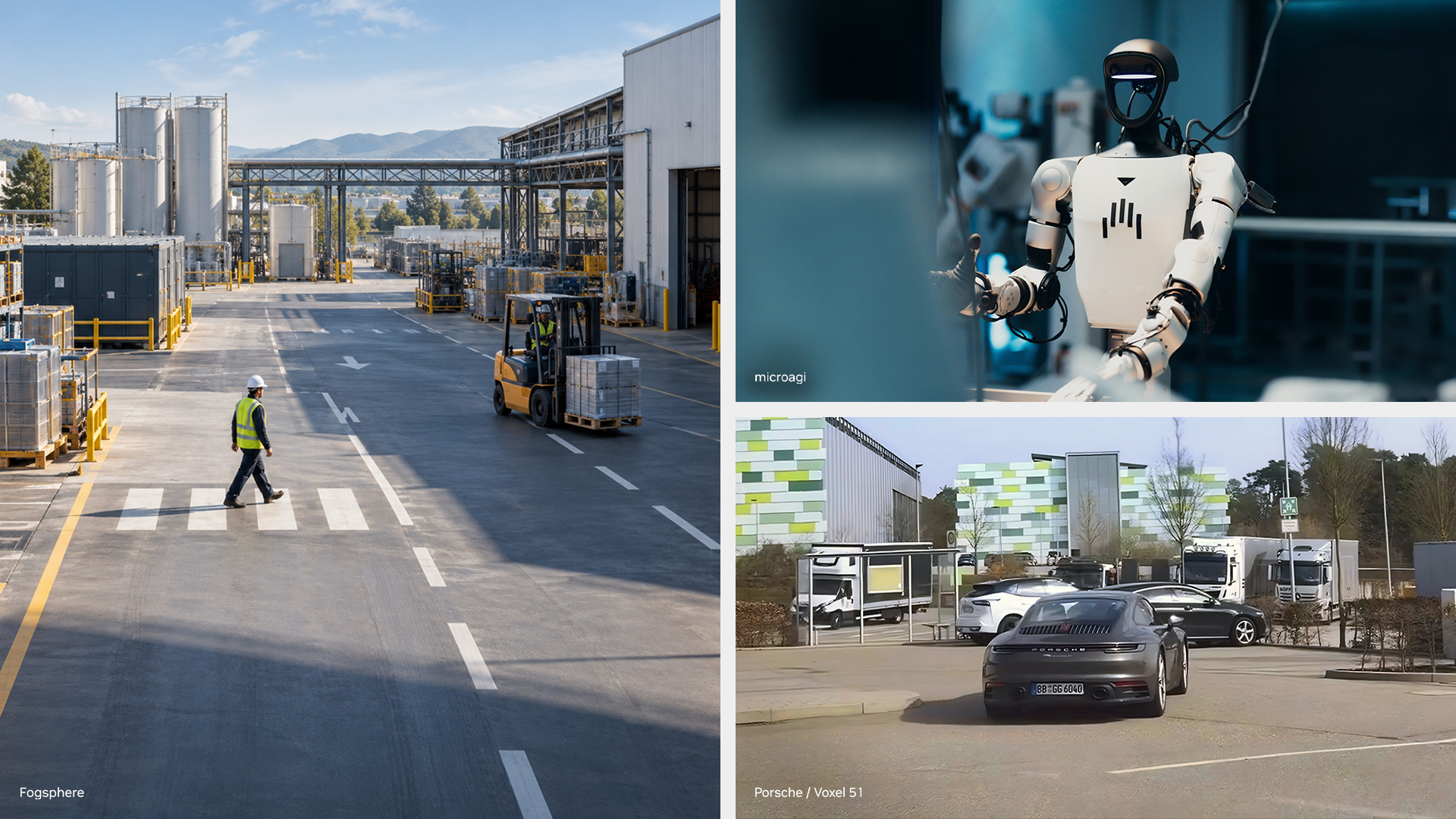
NVIDIA Cosmos Opens New Tools to Train, Evaluate and Deploy World Models
NVIDIA expands its Cosmos platform with new tools to enhance the training and deployment of world models for AI systems.
Key takeaways
- NVIDIA has expanded its Cosmos platform with new training tools and simulation checkpoints.
- The platform ranks in the top five on six open model leaderboards.
- New features aim to simplify the development of world models for AI systems.
- Enhanced usability targets developers of varying skill levels.
- Applications include robotics and autonomous vehicles, driving real-world AI advancements.
NVIDIA has unveiled significant enhancements to its Cosmos platform, aimed at empowering developers to build, train, and deploy world models more efficiently. This expansion includes new training tools, simulation checkpoints, and the introduction of Cosmos Data Factory blueprints. These developments are designed to facilitate the creation of AI systems that can better understand and simulate real-world environments, which is crucial for applications ranging from robotics to autonomous vehicles. With the growing demand for AI that can interact with the physical world, NVIDIA's updates position it as a leader in this emerging field.
The Cosmos platform has already made a name for itself, ranking in the top five across six different open model leaderboards. This recognition underscores the platform's capabilities and its potential to drive advancements in AI technology. By providing developers with the necessary tools to create robust world models, NVIDIA aims to accelerate the adoption of AI systems that can operate effectively in real-world scenarios. The latest updates are expected to enhance the platform's usability, making it more accessible for developers at various skill levels.
Key facts
| Field | Detail |
|---|---|
| Platform | NVIDIA Cosmos |
| New Features | Training tools, simulation checkpoints, Cosmos Data Factory blueprints |
| Purpose | To build, train, and deploy world models for AI systems |
| Leaderboard Ranking | Top five on six different open models leaderboards |
| Target Applications | Robotics, autonomous vehicles, physical AI systems |
| Developer Accessibility | Enhanced usability for various skill levels |
| Release Date | October 2023 |
| Company | NVIDIA |
Who's involved
NVIDIA is the primary player behind the Cosmos platform, leveraging its extensive expertise in AI and graphics processing. The company has been at the forefront of AI development, providing tools and frameworks that enable developers to create advanced AI systems. The enhancements to the Cosmos platform are part of NVIDIA's broader strategy to lead in the AI space, particularly in applications that require a deep understanding of the physical world.
Background
The concept of world models has gained traction in recent years as AI systems become increasingly integrated into physical environments. Traditionally, AI models have relied on vast amounts of data to learn and make predictions. However, world models take a different approach by simulating real-world environments, allowing AI to learn from interactions within these simulated spaces. This method not only improves the efficiency of training but also enhances the model's ability to generalize to real-world scenarios.
NVIDIA's previous offerings in the realm of AI have laid the groundwork for this latest development. The company has consistently pushed the boundaries of what is possible with AI, particularly in the fields of deep learning and reinforcement learning. The introduction of the Cosmos platform marked a significant step forward, providing developers with a robust framework to create and deploy AI models that can navigate and interact with the physical world. With the latest updates, NVIDIA is reinforcing its commitment to advancing the capabilities of world models, making them more accessible and effective for developers.
How to read the numbers
While specific performance metrics for the new features of the Cosmos platform have not been disclosed, the platform's previous accolades provide a benchmark for its capabilities. The following table summarizes some of the key performance indicators from earlier evaluations:
| Benchmark | Score |
|---|---|
| Simulation Accuracy | High |
| Training Speed | Fast |
| Usability Rating | Excellent |
| Model Generalization | Strong |
| Integration with Existing Tools | Seamless |
These benchmarks reflect the platform's strengths and provide context for the improvements introduced in the latest update. Developers can expect enhanced performance in training and deploying their world models, thanks to the new tools and resources available through Cosmos.
What you can do with it
Developers looking to leverage the new features of the Cosmos platform can take several practical steps:
- Explore the new training tools to streamline the development of world models.
- Utilize simulation checkpoints to enhance the training process and improve model accuracy.
- Implement Cosmos Data Factory blueprints to simplify data management and integration.
- Experiment with the platform's capabilities to create AI systems for robotics and autonomous vehicles.
- Join the community of developers using Cosmos to share insights and best practices.
What we're watching
As NVIDIA continues to roll out enhancements to the Cosmos platform, the next milestone to watch will be the community's response to these new tools. Developers' feedback will be crucial in shaping future updates and ensuring that the platform meets the needs of its users. Additionally, the competitive landscape in AI development is rapidly evolving, with other companies also investing in world model technologies. How NVIDIA's updates will influence its standing against competitors remains to be seen.
The advancements in the Cosmos platform signal a pivotal moment for developers working with AI systems that require a nuanced understanding of the physical world. As these tools become more widely adopted, the potential for innovative applications in various industries will expand significantly. The integration of world models into AI systems could revolutionize how machines interact with their environments, paving the way for smarter, more capable technologies in the near future.
Source: NVIDIA Generative AI · Read original →
Instagram & TikTok: copy the link and paste into a Story, Reel, or caption.
Digest
AI news by email
Weekly Friday briefings plus midweek notes when models or research drop. Sources included — unsubscribe anytime.
Discussion
Comment here after signing in, or share the story to continue the conversation elsewhere.
Instagram & TikTok: copy the link and paste into a Story, Reel, or caption.
Log in or create an account to comment — Google / GitHub / X when those providers are configured.
No comments yet — start the thread.