nanoVLM: The simplest repository to train your VLM in pure PyTorch
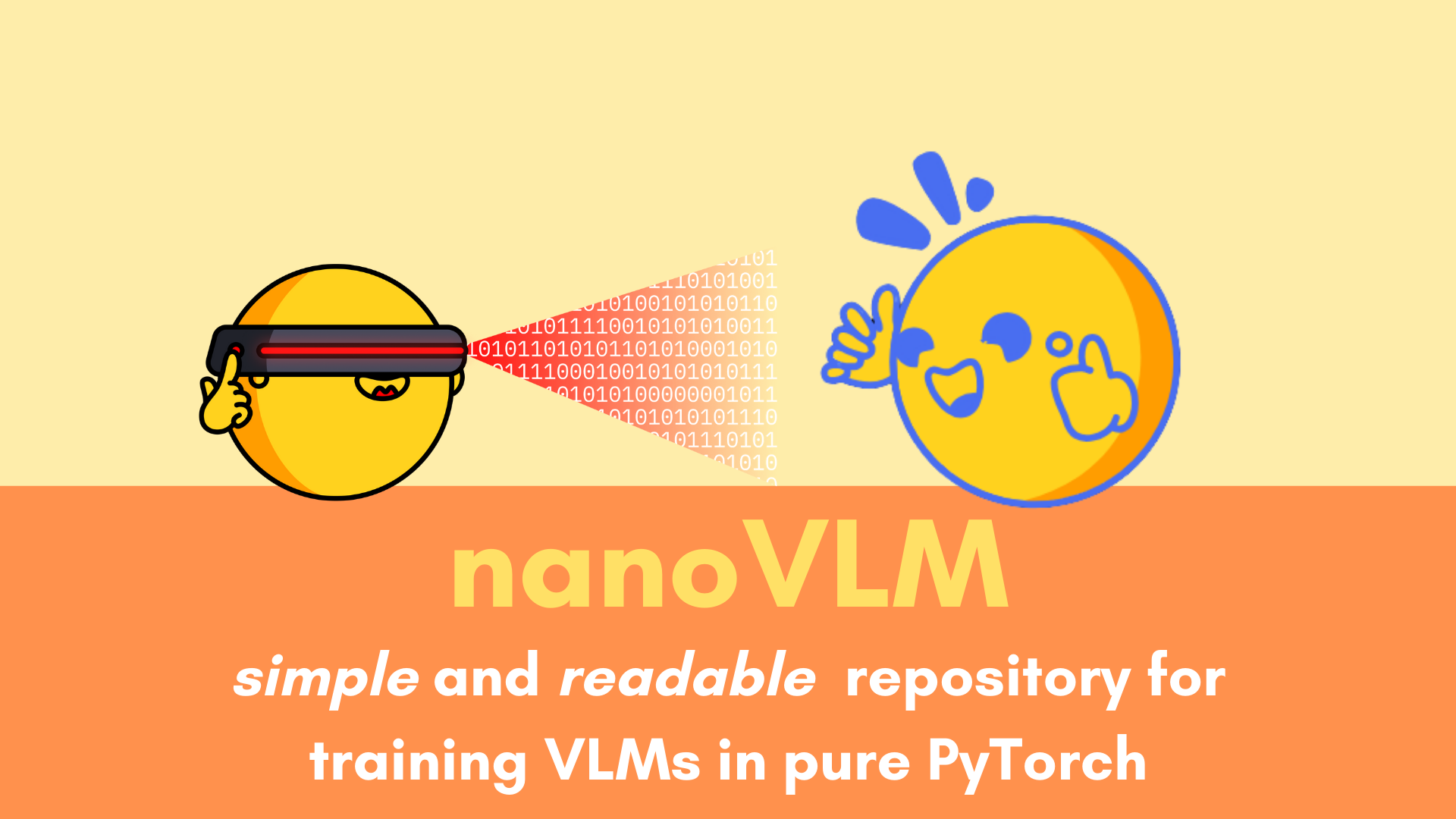
Hugging Face launches nanoVLM, a streamlined repository for training Vision Language Models in PyTorch.
Hugging Face has unveiled nanoVLM, a new repository designed to simplify the training of Vision Language Models (VLMs) using pure PyTorch. This initiative aims to make the process of developing and fine-tuning VLMs more accessible to both researchers and developers, addressing a growing demand for tools that lower the barrier to entry in the field of machine learning. With its user-friendly design, nanoVLM promises to streamline workflows and enhance productivity for those working with multimodal models that integrate visual and textual data.
The repository is built with a focus on performance and ease of use, allowing users to train their models with minimal setup requirements. This is particularly significant in an era where the complexity of machine learning frameworks can often deter newcomers. By providing support for various datasets, nanoVLM offers flexibility in model training, catering to a wide range of applications from image captioning to visual question answering. This versatility is crucial as the demand for VLMs continues to grow across industries, from e-commerce to healthcare.
Key facts
| Field | Detail |
|---|---|
| Repository Name | nanoVLM |
| Framework | Pure PyTorch |
| Primary Focus | Training Vision Language Models |
| Setup Requirements | Minimal setup required |
| Dataset Support | Supports various datasets for flexible training |
| Target Audience | Developers and researchers in AI/ML |
The introduction of nanoVLM comes at a time when the field of AI is increasingly leaning towards multimodal approaches, where models are designed to understand and generate content across different types of data. Vision Language Models are a prime example of this trend, as they combine visual inputs with textual outputs, enabling applications that require a nuanced understanding of both images and language. This aligns with the broader industry shift towards creating more integrated AI systems that can perform complex tasks across various domains.
Moreover, the ease of training VLMs with nanoVLM could lead to a surge in innovative applications. For instance, businesses could leverage these models for enhanced customer interactions, such as personalized product recommendations based on visual content. Educational institutions might also find value in using VLMs for interactive learning tools that adapt to students' needs. As the repository gains traction, it will be interesting to see how the community embraces it and what novel use cases emerge from this simplified training process.
Looking ahead, the success of nanoVLM will depend on community engagement and contributions. As developers begin to utilize the repository, feedback and enhancements could lead to further optimizations and features. This collaborative approach is essential for the evolution of tools in the AI space, ensuring they meet the dynamic needs of users. The potential for nanoVLM to become a standard in VLM training hinges on its adaptability and the support it garners from the AI community.
Source: Hugging Face Blog · Read original →
Discussion
Comment here after signing in, or share the story to continue the conversation elsewhere.
Instagram & TikTok: copy the link and paste into a Story, Reel, or post caption.
Log in or create an account to comment — Google / GitHub / X when those providers are configured.
No comments yet — start the thread.