

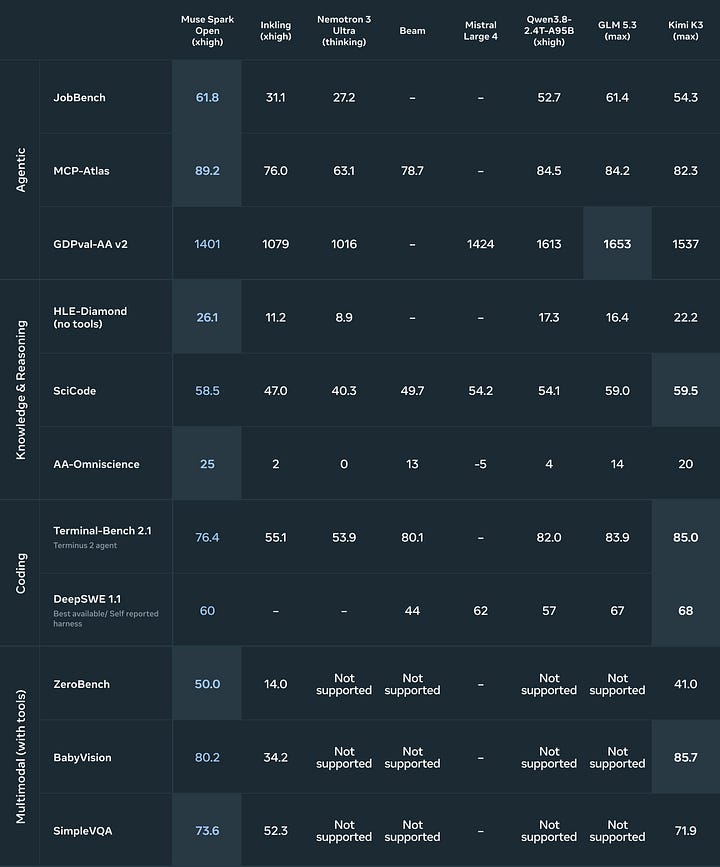
Meta shakes up the frontiers, open and closed
Meta's latest move reintroduces open weights in the U.S., reshaping the landscape of AI development and accessibility.
“Meta's bold move could inspire a wave of open-source initiatives, challenging competitors to rethink their proprietary strategies in AI development.”
Key takeaways
- Meta has reintroduced open weights for its AI models in the U.S.
- This initiative aims to enhance accessibility and foster innovation within the developer community.
- Competitors like OpenAI and Google may need to reassess their closed approaches in light of Meta's decision.
- The move is seen as a response to growing demands for transparency and ethical AI practices.
- Community engagement and collaboration are expected to increase as developers leverage Meta's open models.
Meta has made a bold move in the AI landscape by reintroducing open weights for its models in the United States, a significant shift that promises to reshape how developers and researchers interact with AI technology. This decision comes after a period of increased scrutiny and regulation surrounding AI, particularly in the context of data privacy and ethical considerations. By making its models more accessible, Meta aims to foster innovation and collaboration within the AI community, allowing developers to build upon its foundational work without the barriers that previously existed.
The reintroduction of open weights is particularly noteworthy given the recent trend towards more closed ecosystems in AI development. Companies like OpenAI and Google have been leaning towards proprietary models, limiting access to their most advanced technologies. Meta's decision to go in the opposite direction signals a commitment to open-source principles and could encourage other tech giants to reconsider their own approaches. This move not only enhances Meta's reputation as a leader in AI research but also positions the company as a champion of open collaboration in a field that has often been characterized by secrecy and competition.
Key facts
| Field | Detail |
|---|---|
| Company | Meta |
| Initiative | Reintroduction of open weights |
| Region | United States |
| Focus | AI model accessibility |
| Impact | Encourages collaboration and innovation |
| Competitors | OpenAI, Google, others |
| Date Announced | October 2023 |
| Community Response | Generally positive, with calls for more transparency |
| Future Plans | Ongoing updates to open-source models |
| Ethical Considerations | Addressing data privacy and responsible AI use |
Who's involved
Meta is the primary player in this initiative, leveraging its extensive research capabilities and resources to enhance the accessibility of its AI models. The company has a long history of contributing to open-source projects and fostering community engagement. Other notable players in the AI space include OpenAI and Google, both of which have adopted more closed approaches to their AI models, creating a competitive landscape that Meta is now challenging.
The decision to reintroduce open weights aligns with Meta's broader strategy to engage with the developer community and promote responsible AI practices. By making its models available, Meta not only enhances its own offerings but also encourages a collaborative environment where developers can innovate and build upon existing technologies.
The landscape of AI development has evolved significantly over the past few years. Initially, many companies embraced open-source models, allowing researchers and developers to experiment freely. However, as AI technologies advanced and concerns about misuse grew, many organizations shifted towards more closed systems. This shift was driven by the need to protect proprietary technology and address ethical concerns surrounding AI deployment. Meta's recent decision marks a potential turning point in this trend, suggesting that the industry may be ready to embrace a more open approach once again.
In the past, open weights have facilitated rapid advancements in AI research, allowing developers to build on existing models and share their findings with the community. The reintroduction of open weights by Meta could reignite this collaborative spirit, encouraging researchers to experiment and innovate without the constraints imposed by proprietary systems. This could lead to breakthroughs in various applications, from natural language processing to computer vision, as developers leverage Meta's models to create new solutions.
How to read the numbers
| Benchmark | Score |
|---|---|
| Model Accessibility | High |
| Community Engagement | Increasing |
| Innovation Rate | Potentially High |
| Ethical Compliance | Under Review |
| Competition Level | Intensifying |
While specific performance scores for Meta's open weights have not been disclosed, the potential for increased accessibility and community engagement is evident. The innovation rate is expected to rise as developers gain access to powerful tools that were previously restricted. However, the ethical implications of this move are still under scrutiny, as the industry grapples with how to ensure responsible AI use in an open environment.
What you can do with it
- Explore Meta's Open Weights: Developers can access Meta's open weights to experiment with AI models, enhancing their projects with cutting-edge technology.
- Collaborate with the Community: Engage with other developers and researchers to share insights, improvements, and applications of the open models.
- Contribute to Ethical AI Practices: Participate in discussions around responsible AI use and contribute to frameworks that ensure ethical compliance in open-source projects.
- Build Innovative Applications: Leverage the open weights to create new applications across various domains, from healthcare to entertainment, pushing the boundaries of what AI can achieve.
What we're watching
As Meta rolls out its open weights initiative, the industry will be closely monitoring the response from competitors like OpenAI and Google. Will they adapt their strategies in response to Meta's bold move? Additionally, the effectiveness of Meta's open weights in fostering innovation and collaboration will be a key area of interest. The company’s commitment to ethical AI practices will also be scrutinized, as the balance between openness and responsibility remains a critical concern.
Looking ahead, the success of this initiative could lead to a broader shift in the AI landscape, encouraging more companies to adopt open-source principles. If Meta can demonstrate the benefits of open weights in terms of innovation and responsible use, it may pave the way for a new era of collaboration in AI development. The implications of this shift could extend beyond Meta, influencing how the entire industry approaches AI model accessibility and ethical considerations in the years to come.
Source: Interconnects · Read original →
Instagram & TikTok: copy the link or quote and paste into a Story, Reel, or caption.
Digest
AI news by email
Weekly Friday briefings plus midweek notes when models or research drop. Sources included — unsubscribe anytime.
Discussion
Comment here after signing in, or share the story to continue the conversation elsewhere.
Instagram & TikTok: copy the link and paste into a Story, Reel, or caption.
Log in or create an account to comment — Google / GitHub / X when those providers are configured.
No comments yet — start the thread.


