Jupyter X Hugging Face
Jupyter integrates with Hugging Face, streamlining AI development for data scientists and researchers.
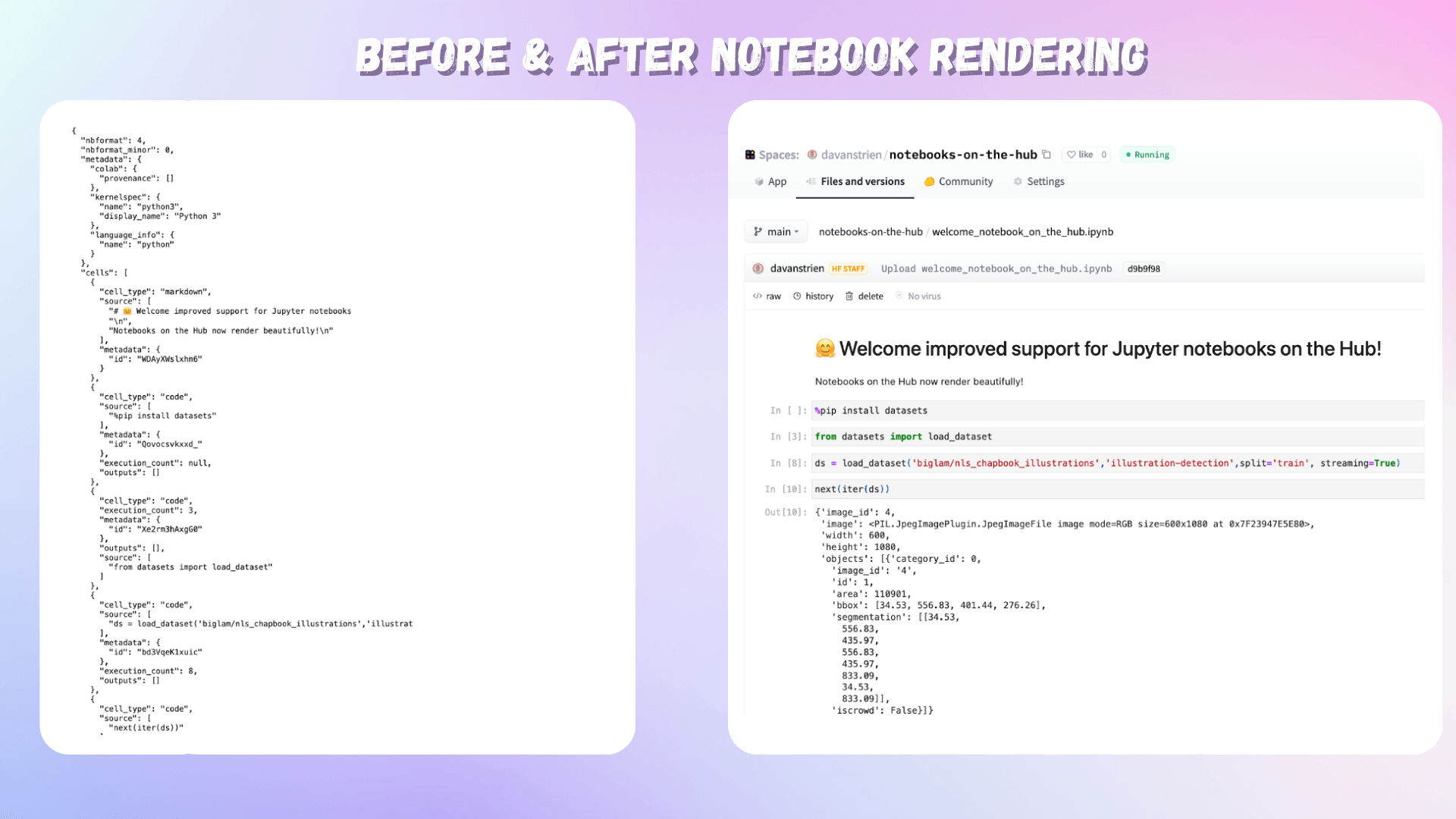
Jupyter has officially announced its integration with Hugging Face, a leading platform for machine learning models, enabling users to access and utilize over 100,000 pre-trained models directly within the Jupyter environment. This collaboration aims to enhance the workflow for data scientists and researchers by simplifying the process of implementing AI models in their projects. With this integration, users can now leverage Hugging Face's extensive library of models, which includes various architectures for natural language processing, computer vision, and more, directly from their Jupyter notebooks.
The integration allows for seamless interaction between Jupyter's interactive coding environment and Hugging Face's robust model repository. Users can easily import models, run experiments, and visualize results without needing to switch between different platforms or tools. This streamlined approach not only saves time but also encourages more experimentation and innovation in AI development, as users can focus on building and refining their applications rather than managing complex workflows.
Key facts
| Field | Detail |
|---|---|
| Integration Launch Date | Recently announced |
| Supported Models | Over 100,000 pre-trained models |
| Primary Use Case | AI development and research |
| Target Audience | Data scientists and researchers |
| Workflow Improvement | Streamlined access to models |
The significance of this integration cannot be overstated, especially in a landscape where the demand for efficient AI development tools is skyrocketing. Jupyter has long been a staple in the data science community, known for its interactive notebooks that facilitate code execution, visualization, and documentation all in one place. By incorporating Hugging Face's extensive model library, Jupyter is positioning itself as an even more powerful tool for AI practitioners. This move aligns with a broader trend in the industry where platforms are increasingly focusing on interoperability to enhance user experience and productivity.
As AI models become more complex and diverse, the need for accessible tools that can accommodate various workflows is critical. The partnership between Jupyter and Hugging Face reflects a growing recognition of this need, as developers and researchers seek to harness the power of AI without getting bogged down by technical barriers. This integration not only empowers users to experiment with cutting-edge models but also encourages collaboration and knowledge sharing within the community, as more individuals can contribute to and learn from shared projects.
Looking ahead, the integration is expected to evolve further, potentially incorporating additional features such as enhanced model fine-tuning capabilities or collaborative tools that allow multiple users to work on projects simultaneously. As both Jupyter and Hugging Face continue to innovate, the AI development landscape may see even more significant changes that prioritize user experience and accessibility, making it easier for everyone to engage with advanced machine learning technologies.
Source: Hugging Face Blog · Read original →
Discussion
Comment here after signing in, or share the story to continue the conversation elsewhere.
Instagram & TikTok: copy the link and paste into a Story, Reel, or post caption.
Log in or create an account to comment — Google / GitHub / X when those providers are configured.
No comments yet — start the thread.


