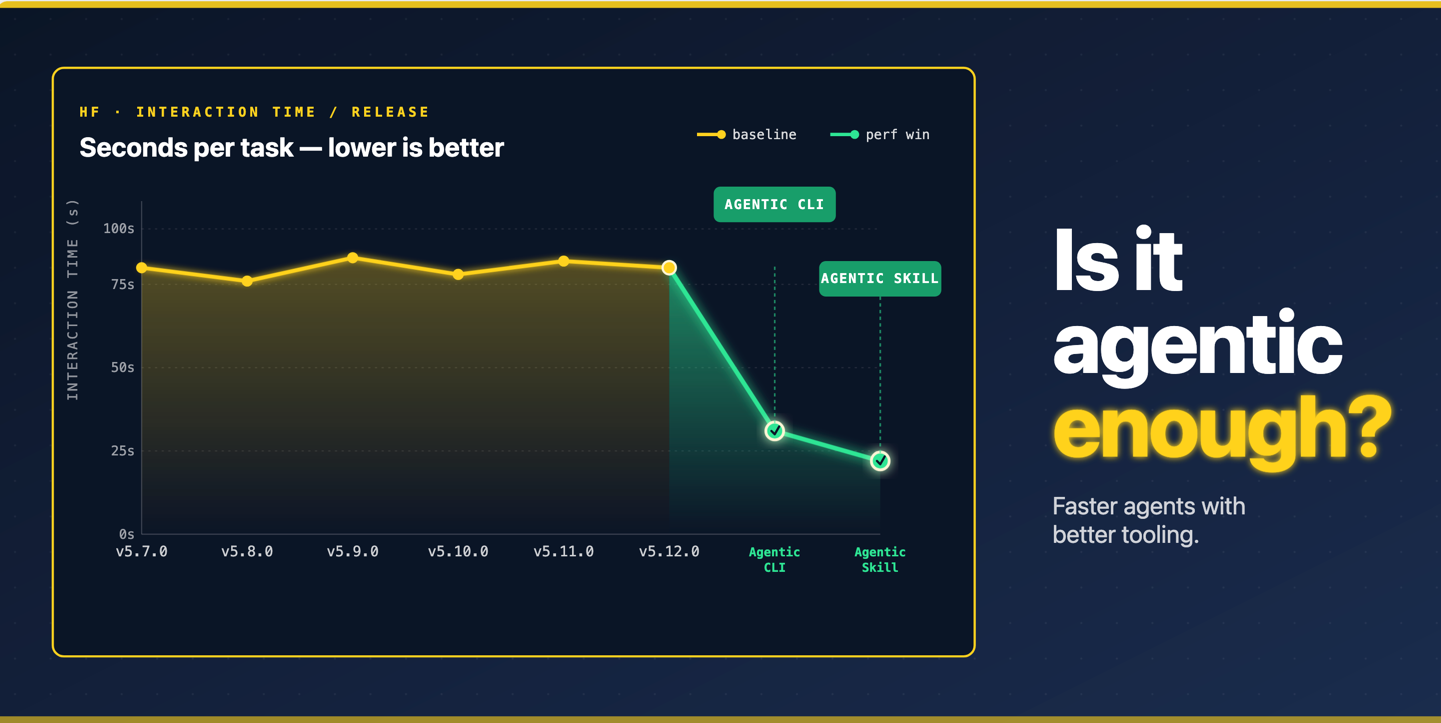
Is it agentic enough? Benchmarking open models on your own tooling
New benchmarks assess the agentic capabilities of open AI models, guiding developers in tool selection for enhanced performance.
Recent benchmarks have emerged that evaluate the agentic capabilities of open AI models, offering developers crucial insights into their performance and suitability for various applications. This benchmarking initiative, spearheaded by Hugging Face, aims to provide a clearer understanding of how these models can interact with tools and environments, ultimately influencing the decisions developers make when selecting AI solutions for their projects. The findings are expected to play a pivotal role in shaping the future of AI development, particularly as the demand for more capable and versatile models continues to grow.
The benchmarks focus on assessing the ability of open AI models to perform tasks that require a degree of agency, such as decision-making and problem-solving in complex scenarios. By evaluating how well these models can adapt to different tools and workflows, developers can better understand their strengths and weaknesses. This initiative is particularly timely, as the AI landscape is rapidly evolving, with an increasing number of open-source models being released and adopted across various industries. The insights gained from these benchmarks will be invaluable for developers looking to leverage AI in innovative ways.
Key facts
| Field | Detail |
|---|---|
| Benchmarking Organization | Hugging Face |
| Focus Area | Agentic capabilities of open AI models |
| Purpose | Provide insights for developers in tool selection |
| Industry Impact | Influences AI model adoption and application development |
| Model Type | Open AI models |
The significance of this benchmarking effort cannot be overstated. As AI technology becomes more integrated into various sectors, the ability to assess and compare the capabilities of different models is crucial. Previous benchmarks, such as those conducted by OpenAI and Google, have set a precedent for evaluating AI performance, but Hugging Face’s focus on agentic capabilities adds a new dimension to this discourse. By concentrating on how models can effectively interact with tools, this initiative addresses a critical aspect of AI deployment that has often been overlooked.
Looking ahead, the results of these benchmarks are expected to influence not only the selection of AI models by developers but also the design of future models. As developers gain insights into which models perform best in agentic tasks, they may prioritize the development of features that enhance these capabilities in their own projects. This could lead to a new wave of AI applications that are not only more efficient but also capable of more complex interactions with users and other systems. The ongoing evolution of AI models will likely see a greater emphasis on agentic functionalities, shaping the trajectory of AI development in the years to come.
Source: Hugging Face Blog · Read original →
Discussion
Comment here after signing in, or share the story to continue the conversation elsewhere.
Instagram & TikTok: copy the link and paste into a Story, Reel, or post caption.
Log in or create an account to comment — Google / GitHub / X when those providers are configured.
No comments yet — start the thread.
