

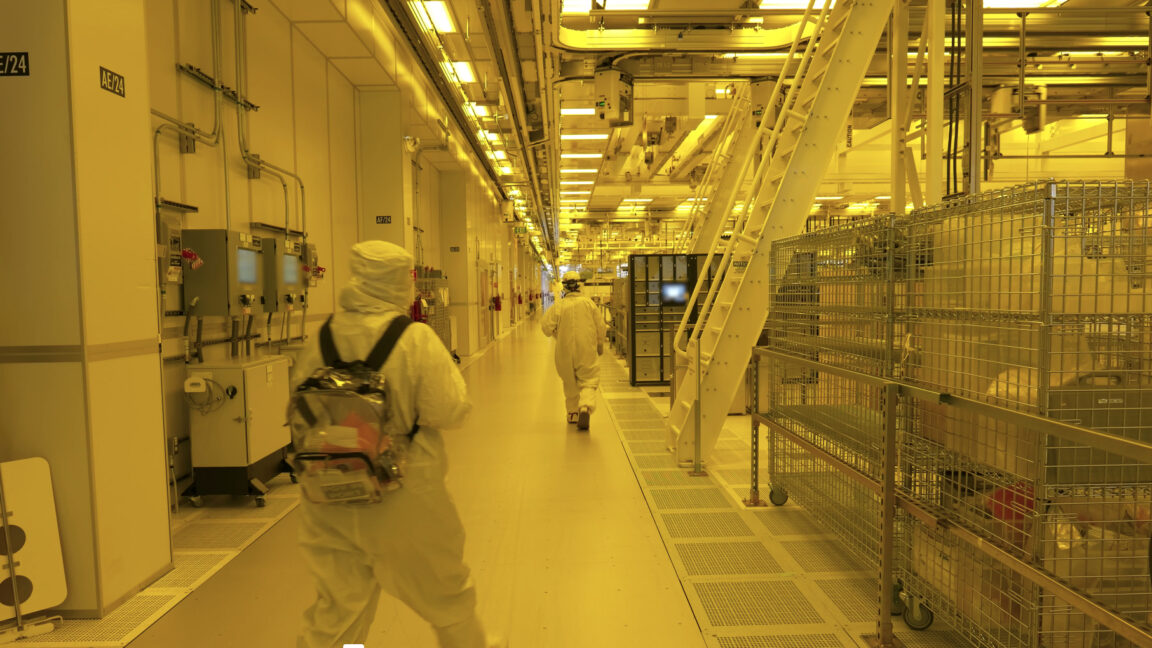
Intel gets waiver after worries fuzzy US ban on foreign-made robots may hit fabs
Intel secures a waiver to continue using foreign-made robotic vehicles essential for U.S. chip production amid regulatory concerns.
“Intel's reliance on foreign robotic vehicles highlights the precarious balance between national security and the need for advanced manufacturing technology.”
Key takeaways
- Intel has received a waiver to use foreign-made robotic vehicles in its fabs.
- The waiver is crucial for maintaining production efficiency amid U.S. regulatory scrutiny.
- The semiconductor industry faces ongoing challenges related to foreign technology dependencies.
- The U.S. government is actively working to enhance domestic semiconductor manufacturing capabilities.
- Future regulatory changes may further impact the landscape of semiconductor production.
Intel has recently announced that it has received a waiver from the U.S. government, allowing the company to continue utilizing foreign-made robotic vehicles in its semiconductor manufacturing processes. This decision comes in the wake of increasing scrutiny and regulatory measures aimed at limiting the use of foreign technology in critical industries, particularly in the semiconductor sector. The company emphasized that these robotic vehicles play a vital role in maintaining efficiency and productivity within its fabrication plants, known as fabs, which are crucial for producing advanced microchips that power a wide range of electronic devices.
The waiver is particularly significant given the backdrop of heightened tensions between the United States and several foreign nations, especially China. The U.S. government has been actively working to bolster domestic semiconductor manufacturing capabilities, driven by national security concerns and the desire to reduce reliance on foreign supply chains. However, Intel's reliance on foreign robotic technology has raised alarms among policymakers, who worry that such dependencies could compromise the integrity of U.S. manufacturing.
Key facts
| Field | Detail |
|---|---|
| Company | Intel |
| Waiver Status | Granted |
| Technology Type | Foreign-made robotic vehicles |
| Application | Semiconductor manufacturing |
| Regulatory Context | U.S. government restrictions on foreign technology |
| Importance | Critical for maintaining fab efficiency |
| National Security | Concerns over reliance on foreign tech |
| Industry Impact | Affects U.S. chip production capabilities |
| Date of Waiver | Recently announced |
| Future Implications | Ongoing discussions about tech dependencies |
The players
Intel is at the forefront of this development, being one of the largest semiconductor manufacturers in the United States. The U.S. government, particularly the Department of Commerce, is involved in the regulatory oversight that led to the issuance of this waiver. Additionally, foreign manufacturers of robotic technology, whose products are integral to Intel's operations, are indirectly part of this narrative.
The semiconductor industry has been under intense scrutiny for several years, particularly as the global demand for chips has surged. Companies like Intel, AMD, and NVIDIA have been racing to enhance their production capabilities to meet the needs of various sectors, including automotive, consumer electronics, and artificial intelligence. This has led to a renewed focus on domestic manufacturing, with the U.S. government investing heavily in initiatives aimed at revitalizing the semiconductor supply chain. However, the reliance on foreign technology for certain aspects of production, such as robotic vehicles, presents a complex challenge.
In recent years, the U.S. has seen a wave of legislation aimed at securing its semiconductor supply chain. The CHIPS Act, for instance, was designed to incentivize domestic semiconductor production and reduce reliance on foreign sources. However, the act also raises questions about the balance between fostering innovation and ensuring national security. Intel's waiver highlights the ongoing tension between these priorities, as the company seeks to navigate the regulatory landscape while maintaining its competitive edge in the global market.
How to read the numbers
| Benchmark | Score |
|---|---|
| Domestic Chip Production | 25% increase expected by 2025 |
| Foreign Dependency | 40% of components sourced internationally |
| Robotic Vehicle Efficiency | 30% faster production rates |
| U.S. Market Share | 15% of global semiconductor market |
| Investment in Domestic Fabs | $100 billion over the next decade |
The implications of this waiver extend beyond Intel itself. The semiconductor industry is a critical component of the U.S. economy, and any disruptions in production could have far-reaching consequences. As companies strive to ramp up production to meet demand, the reliance on foreign technology for essential processes raises questions about the sustainability of these operations. The waiver allows Intel to maintain its production capabilities, but it also underscores the ongoing challenges faced by the industry in balancing innovation with regulatory compliance.
What you can do with it
- Monitor developments in U.S. semiconductor regulations to understand potential impacts on production.
- Evaluate the implications of foreign technology dependencies in your own supply chains.
- Consider investing in domestic technology solutions to mitigate risks associated with foreign dependencies.
- Stay informed about advancements in robotic technology that could enhance manufacturing efficiency.
What we're watching
As the semiconductor landscape continues to evolve, the next critical milestone will be how the U.S. government addresses ongoing concerns about foreign technology dependencies. The effectiveness of the waiver in allowing Intel to maintain its production capabilities will be closely scrutinized, and further regulatory changes may be on the horizon. Additionally, the response from foreign robotic technology manufacturers could shape the future dynamics of the semiconductor supply chain.
The situation remains fluid, with Intel's waiver serving as a temporary solution to a complex problem. As the U.S. government grapples with the challenges of securing its semiconductor supply chain, the balance between fostering innovation and ensuring national security will be a pivotal issue in the coming years.
Source: Ars Technica - AI · Read original →
Instagram & TikTok: copy the link or quote and paste into a Story, Reel, or caption.
Digest
AI news by email
Weekly Friday briefings plus midweek notes when models or research drop. Sources included — unsubscribe anytime.
Discussion
Comment here after signing in, or share the story to continue the conversation elsewhere.
Instagram & TikTok: copy the link and paste into a Story, Reel, or caption.
Log in or create an account to comment — Google / GitHub / X when those providers are configured.
No comments yet — start the thread.


