IBM and UC Berkeley Diagnose Why Enterprise Agents Fail Using IT-Bench and MAST
IBM and UC Berkeley reveal critical failure points in enterprise AI agents, aiming to boost reliability and performance.
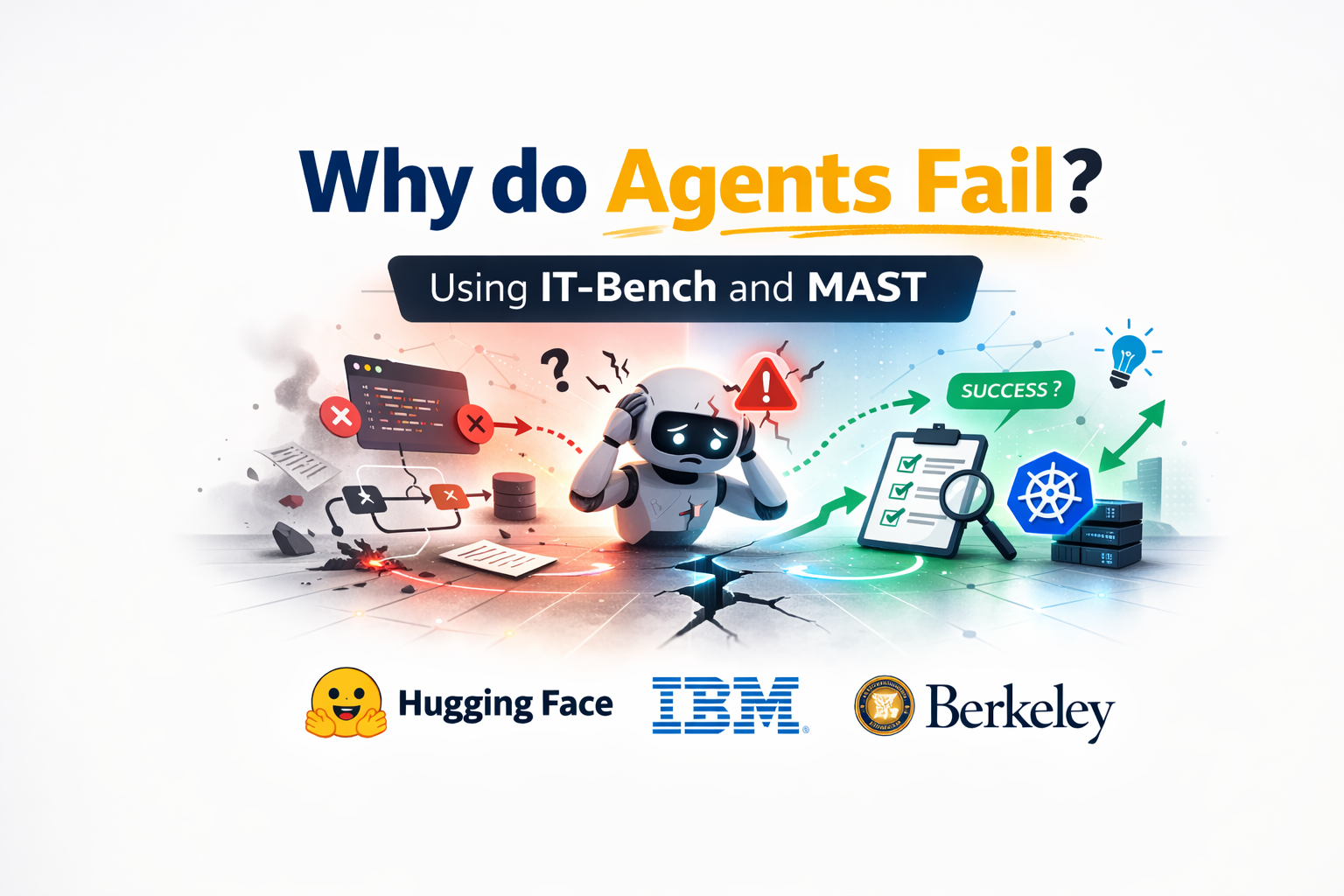
IBM and the University of California, Berkeley have collaborated to investigate the reasons behind the failures of enterprise AI agents, utilizing their newly developed frameworks, IT-Bench and MAST. This study sheds light on the alarming statistic that approximately 30% of enterprise agents fail primarily due to integration issues. By pinpointing these critical failure points, the research aims to provide actionable insights that can enhance the reliability and performance of AI agents in business environments.
The research team employed IT-Bench and MAST to systematically evaluate the performance of various enterprise agents under real-world conditions. IT-Bench serves as a benchmarking tool that assesses the capabilities of AI agents, while MAST focuses on the architectural aspects that contribute to their success or failure. The findings from this study not only reveal the common pitfalls that lead to agent failures but also offer a roadmap for organizations looking to implement more robust AI solutions. This initiative is particularly timely as businesses increasingly rely on AI agents for customer service, data analysis, and operational efficiency.
Key facts
| Field | Detail |
|---|---|
| Collaborators | IBM and UC Berkeley |
| Study Focus | Reasons for enterprise agent failures |
| Key Findings | 30% of agents fail due to integration issues |
| Tools Used | IT-Bench and MAST |
| Goal | Improve enterprise AI agent reliability |
The implications of this research are significant for businesses that depend on AI agents for various functions. As organizations integrate AI into their operations, understanding the reasons behind agent failures becomes crucial. Previous studies have shown that AI implementations can often fall short due to a lack of proper integration with existing systems. This new research builds on that foundation, providing a more granular analysis of where these integration issues occur and how they can be mitigated. By addressing these challenges, companies can not only enhance the performance of their AI agents but also improve overall customer satisfaction and operational efficiency.
Looking ahead, the findings from IBM and UC Berkeley's study could lead to the development of best practices for deploying AI agents in enterprise settings. As the demand for reliable AI solutions continues to grow, organizations will likely seek to adopt the insights from this research to refine their AI strategies. The next steps will involve testing these recommendations in real-world scenarios to validate their effectiveness and further enhance the frameworks of IT-Bench and MAST. This ongoing research could pave the way for a new standard in enterprise AI reliability, ensuring that businesses can trust their AI agents to perform consistently and effectively.
Source: Hugging Face Blog · Read original →
Discussion
Comment here after signing in, or share the story to continue the conversation elsewhere.
Instagram & TikTok: copy the link and paste into a Story, Reel, or post caption.
Log in or create an account to comment — Google / GitHub / X when those providers are configured.
No comments yet — start the thread.