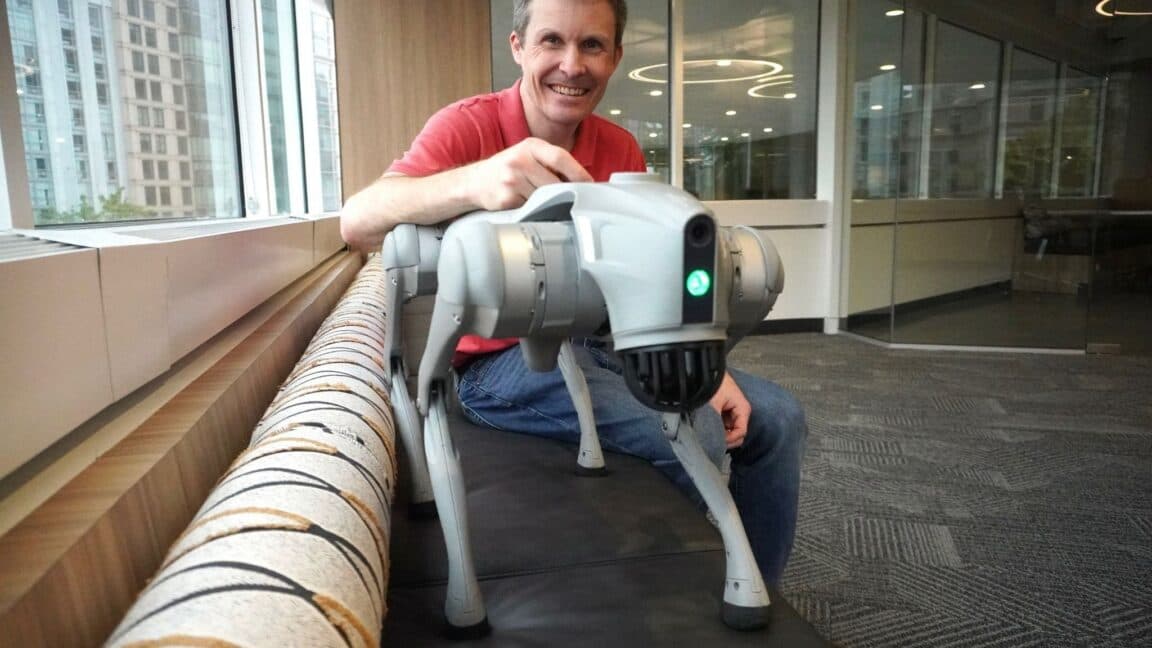
I spent $4,000 on a robot dog from China
A $4,000 robot dog from Unitree is raising eyebrows and setting the stage for future robotics advancements.
The emergence of advanced robotics has captured the imagination of tech enthusiasts and industry leaders alike, and one company at the forefront of this revolution is Unitree Robotics. Recently, a tech journalist spent $4,000 on one of Unitree's flagship products, the A1 robot dog, which has been hailed as a potential game-changer in the robotics landscape. With its impressive capabilities and affordability compared to similar products, the A1 is not just a novelty; it represents a significant step forward in consumer robotics, making sophisticated technology accessible to a broader audience.
Unitree Robotics, based in China, has quickly gained recognition for its innovative approach to robotics. Founded in 2017, the company has developed a series of quadrupedal robots that combine advanced engineering with user-friendly interfaces. The A1, which is the subject of the recent purchase, stands out due to its agility, speed, and versatility. Unlike many robotic systems that require specialized knowledge to operate, the A1 is designed for ease of use, allowing users from various backgrounds to engage with the technology. This accessibility is crucial as it paves the way for broader adoption of robotics in everyday life, from entertainment to practical applications in industries such as security and logistics.
Key facts
| Field | Detail |
|---|---|
| Company | Unitree Robotics |
| Product | A1 Robot Dog |
| Price | Approximately $4,000 |
| Year Founded | 2017 |
| Country | China |
| Key Features | Agility, speed, user-friendly interface |
| Target Audience | Tech enthusiasts, businesses, researchers |
| Potential Applications | Entertainment, security, logistics |
The rise of Unitree Robotics is part of a broader trend in the robotics industry, where companies are increasingly focusing on creating robots that are not only functional but also affordable. In contrast to earlier generations of robotic systems, which often came with hefty price tags and complex operational requirements, the A1 robot dog is designed to be approachable for consumers and businesses alike. This shift reflects a growing recognition that robotics can play a significant role in enhancing productivity and providing entertainment, making them more appealing to a wider audience.
In recent years, several companies have attempted to enter the consumer robotics market, but few have managed to strike the right balance between performance and cost. For example, Boston Dynamics, known for its Spot robot, has produced highly capable robots, but their price points often exceed $70,000, limiting their accessibility. Unitree's A1, on the other hand, offers a glimpse into a future where advanced robotics can be integrated into daily life without breaking the bank. This democratization of technology could lead to increased innovation and experimentation as more individuals and businesses gain access to robotic tools.
How to read the numbers
| Benchmark | Score |
|---|---|
| Speed | 3.3 m/s |
| Battery Life | 2 hours |
| Weight | 12 kg |
| Payload Capacity | 5 kg |
| Operating Range | 100 m |
| Control Options | App, Remote |
The A1 robot dog is equipped with a range of features that enhance its usability and performance. With a maximum speed of 3.3 meters per second and a battery life of around two hours, the A1 is designed for both agility and endurance. Weighing in at 12 kilograms, it is lightweight enough for easy transport yet robust enough to handle various terrains. The payload capacity of 5 kilograms allows users to attach additional equipment, making the A1 versatile for different applications. Furthermore, the control options, which include a mobile app and remote control, ensure that users can operate the robot with ease, regardless of their technical background.
What you can do with it
- Explore Robotics: Use the A1 to learn about robotics and programming through hands-on experience.
- Develop Applications: Experiment with the robot for various applications in fields like security or logistics.
- Engage in Entertainment: Utilize the robot for entertainment purposes, such as creating interactive experiences or performances.
- Conduct Research: Leverage the A1 in academic or industrial research settings to explore new robotic applications.
As Unitree Robotics continues to innovate, the implications of the A1 robot dog extend beyond mere consumer interest. The company is poised to influence the future of robotics, particularly as it seeks to expand its product offerings and enhance the capabilities of its existing models. With advancements in artificial intelligence and machine learning, future iterations of the A1 and similar robots may incorporate even more sophisticated features, such as improved navigation and autonomous decision-making. The ongoing development of these technologies will likely shape the landscape of robotics, making it an exciting time for both consumers and developers in the field.
Source: Ars Technica - AI · Read original →
Discussion
Comment here after signing in, or share the story to continue the conversation elsewhere.
Instagram & TikTok: copy the link and paste into a Story, Reel, or post caption.
Log in or create an account to comment — Google / GitHub / X when those providers are configured.
No comments yet — start the thread.


