

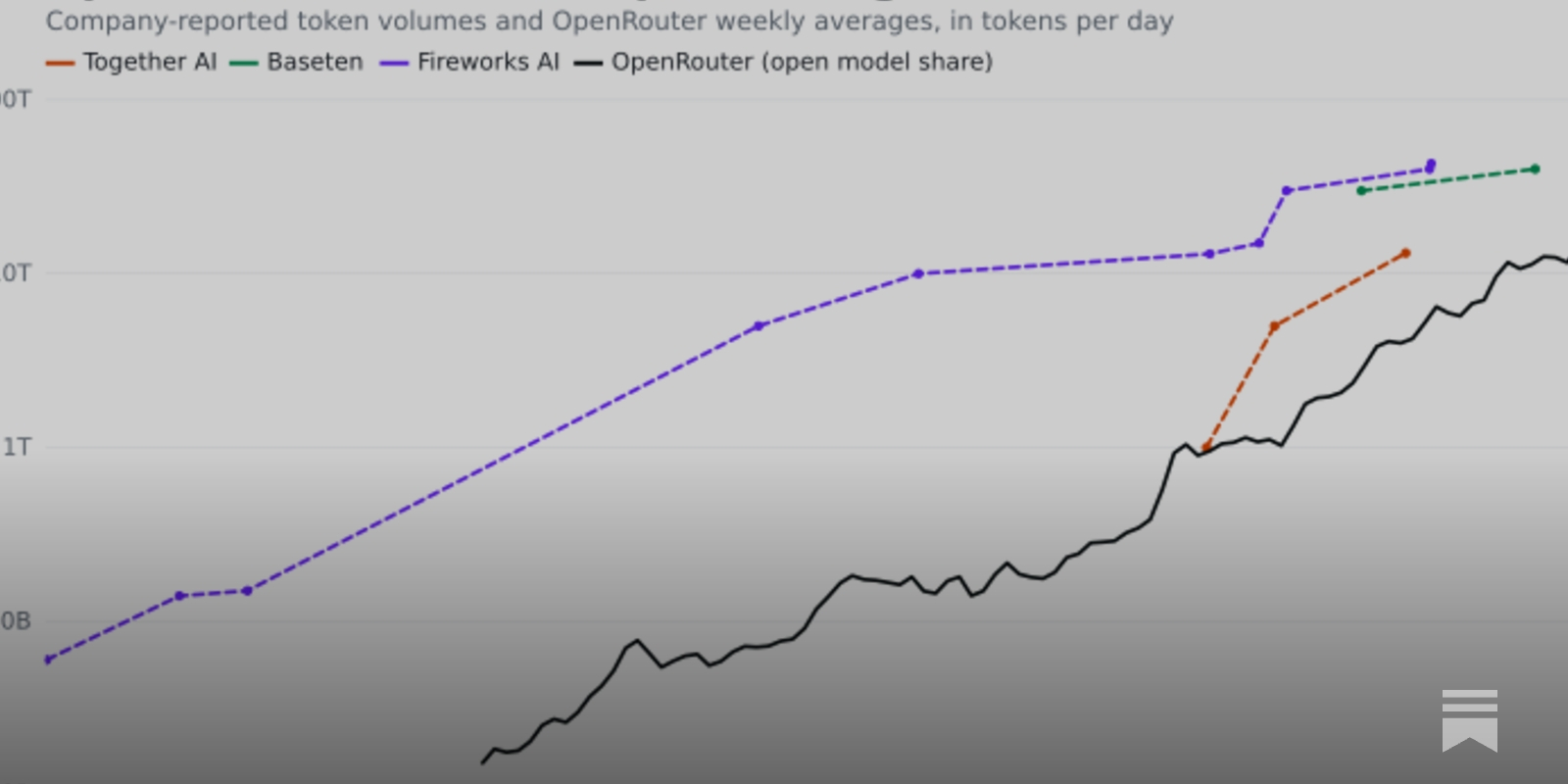
How well can we measure open model inference share?
New research sheds light on the measurement of open model inference share in the AI landscape.
“The challenge of quantifying open model inference share reflects the broader complexities of navigating the rapidly evolving AI landscape.”
Key takeaways
- Open models are increasingly adopted across various sectors.
- Measuring open model inference share presents significant challenges.
- Interconnects focuses on the competitive dynamics between open-source and proprietary models.
- Stakeholders need to evaluate performance metrics to make informed decisions.
- The landscape is shifting towards a more inclusive future for AI capabilities.
The landscape of artificial intelligence is rapidly evolving, with open models gaining traction as a viable alternative to proprietary systems. A recent research note from Interconnects delves into the complexities of measuring the share of open model inference within the broader AI ecosystem. This analysis is crucial as it provides insights into how open models are being utilized across various sectors and highlights the competitive dynamics between open-source and proprietary AI solutions. As organizations increasingly adopt open models for their flexibility and cost-effectiveness, understanding their market share becomes essential for stakeholders.
The research note emphasizes that measuring open model inference share is not a straightforward task. It involves analyzing a variety of factors, including the types of models being used, the industries adopting them, and the overall performance of these models compared to their closed-source counterparts. The findings suggest that while open models are making significant inroads, there are still challenges in quantifying their exact impact on the market. This complexity arises from the diverse nature of open models, which can range from large-scale transformer models to smaller, specialized architectures tailored for specific tasks.
Key facts
| Field | Detail |
|---|---|
| Research Focus | Measurement of open model inference share |
| Organization | Interconnects |
| Audience | Paid subscribers |
| Key Insight | Complexity in measuring market share |
| Model Types | Includes large-scale transformers and specialized architectures |
| Industry Impact | Growing adoption across various sectors |
| Competitive Dynamics | Open-source vs. proprietary models |
| Challenges | Quantifying exact market impact |
| Future Outlook | Increased focus on open model performance |
| Publication Date | Recent research note |
Who's involved
The research note is published by Interconnects, a firm dedicated to analyzing trends in the AI landscape. Their focus on open models reflects a growing interest in how these technologies are reshaping the competitive landscape. The note is aimed at paid subscribers, indicating a targeted approach to disseminating valuable insights to industry stakeholders who are keen on understanding the implications of open models.
Background on Open Models
Open models have emerged as a significant force in the AI sector, particularly as organizations seek alternatives to proprietary solutions that can be costly and restrictive. The rise of frameworks like TensorFlow and PyTorch has facilitated the development and deployment of open models, allowing researchers and developers to collaborate and innovate without the constraints of licensing fees or vendor lock-in. This shift has been particularly pronounced in areas such as natural language processing, computer vision, and reinforcement learning, where open-source models have demonstrated competitive performance against their proprietary counterparts.
Historically, the AI landscape was dominated by a few key players who controlled access to powerful models. However, the advent of open models has democratized access to advanced AI capabilities, enabling smaller companies and individual developers to leverage state-of-the-art technologies. This shift has not only spurred innovation but has also led to a more diverse ecosystem where various models can coexist and compete based on their merits rather than their licensing agreements.
How to read the numbers
While the research note does not provide specific numerical scores, it underscores the importance of understanding the performance metrics associated with open models. Stakeholders should consider various benchmarks that reflect the capabilities of these models, including:
| Benchmark | Description |
|---|---|
| Inference Speed | Time taken to generate predictions |
| Model Size | Number of parameters in the model |
| Training Data | Volume and diversity of data used for training |
| Accuracy | Performance on standard datasets |
| Deployment Ease | Complexity of integrating the model into applications |
These benchmarks can serve as a guide for organizations looking to evaluate the effectiveness of open models in their specific use cases. By focusing on these metrics, developers and businesses can make informed decisions about which models to adopt and how to optimize their performance.
What you can do with it
For organizations looking to leverage open models, here are some practical takeaways:
- Evaluate Model Performance: Use established benchmarks to assess the suitability of open models for your applications.
- Engage with the Community: Participate in open-source communities to stay updated on the latest developments and best practices.
- Experiment with Different Architectures: Explore various open models to identify those that best meet your specific needs.
- Contribute to Open-Source Projects: Enhance your understanding and influence the development of open models by contributing to ongoing projects.
What we're watching
As the open model landscape continues to evolve, we are closely monitoring the competitive dynamics between open-source and proprietary models. Key questions remain regarding how organizations will balance the benefits of open models with the support and resources often provided by proprietary solutions. Additionally, the performance of open models in real-world applications will be a critical factor in determining their long-term viability and adoption.
Looking ahead, the focus on measuring open model inference share is likely to intensify as more organizations recognize the value of these technologies. As the research note indicates, understanding the market dynamics and performance metrics associated with open models will be essential for stakeholders aiming to navigate this rapidly changing landscape. The ongoing evolution of open models could redefine how AI capabilities are accessed and utilized across industries, paving the way for a more inclusive and innovative future in artificial intelligence.
Source: Interconnects · Read original →
Instagram & TikTok: copy the link or quote and paste into a Story, Reel, or caption.
Digest
AI news by email
Weekly Friday briefings plus midweek notes when models or research drop. Sources included — unsubscribe anytime.
Discussion
Comment here after signing in, or share the story to continue the conversation elsewhere.
Instagram & TikTok: copy the link and paste into a Story, Reel, or caption.
Log in or create an account to comment — Google / GitHub / X when those providers are configured.
No comments yet — start the thread.


