How U Mobile built agentic telco operations with Amazon Bedrock AgentCore
U Mobile leverages Amazon Bedrock AgentCore to create AiDaH, an AI platform that autonomously manages telco operations and reduces trouble tickets significantly.
“U Mobile's AiDaH not only manages operations but also autonomously resolves issues, cutting trouble tickets by an impressive 84.5% in just nine months.”
Key takeaways
- U Mobile launched AiDaH, an agentic AI platform, nine months ago.
- The platform handles over 150 operational scenarios across six divisions.
- AiDaH has reduced trouble tickets by up to 84.5%.
- Amazon Bedrock AgentCore powers the AiDaH platform.
- U Mobile aims to set a new standard in telecommunications efficiency.
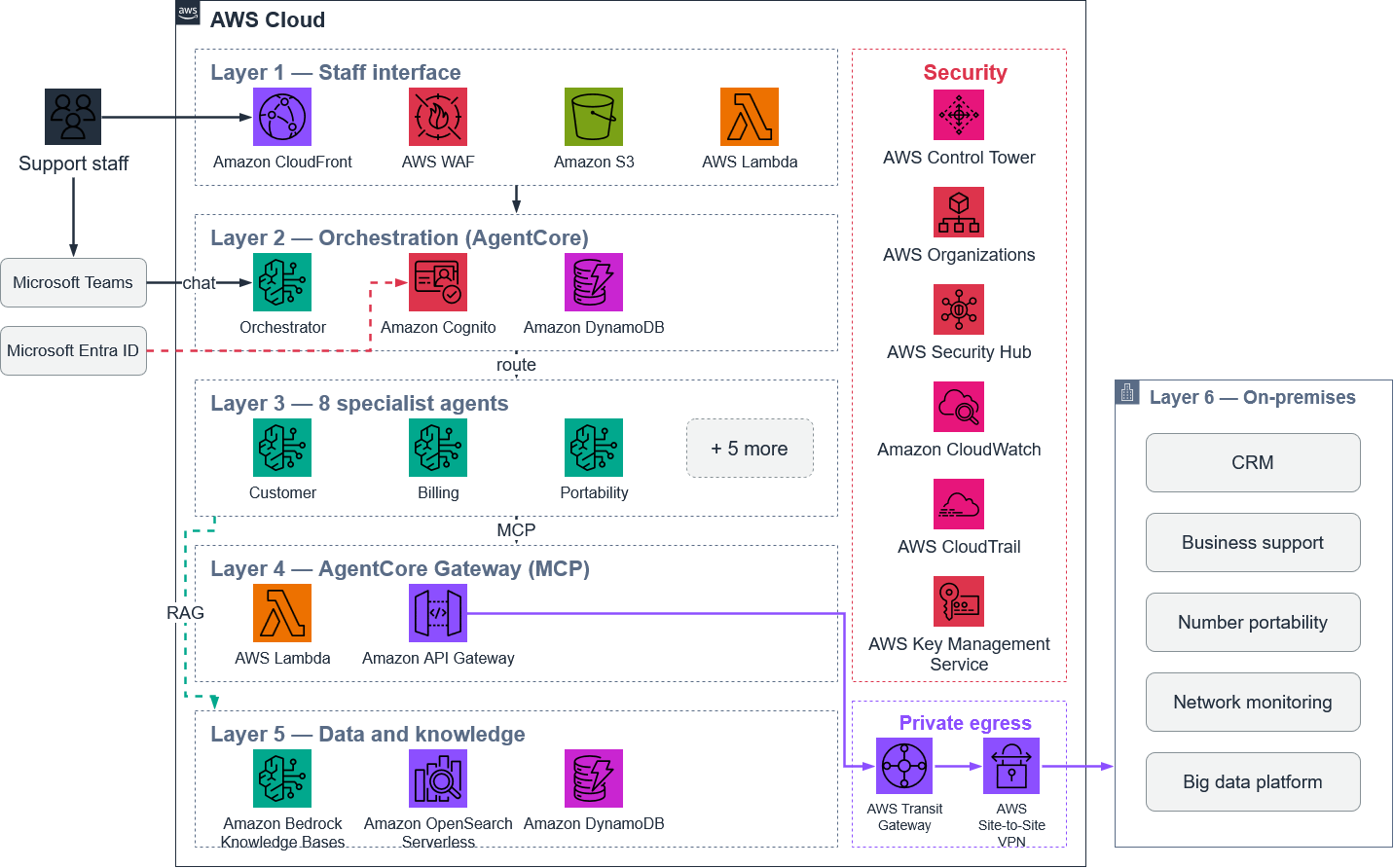
U Mobile, Malaysia's newest 5G network provider, has successfully implemented AiDaH, an innovative agentic AI operations platform powered by Amazon Bedrock AgentCore. This platform marks a significant evolution in telecommunications operations, moving beyond traditional AI assistance to enable autonomous actions across various operational scenarios. Launched nine months ago, AiDaH has already demonstrated remarkable efficiency, managing over 150 operational scenarios across six divisions within the company. The results have been striking, with U Mobile reporting a reduction in trouble tickets by up to 84.5%, showcasing the potential of AI in streamlining telecommunications processes.
The introduction of AiDaH is a transformative step for U Mobile, which has positioned itself as a forward-thinking player in the competitive Malaysian telecommunications market. By leveraging Amazon Bedrock AgentCore, U Mobile has not only enhanced its operational capabilities but also set a new standard for customer service and operational efficiency in the industry. This move reflects a broader trend in telecommunications, where companies are increasingly adopting AI technologies to improve service delivery and operational resilience.
Key facts
| Field | Detail |
|---|---|
| Company | U Mobile |
| Platform | AiDaH |
| Technology | Amazon Bedrock AgentCore |
| Launch Date | Nine months ago |
| Operational Scenarios | Over 150 |
| Divisions Involved | Six divisions |
| Trouble Ticket Reduction | Up to 84.5% |
| Market | Malaysia |
| Industry | Telecommunications |
| AI Type | Agentic AI |
U Mobile is not alone in its quest to integrate AI into its operations. The telecommunications industry has been increasingly focused on enhancing customer experience and operational efficiency through advanced technologies. Companies like AT&T and Verizon have also explored AI-driven solutions to manage customer inquiries and streamline their operations. However, U Mobile's approach with AiDaH, which emphasizes autonomous action rather than mere assistance, sets it apart from many competitors who still rely heavily on human intervention in their processes.
The players involved in this groundbreaking initiative include U Mobile, which has taken the lead in implementing the AiDaH platform, and Amazon Web Services (AWS), the provider of the underlying technology through its Bedrock AgentCore. This collaboration highlights the growing importance of partnerships between telecommunications companies and cloud service providers in driving innovation. By utilizing AWS's powerful infrastructure and AI capabilities, U Mobile has been able to rapidly develop and deploy a solution that meets the demands of modern telecommunications operations.
The evolution of AI in telecommunications has been marked by a shift from basic automation to more sophisticated, agentic systems capable of making decisions and taking actions independently. In previous generations, AI applications were primarily focused on customer service chatbots or basic data analysis tools. However, with advancements in machine learning and natural language processing, companies are now able to create systems that can autonomously handle complex operational tasks. U Mobile's AiDaH is a prime example of this trend, showcasing how AI can be leveraged to not only assist but also autonomously manage a wide range of operational scenarios.
How to read the numbers
| Benchmark | Score |
|---|---|
| Operational Efficiency | 84.5% reduction in trouble tickets |
| Scenarios Managed | 150+ |
| Divisions Integrated | 6 |
| Time to Deployment | 9 months |
The implementation of AiDaH has resulted in significant operational improvements for U Mobile. The platform's ability to autonomously manage over 150 scenarios means that the company can respond to customer needs more quickly and efficiently than ever before. This not only enhances customer satisfaction but also reduces the workload on human agents, allowing them to focus on more complex issues that require human intervention. The reduction in trouble tickets by up to 84.5% is a testament to the effectiveness of the platform in addressing operational challenges.
For those looking to build or utilize AI solutions in telecommunications or other industries, there are several practical takeaways from U Mobile's experience with AiDaH. First, leveraging a robust cloud platform like Amazon Bedrock can provide the necessary infrastructure and tools to develop sophisticated AI applications. Second, focusing on autonomous capabilities can significantly enhance operational efficiency and customer satisfaction. Third, integrating AI across multiple divisions can create a more cohesive operational strategy, allowing for better resource allocation and response times. Finally, continuous monitoring and optimization of AI systems are essential to ensure they are meeting the evolving needs of the business and its customers.
What we're watching
As U Mobile continues to refine and expand the capabilities of AiDaH, the telecommunications industry will be closely watching how this platform evolves. Key questions include how U Mobile will integrate additional operational scenarios and whether it will expand its AI capabilities to include predictive analytics or customer engagement features. Additionally, the competitive landscape may shift as other telecommunications providers seek to replicate U Mobile's success with similar AI-driven initiatives.
Looking ahead, the success of AiDaH could prompt a wave of innovation in the telecommunications sector, with other companies exploring their own autonomous AI solutions. As the technology matures, we may see a broader adoption of agentic AI across various industries, leading to more efficient operations and enhanced customer experiences. The implications of this shift could reshape the way businesses operate, driving a new era of automation and intelligence in the workplace.
Source: AWS Machine Learning · Read original →
Instagram & TikTok: copy the link or quote and paste into a Story, Reel, or caption.
Digest
AI news by email
Weekly Friday briefings plus midweek notes when models or research drop. Sources included — unsubscribe anytime.
Discussion
Comment here after signing in, or share the story to continue the conversation elsewhere.
Instagram & TikTok: copy the link and paste into a Story, Reel, or caption.
Log in or create an account to comment — Google / GitHub / X when those providers are configured.
No comments yet — start the thread.