GPU Management: Why Idle GPUs Are the New Grounded Aircraft
Idle GPUs are costing companies billions, drawing parallels to grounded aircraft and underscoring the need for better management.
The growing reliance on artificial intelligence and machine learning has led to an unprecedented demand for GPU resources. However, a recent analysis reveals that many organizations are facing a significant financial burden due to idle GPUs, which are not being utilized effectively. This situation mirrors the economic impact of grounded aircraft in the aviation industry, where planes that are not in use represent a loss of potential revenue. Companies are now being urged to rethink their GPU management strategies to avoid wasting valuable resources and to optimize their operational efficiency.
In the tech landscape, GPUs are essential for training complex AI models, enabling faster computations and processing large datasets. However, as companies scale their AI capabilities, they often find themselves with a surplus of GPU power that remains idle during off-peak hours or when specific projects are not in progress. This inefficiency can lead to billions of dollars in wasted costs, prompting industry leaders to seek solutions that can better allocate these resources. The analogy to grounded aircraft serves to illustrate the urgency of the situation, as both scenarios involve significant financial implications for organizations that fail to optimize their assets.
Key facts
| Field | Detail |
|---|---|
| Problem | Idle GPUs costing billions |
| Comparison | Similar to grounded aircraft |
| Industry Impact | Urgent need for efficient management |
| Resource Utilization | Many GPUs remain unused |
| Financial Loss | Significant costs for organizations |
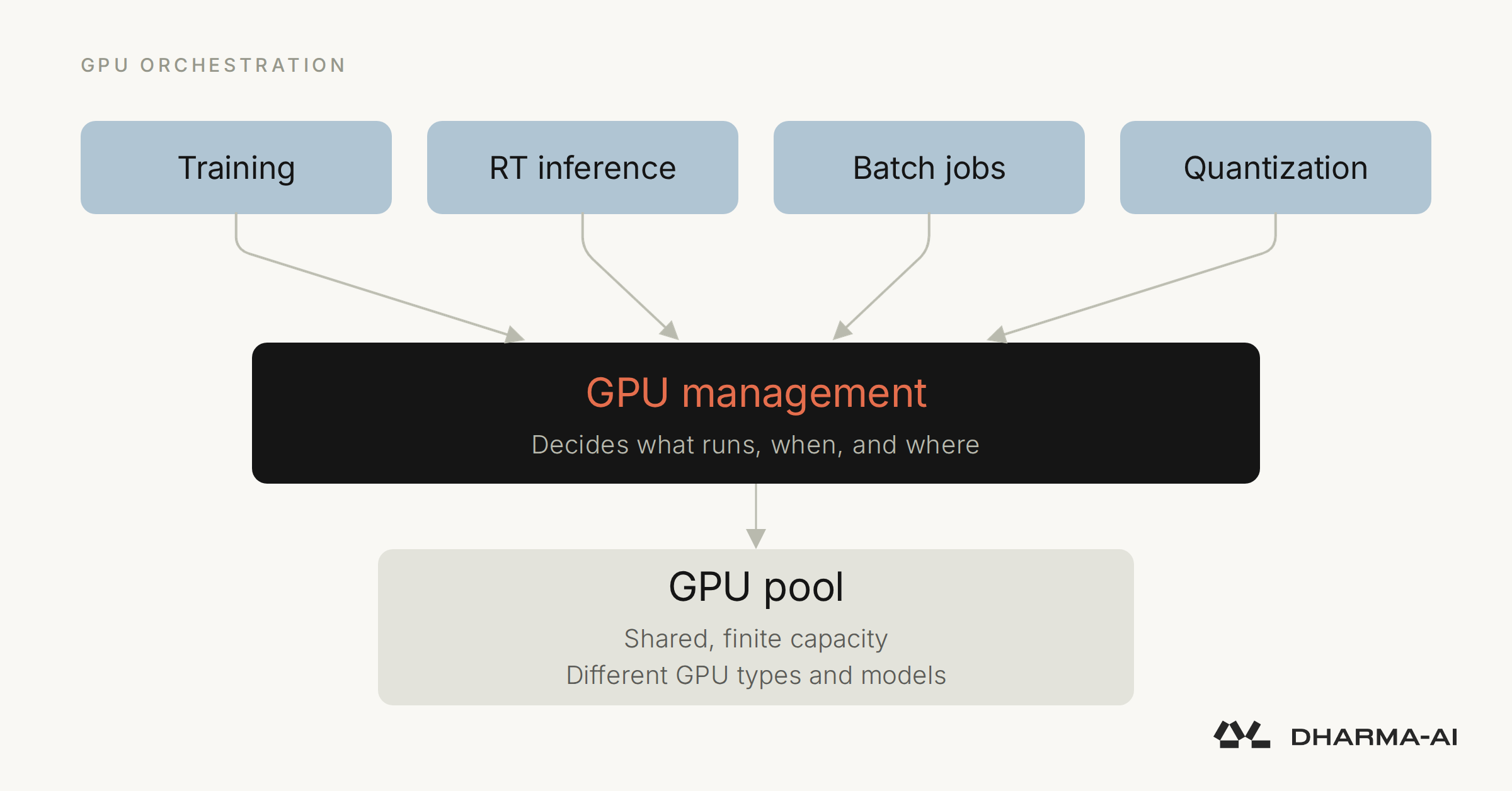
The challenge of managing GPU resources effectively is not new, but it has become increasingly critical as AI adoption accelerates across various sectors. Companies are investing heavily in GPU infrastructure, yet many are not fully leveraging these assets due to poor scheduling, lack of real-time monitoring, and inefficient allocation strategies. This has led to a growing conversation within the industry about the importance of implementing robust GPU management tools and practices that can help organizations maximize their investments. Just as airlines have developed sophisticated systems to manage flight schedules and aircraft utilization, tech companies are now looking for similar solutions to optimize their GPU usage.
As the AI landscape continues to evolve, the need for efficient resource management will only become more pronounced. Companies that can successfully implement strategies to minimize idle GPU time will not only save costs but also enhance their overall productivity. This could involve adopting cloud-based GPU services that allow for on-demand access to resources, or utilizing AI-driven management platforms that can predict usage patterns and adjust allocations accordingly. The future of GPU management is likely to be shaped by advancements in AI and machine learning, which can provide insights and automation to help organizations make the most of their computing power.
Looking ahead, the tech industry must prioritize the development of solutions that address the issue of idle GPUs. This includes investing in software that can monitor GPU utilization in real-time and provide actionable insights for optimization. As companies continue to expand their AI capabilities, the ability to efficiently manage GPU resources will be a key differentiator in maintaining competitive advantage and driving innovation in the field.
Source: Hugging Face Blog · Read original →
Discussion
Comment here after signing in, or share the story to continue the conversation elsewhere.
Instagram & TikTok: copy the link and paste into a Story, Reel, or post caption.
Log in or create an account to comment — Google / GitHub / X when those providers are configured.
No comments yet — start the thread.
