Fine-Tune ViT for Image Classification with 🤗 Transformers
Hugging Face's Transformers library now enables fine-tuning of Vision Transformers for enhanced image classification tasks.
Hugging Face has announced a significant update to its popular Transformers library, now allowing developers to fine-tune Vision Transformers (ViT) specifically for image classification tasks. This enhancement is poised to streamline the process of training advanced models on various datasets, making it easier for developers to achieve high accuracy and efficiency in image recognition. The integration of ViT into the Transformers ecosystem reflects Hugging Face's commitment to providing robust tools for machine learning practitioners, enabling them to leverage cutting-edge technology with minimal effort.
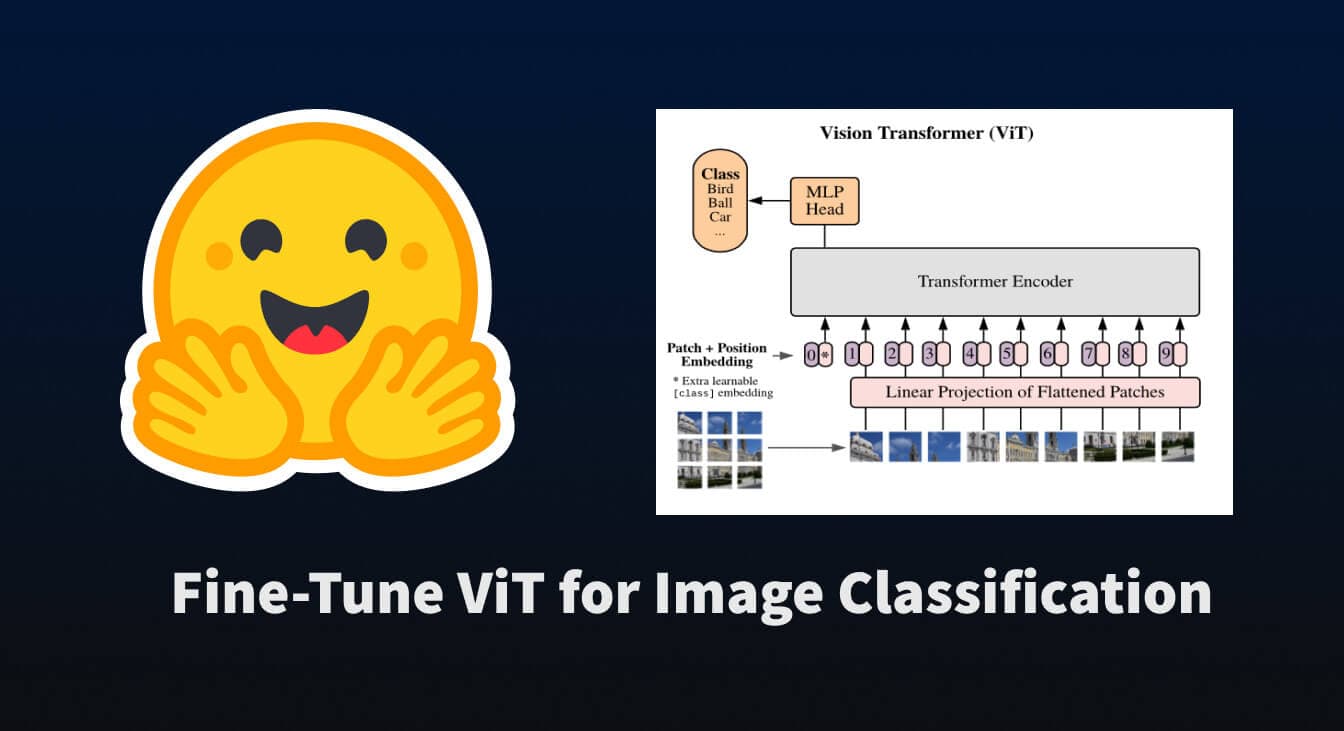
The Vision Transformer architecture, which has gained traction for its ability to process images as sequences of patches, has shown remarkable performance in various image classification benchmarks. By incorporating this architecture into the Transformers library, Hugging Face not only broadens the scope of its offerings but also empowers developers to harness the power of ViT without needing extensive expertise in model training. This update is expected to attract a wider audience, including those who may have previously found the complexities of fine-tuning deep learning models daunting.
Key facts
| Field | Detail |
|---|---|
| Model Type | Vision Transformers (ViT) |
| Library | Hugging Face's 🤗 Transformers |
| Primary Use Case | Image classification tasks |
| Supported Datasets | Various datasets for enhanced image classification |
| Benefits | Improved accuracy and efficiency in image recognition |
The introduction of fine-tuning capabilities for Vision Transformers aligns with a broader trend in the AI and machine learning community, where pre-trained models are increasingly utilized to reduce the time and resources required for training. This approach allows developers to build upon existing models, adapting them to specific tasks or datasets without starting from scratch. The success of models like BERT and GPT-3 in natural language processing has paved the way for similar advancements in computer vision, with ViT standing out as a leading contender.
As the demand for high-performance image classification continues to grow across industries, the ability to fine-tune ViT using the Transformers library represents a significant leap forward. Developers can now expect to achieve state-of-the-art results in their image classification projects with less effort and expertise. This not only democratizes access to advanced machine learning techniques but also accelerates the pace of innovation in the field.
Looking ahead, the focus will likely shift towards optimizing these fine-tuning processes further, potentially incorporating more automated approaches to model selection and hyperparameter tuning. As more developers adopt these tools, collaborative efforts may emerge to refine best practices and share insights, ultimately leading to even greater advancements in image classification capabilities.
Source: Hugging Face Blog · Read original →
Discussion
Comment here after signing in, or share the story to continue the conversation elsewhere.
Instagram & TikTok: copy the link and paste into a Story, Reel, or post caption.
Log in or create an account to comment — Google / GitHub / X when those providers are configured.
No comments yet — start the thread.