Fine-Tune a Semantic Segmentation Model with a Custom Dataset
Hugging Face reveals how to enhance semantic segmentation models with custom datasets for improved accuracy.
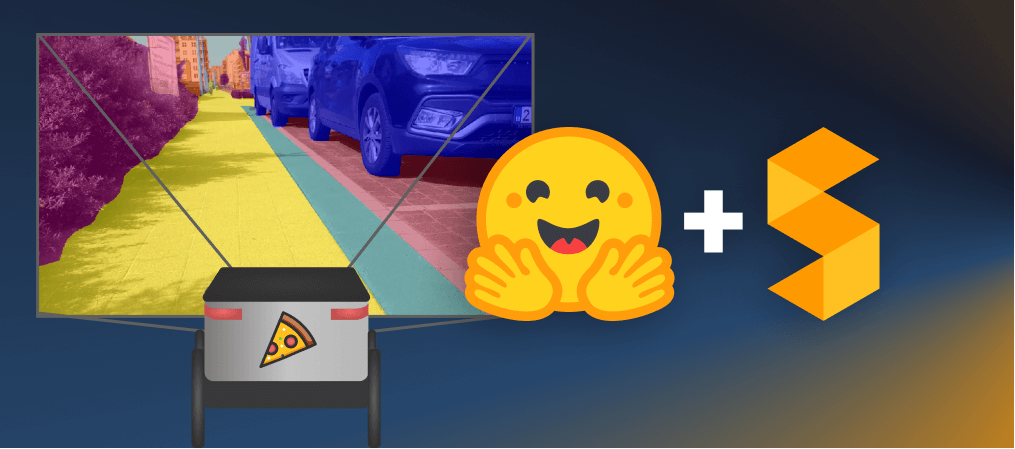
Hugging Face has announced a new guide that empowers developers to fine-tune semantic segmentation models using custom datasets. This approach is particularly beneficial for those working in specialized fields where generic models may fall short. By leveraging the capabilities of Hugging Face’s tools, users can enhance the performance of their models, making them more adept at handling specific tasks that require nuanced understanding and analysis of images.
The guide emphasizes the significance of fine-tuning, which allows developers to adapt pre-trained models to their unique datasets. This process not only improves the model's accuracy but also ensures that it can effectively interpret and analyze images in a way that aligns with the specific requirements of the task at hand. Semantic segmentation, a technique that involves classifying each pixel in an image, is crucial for applications ranging from autonomous driving to medical imaging, where precision is paramount.
Key facts
| Field | Detail |
|---|---|
| Model Type | Semantic Segmentation |
| Purpose | Fine-tuning with custom datasets |
| Benefits | Improved accuracy on specific tasks |
| Applications | Autonomous driving, medical imaging, and more |
| Platform | Hugging Face |
| Accessibility | Open-source tools and resources available |
The ability to fine-tune models with custom datasets is not just a technical enhancement; it represents a shift in how AI practitioners can approach problem-solving in their respective fields. Traditionally, many models were trained on large, generic datasets, which often led to suboptimal performance in specialized scenarios. By utilizing custom datasets, developers can ensure that their models are trained on relevant data, which can lead to significant improvements in accuracy and reliability.
This approach is particularly relevant in industries where the stakes are high, such as healthcare or autonomous vehicles. For instance, in medical imaging, a model trained specifically on a dataset of MRI scans can learn to identify anomalies with greater precision than a model trained on a more generalized dataset. Similarly, in the realm of autonomous driving, fine-tuning a model with data from specific environments can enhance its ability to navigate complex scenarios, thereby improving safety and efficiency.
Looking ahead, the integration of custom datasets into the fine-tuning process is likely to become a standard practice among AI developers. As tools and resources continue to evolve, the accessibility of these capabilities will expand, allowing even those with limited experience to harness the power of semantic segmentation. The next steps for Hugging Face may include further enhancements to their platform, potentially introducing more user-friendly interfaces or automated processes that simplify the fine-tuning experience for developers across various industries.
Source: Hugging Face Blog · Read original →
Discussion
Comment here after signing in, or share the story to continue the conversation elsewhere.
Instagram & TikTok: copy the link and paste into a Story, Reel, or post caption.
Log in or create an account to comment — Google / GitHub / X when those providers are configured.
No comments yet — start the thread.