Few-shot learning in practice: GPT-Neo and the 🤗 Accelerated Inference API
Hugging Face unveils few-shot learning capabilities of GPT-Neo through its Accelerated Inference API.
Hugging Face has recently showcased the impressive few-shot learning capabilities of its GPT-Neo model, leveraging the power of the Accelerated Inference API. This development allows developers to implement advanced AI functionalities with minimal training data, significantly streamlining the process of model deployment. The Accelerated Inference API not only enhances the efficiency of response times but also enables users to harness the potential of GPT-Neo in various applications without the need for extensive datasets.
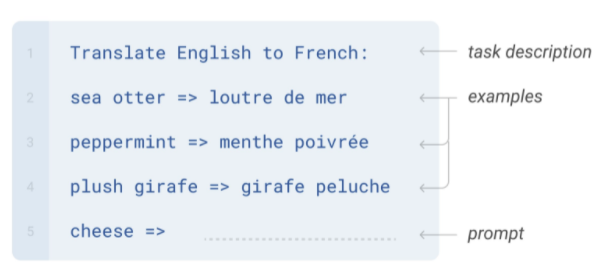
The introduction of few-shot learning with GPT-Neo marks a pivotal moment for developers looking to create AI applications that require less training data. Traditionally, training large language models necessitated vast amounts of data, which could be a barrier for many developers and organizations. With few-shot learning, users can achieve effective results by providing just a handful of examples, making AI more accessible and practical for a broader range of applications. This shift is particularly beneficial for startups and smaller companies that may lack the resources to gather extensive datasets.
Key facts
| Field | Detail |
|---|---|
| Model | GPT-Neo |
| Learning Type | Few-shot learning |
| API | Accelerated Inference API |
| Key Benefit | Enhanced response times for AI models |
| User Implementation | Minimal examples required for effective results |
| Target Audience | Developers and organizations in AI applications |
Few-shot learning is not a new concept in the realm of artificial intelligence, but its practical application has often been limited by the complexity of existing models. GPT-Neo, an open-source alternative to models like OpenAI's GPT-3, has been designed to facilitate this learning paradigm. By allowing users to provide only a few examples, GPT-Neo can generalize and produce relevant outputs, thereby reducing the time and resources typically required for training. This approach aligns with a growing trend in AI development where efficiency and accessibility are prioritized.
The implications of this advancement are significant. As AI continues to permeate various industries, the ability to deploy models that require less data can lead to faster innovation cycles. Developers can iterate more quickly, testing and refining their applications without the overhead of extensive data collection. Furthermore, as more organizations adopt few-shot learning techniques, we may see a shift in how AI models are trained and utilized across the board. The focus may increasingly move towards optimizing existing models rather than solely creating new ones from scratch.
Looking ahead, the integration of few-shot learning capabilities into widely used models like GPT-Neo could reshape the landscape of AI development. As more developers experiment with the Accelerated Inference API, we can expect to see a surge in applications that leverage this technology. The ongoing challenge will be to refine these models further, ensuring they maintain accuracy and relevance even with minimal input. This evolution could lead to a new standard in AI, where efficiency and effectiveness go hand in hand, paving the way for innovative applications across diverse sectors.
Source: Hugging Face Blog · Read original →
Discussion
Comment here after signing in, or share the story to continue the conversation elsewhere.
Instagram & TikTok: copy the link and paste into a Story, Reel, or post caption.
Log in or create an account to comment — Google / GitHub / X when those providers are configured.
No comments yet — start the thread.