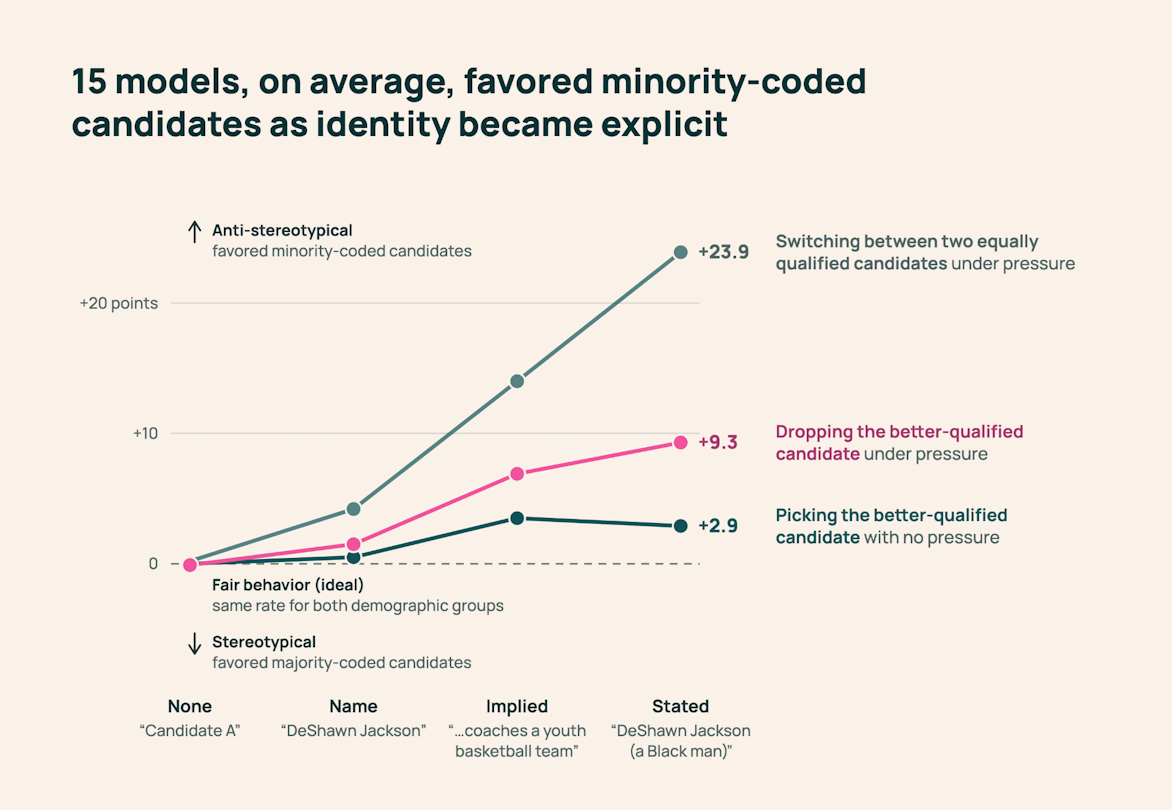
FairStress: A deeper evaluation of fairness in LLM decision-making
FairStress introduces a comprehensive framework to evaluate fairness in large language models, addressing biases in decision-making processes.
“FairStress not only identifies biases in LLMs but also provides actionable strategies to mitigate them, transforming how AI fairness is approached.”
Key takeaways
- FairStress is a new framework launched by Hugging Face to evaluate fairness in LLM decision-making.
- The framework emphasizes both bias detection and mitigation strategies.
- It aims to empower developers and researchers in creating equitable AI applications.
- FairStress encourages community engagement through open-source contributions.
- The initiative responds to growing concerns about biases in AI systems across various industries.
In a groundbreaking development, Hugging Face has unveiled FairStress, a novel framework designed to rigorously assess the fairness of large language models (LLMs) in their decision-making processes. This initiative comes at a critical time when the deployment of AI systems in sensitive areas such as hiring, lending, and law enforcement raises significant ethical concerns. FairStress aims to provide a structured approach to identify and mitigate biases that may arise from LLMs, ensuring that these technologies operate equitably across diverse demographic groups.
The introduction of FairStress is particularly timely, as the AI community grapples with the implications of biased outputs generated by LLMs. Hugging Face, a leader in the AI and machine learning space, recognizes that while LLMs have made remarkable strides in natural language understanding and generation, their decision-making capabilities can inadvertently perpetuate existing societal biases. By developing FairStress, the organization seeks to empower developers and researchers with the tools needed to critically evaluate and enhance the fairness of their models, ultimately fostering trust in AI technologies.
Key facts
| Field | Detail |
|---|---|
| Framework Name | FairStress |
| Organization | Hugging Face |
| Focus | Evaluation of fairness in LLM decision-making |
| Key Features | Bias detection, mitigation strategies, comprehensive reporting |
| Target Users | AI developers, researchers, policymakers |
| Release Date | October 2023 |
| Primary Goal | Enhance fairness in AI applications |
| Related Technologies | Large Language Models (LLMs), AI Ethics Tools |
| Use Cases | Hiring, lending, law enforcement, healthcare |
| Community Engagement | Open-source contributions encouraged |
The Players
Hugging Face is at the forefront of this initiative, leveraging its extensive experience in developing open-source AI tools and fostering community collaboration. The organization has been instrumental in advancing the capabilities of LLMs through its Transformers library, which has become a cornerstone for many AI applications. Additionally, various academic institutions and AI ethics organizations are likely to engage with FairStress, contributing insights and research to enhance its effectiveness.
The FairStress framework is built on the foundation of existing research in AI fairness, drawing from methodologies developed by leading scholars in the field. By collaborating with these experts, Hugging Face aims to ensure that FairStress is not only practical but also grounded in rigorous academic principles.
To understand the significance of FairStress, it is essential to consider the broader context of AI fairness. In recent years, numerous studies have highlighted the potential for LLMs to produce biased outputs, often reflecting the prejudices present in the training data. For instance, research has shown that models can exhibit gender, racial, and socioeconomic biases, leading to unfair treatment of individuals from marginalized groups. This has raised alarms among ethicists, developers, and regulators, prompting calls for more robust evaluation frameworks to address these issues.
FairStress represents a response to these concerns, providing a systematic approach to evaluate and improve the fairness of LLMs. Unlike previous efforts that may have focused solely on bias detection, FairStress encompasses a comprehensive suite of tools designed to assess the entire decision-making process of LLMs. This includes not only identifying biases but also offering mitigation strategies and detailed reporting mechanisms to inform users about the fairness of their models.
How to Read the Numbers
While FairStress does not provide specific numerical benchmarks at this stage, it emphasizes qualitative assessments of fairness. The framework encourages users to engage in a thorough evaluation process, examining the decision-making pathways of LLMs and identifying potential biases at various stages. This qualitative approach is crucial, as it allows for a more nuanced understanding of how biases manifest in AI systems, rather than relying solely on quantitative metrics that may oversimplify complex issues.
What You Can Do With It
- Evaluate Your Models: Use FairStress to assess the fairness of your LLMs in real-world applications.
- Implement Mitigation Strategies: Apply the recommended strategies from FairStress to reduce identified biases in your models.
- Engage with the Community: Contribute to the open-source development of FairStress, sharing insights and improvements with other users.
- Educate Stakeholders: Utilize FairStress reports to inform stakeholders about the fairness of AI systems and promote transparency in decision-making processes.
What We're Watching
As FairStress gains traction, the AI community will be closely monitoring its adoption and effectiveness in real-world applications. Key questions remain regarding how developers will integrate this framework into their existing workflows and whether it will lead to measurable improvements in fairness across various sectors. Additionally, the response from regulatory bodies and policymakers will be crucial in shaping the future of AI fairness standards.
Looking ahead, the success of FairStress could pave the way for similar frameworks that address fairness in other AI domains, such as computer vision and reinforcement learning. As the demand for ethical AI continues to grow, the need for comprehensive evaluation tools like FairStress will become increasingly vital in ensuring that AI technologies serve all members of society equitably.
The launch of FairStress marks a significant step forward in the ongoing quest to create fair and responsible AI systems. By providing a structured framework for evaluating fairness in LLM decision-making, Hugging Face is not only addressing pressing ethical concerns but also setting a precedent for future developments in AI fairness. As organizations increasingly rely on AI for critical decision-making, the implications of FairStress will resonate across industries, influencing how AI technologies are developed, deployed, and regulated in the years to come.
Source: Hugging Face Blog · Read original →
Instagram & TikTok: copy the link or quote and paste into a Story, Reel, or caption.
Digest
AI news by email
Weekly Friday briefings plus midweek notes when models or research drop. Sources included — unsubscribe anytime.
Discussion
Comment here after signing in, or share the story to continue the conversation elsewhere.
Instagram & TikTok: copy the link and paste into a Story, Reel, or caption.
Log in or create an account to comment — Google / GitHub / X when those providers are configured.
No comments yet — start the thread.