

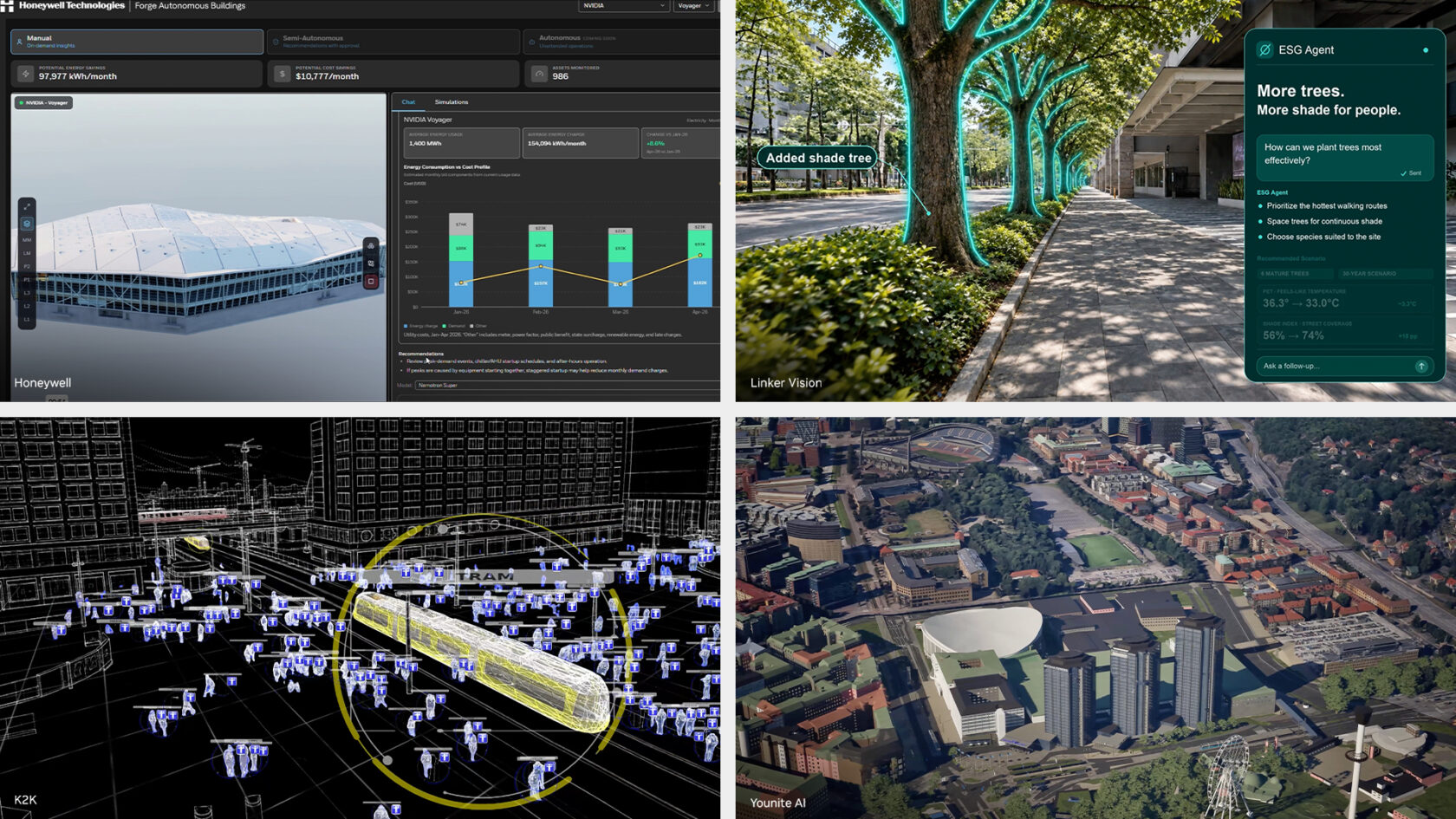
European Cities Deploy NVIDIA-Powered AI Agents to Run Smarter Urban Operations
European cities are harnessing NVIDIA's AI technology to enhance urban operations and improve decision-making for residents.
“Cities leveraging NVIDIA's AI can expect significant improvements in traffic management and energy efficiency, setting new standards for urban living.”
Key takeaways
- European cities are deploying NVIDIA-powered AI agents for smarter urban operations.
- Digital twins are being used to simulate real-world scenarios for better decision-making.
- Partnerships with local software and infrastructure firms are crucial for successful implementation.
- The shift towards data-driven governance is transforming urban management practices.
Cities across Europe are increasingly turning to advanced AI technologies to optimize urban operations and improve the quality of life for their residents. By leveraging NVIDIA's accelerated computing capabilities, local governments and their partners are developing AI agents and digital twins that simulate real-world scenarios, enabling smarter decision-making in areas such as infrastructure maintenance, energy management, and public safety. This deployment of AI is not just about efficiency; it represents a significant shift towards data-driven governance that can adapt to the dynamic needs of urban populations.
The initiative is part of a broader trend where cities are embracing smart technologies to tackle challenges such as traffic congestion, energy consumption, and public safety. With the rapid urbanization of the EMEA region, local authorities are under pressure to deliver services more efficiently while also addressing sustainability goals. NVIDIA's technology provides the computational power necessary to analyze vast amounts of data generated by city operations, allowing for real-time insights and predictive analytics. This capability is essential for urban planners and decision-makers who need to respond quickly to changing conditions.
Key facts
| Field | Detail |
|---|---|
| Technology | NVIDIA accelerated computing |
| Application | AI agents and digital twins |
| Region | EMEA (Europe, Middle East, Africa) |
| Focus Areas | Urban operations, infrastructure maintenance, energy management, public safety |
| Partners | Local software, infrastructure, and integration partners |
The players involved in this initiative include various city governments across Europe, local software developers, and infrastructure partners who are collaborating with NVIDIA to implement these AI solutions. Cities like Amsterdam, Barcelona, and Helsinki are at the forefront of this movement, utilizing NVIDIA's technology to create a more responsive urban environment. These partnerships are crucial as they combine local knowledge with cutting-edge technology, ensuring that the solutions developed are tailored to the specific needs of each city.
Historically, urban management has relied on traditional methods that often lack the agility required to address modern challenges. The introduction of AI agents and digital twins marks a significant evolution in this field. Digital twins, which are virtual replicas of physical entities, allow city planners to simulate and analyze the impact of various decisions before implementing them in the real world. This technology has been gaining traction in industries such as manufacturing and healthcare, but its application in urban management is relatively new. By adopting these technologies, cities can not only enhance operational efficiency but also improve citizen engagement and satisfaction.
The use of AI in urban environments is not without its challenges. Data privacy concerns, the need for robust cybersecurity measures, and the integration of existing infrastructure with new technologies are all critical factors that cities must address. Moreover, the successful implementation of AI solutions requires a cultural shift within city administrations, where data-driven decision-making becomes the norm rather than the exception. Training staff and building the necessary technical expertise will be essential for cities to fully realize the benefits of these technologies.
Who's involved
- NVIDIA: Technology provider specializing in accelerated computing.
- City governments: Local authorities in various European cities.
- Local software developers: Companies creating applications that utilize NVIDIA's technology.
- Infrastructure partners: Organizations responsible for integrating AI solutions into existing urban systems.
How to read the numbers
While specific performance metrics for the AI agents and digital twins have not been disclosed, the potential impact of these technologies can be inferred from their capabilities. For instance, cities that implement AI-driven traffic management systems can expect to see reductions in congestion and improvements in travel times. Similarly, energy management systems powered by AI can lead to significant cost savings and reductions in carbon emissions.
| Benchmark | Expected Impact |
|---|---|
| Traffic congestion reduction | 20-30% improvement |
| Energy consumption efficiency | 15-25% savings |
| Public safety response time | 10-20% faster |
What you can do with it
- Explore partnerships with local governments to develop AI-driven urban solutions.
- Invest in training programs for city staff to enhance data literacy and technical skills.
- Utilize digital twin technology to simulate urban planning scenarios before implementation.
- Implement AI agents for real-time monitoring of city infrastructure and services.
As cities continue to adopt these advanced technologies, the focus will shift towards measuring their effectiveness and scalability. Local governments will need to establish clear metrics to evaluate the success of AI initiatives, ensuring that they deliver tangible benefits to residents. The integration of AI into urban management is still in its infancy, and as more cities embark on this journey, best practices will emerge that can guide future implementations.
What we're watching
The next significant milestone will be the rollout of AI solutions in more cities across the EMEA region. As these technologies become more widely adopted, we will be watching for case studies that demonstrate their effectiveness in real-world applications. Additionally, the ongoing discussions around data privacy and ethical AI use will play a crucial role in shaping the future of urban AI deployments.
Looking ahead, the potential for AI to transform urban operations is immense. As cities become smarter and more interconnected, the role of AI agents and digital twins will expand beyond basic operational tasks to include more complex decision-making processes. This evolution will require continuous innovation and collaboration among technology providers, local governments, and citizens to ensure that the benefits of AI are realized equitably across urban populations. The journey towards smarter cities is just beginning, and the lessons learned from early adopters will be invaluable for those following in their footsteps.
Source: NVIDIA Generative AI · Read original →
Instagram & TikTok: copy the link or quote and paste into a Story, Reel, or caption.
Digest
AI news by email
Weekly Friday briefings plus midweek notes when models or research drop. Sources included — unsubscribe anytime.
Discussion
Comment here after signing in, or share the story to continue the conversation elsewhere.
Instagram & TikTok: copy the link and paste into a Story, Reel, or caption.
Log in or create an account to comment — Google / GitHub / X when those providers are configured.
No comments yet — start the thread.


