Consilium: When Multiple LLMs Collaborate
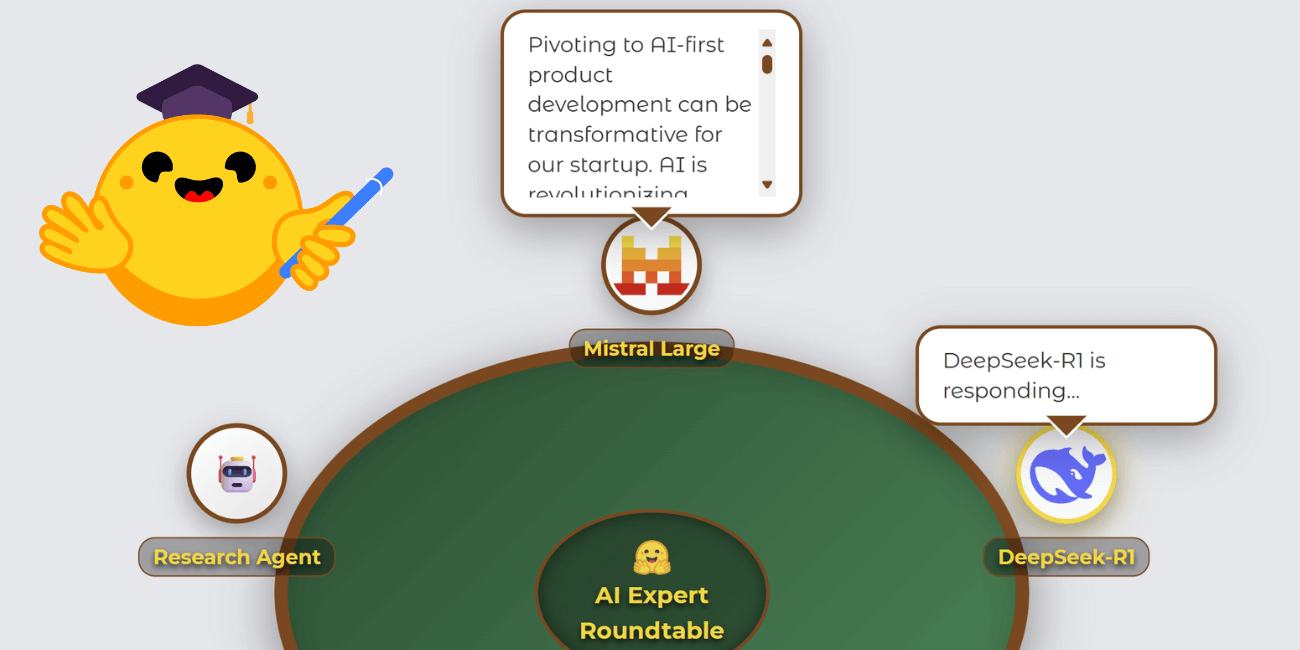
Consilium allows multiple LLMs to work together, enhancing AI performance across various industries.
Consilium has emerged as a groundbreaking framework that enables collaboration among multiple large language models (LLMs), significantly enhancing their performance. Developed by Hugging Face, a leader in the AI and machine learning community, this innovative approach facilitates seamless communication between different LLMs, allowing them to share insights and resources. The immediate implications of this technology are profound, as it promises to improve the accuracy and efficiency of AI-generated responses, making it a valuable tool for developers and businesses alike.
The introduction of Consilium comes at a time when the demand for more sophisticated AI solutions is on the rise. With industries ranging from healthcare to finance increasingly relying on AI for decision-making and customer interaction, the ability for LLMs to collaborate could lead to more nuanced and context-aware outputs. By leveraging the strengths of various models, Consilium aims to create a more robust AI ecosystem capable of tackling complex tasks that single models might struggle with.
Key facts
| Field | Detail |
|---|---|
| Technology | Collaboration framework for multiple LLMs |
| Developed by | Hugging Face |
| Primary benefit | Enhanced accuracy and efficiency of AI responses |
| Industry applications | Supports diverse applications across various sectors |
| Communication method | Facilitates interaction among different LLMs |
The concept of multiple AI models working in tandem is not entirely new; however, Consilium represents a significant advancement in this area. Previous initiatives, such as ensemble learning techniques, have shown that combining the outputs of multiple models can lead to improved performance. However, Consilium takes this a step further by enabling real-time communication and collaboration among LLMs, which can dynamically adjust their responses based on input from their counterparts. This collaborative approach could redefine how AI systems are designed and deployed, making them more adaptable and effective.
Looking ahead, the potential applications of Consilium are vast and varied. Industries such as customer service, where nuanced understanding and rapid response are critical, stand to benefit immensely from this technology. As organizations begin to integrate Consilium into their workflows, the challenge will be to ensure that these collaborative models maintain coherence and consistency in their outputs. The success of this framework could set a new standard for AI development, pushing the boundaries of what is possible with language models and opening the door for even more complex and intelligent systems in the future.
Source: Hugging Face Blog · Read original →
Discussion
Comment here after signing in, or share the story to continue the conversation elsewhere.
Instagram & TikTok: copy the link and paste into a Story, Reel, or post caption.
Log in or create an account to comment — Google / GitHub / X when those providers are configured.
No comments yet — start the thread.