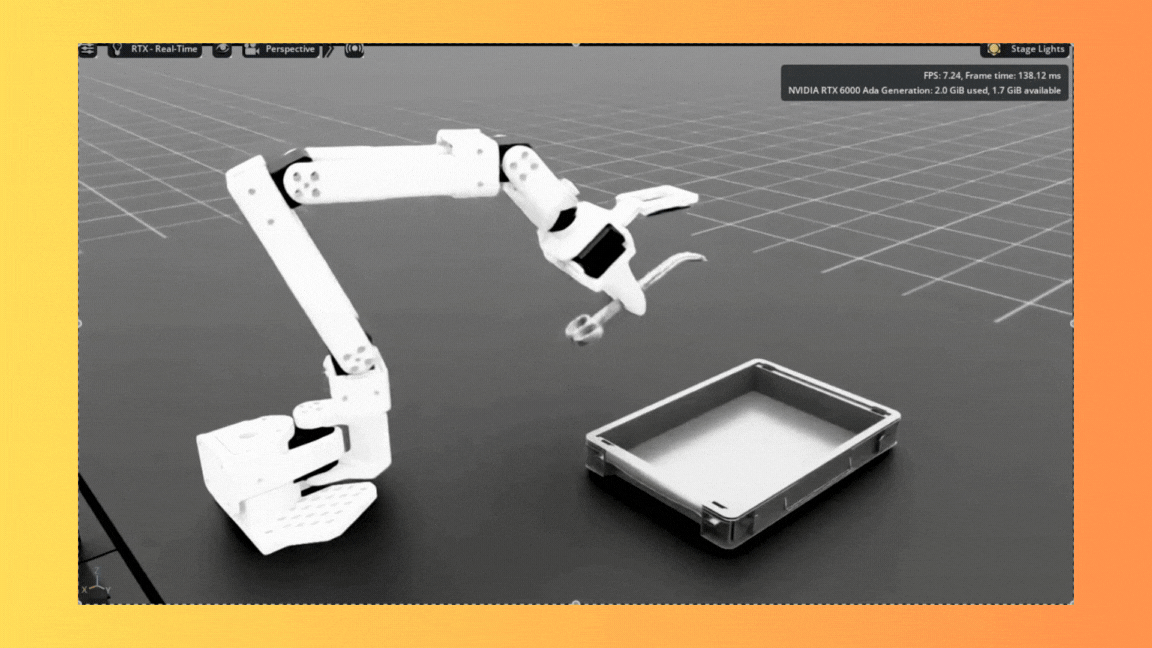
Building a Healthcare Robot from Simulation to Deployment with NVIDIA Isaac
NVIDIA introduces a groundbreaking healthcare robot, moving from simulation to real-world application with the help of NVIDIA Isaac.
NVIDIA has made a significant leap in the realm of robotics by unveiling a healthcare robot that transitions from simulation to real-world deployment. This innovative robot is designed to assist in various healthcare environments, showcasing the capabilities of NVIDIA's Isaac platform, which is specifically tailored for simulation and robotics development. By leveraging advanced AI technologies, this robot aims to enhance operational efficiency and provide support in healthcare settings, addressing a growing need for automation in the industry.
The healthcare robot utilizes NVIDIA Isaac to create a robust simulation environment, allowing developers to test and refine the robot's functionalities before deploying it in real-world scenarios. This approach not only accelerates the development process but also ensures that the robot can operate effectively in dynamic healthcare settings. With the increasing demand for healthcare services and the challenges posed by staff shortages, this robot represents a timely solution that could alleviate some of the pressures faced by healthcare professionals.
Key facts
| Field | Detail |
|---|---|
| Technology | NVIDIA Isaac for simulation and robotics |
| Purpose | Assist in healthcare environments |
| Development Stage | Transitioning from simulation to deployment |
| AI Integration | Advanced AI-driven applications |
| Target Industry | Healthcare |
| Expected Impact | Enhanced efficiency and support in healthcare |
The introduction of this healthcare robot is part of a broader trend in the robotics industry, where AI-driven solutions are increasingly being integrated into various sectors. Companies like Boston Dynamics and Intuitive Surgical have previously showcased how robots can enhance surgical precision and patient care. However, NVIDIA's approach with the Isaac platform emphasizes the importance of simulation in developing reliable robotic systems, which could set a new standard for future robotics projects. The ability to simulate real-world scenarios allows developers to identify potential issues and optimize performance before actual deployment, reducing risks associated with robotic integration in sensitive environments like hospitals.
Looking ahead, the successful deployment of this healthcare robot could pave the way for further innovations in the field. As healthcare systems continue to evolve, the integration of AI and robotics is likely to become more prevalent, leading to improved patient outcomes and operational efficiencies. The next steps for NVIDIA will involve monitoring the robot's performance in real-world settings and gathering data to refine its capabilities further. This development not only marks a milestone for NVIDIA but also signals a shift in how healthcare services may be delivered in the future, potentially transforming patient care through automation.
Source: Hugging Face Blog · Read original →
Discussion
Comment here after signing in, or share the story to continue the conversation elsewhere.
Instagram & TikTok: copy the link and paste into a Story, Reel, or post caption.
Log in or create an account to comment — Google / GitHub / X when those providers are configured.
No comments yet — start the thread.