Build efficient agents with knowledge distillation on Amazon SageMaker AI
Amazon SageMaker introduces knowledge distillation to optimize agentic assistants, reducing costs while maintaining performance.
“With SeqKD, businesses can harness the sophisticated capabilities of large models while significantly reducing operational costs, transforming AI deployment strategies.”
Key takeaways
- Amazon SageMaker AI now supports sequence-level knowledge distillation for building efficient AI agents.
- Knowledge distillation allows smaller models to replicate the behavior of larger, more complex models.
- This approach significantly reduces operational costs associated with deploying AI at scale.
- Businesses can leverage distilled models for tasks requiring multi-step reasoning without sacrificing performance.
- The AWS Machine Learning team provides a comprehensive guide for implementing SeqKD in AI projects.
In the rapidly evolving landscape of artificial intelligence, the cost of deploying advanced models can be prohibitive for many organizations. Amazon Web Services (AWS) has recognized this challenge and is addressing it with a new approach to building efficient AI agents. The latest post from AWS Machine Learning outlines how to utilize sequence-level knowledge distillation (SeqKD) on Amazon SageMaker AI to transfer the sophisticated capabilities of high-performing models—referred to as 'teachers'—to smaller, more cost-effective models known as 'students.' This method allows organizations to maintain high performance without incurring the high operational costs associated with running frontier models at scale.
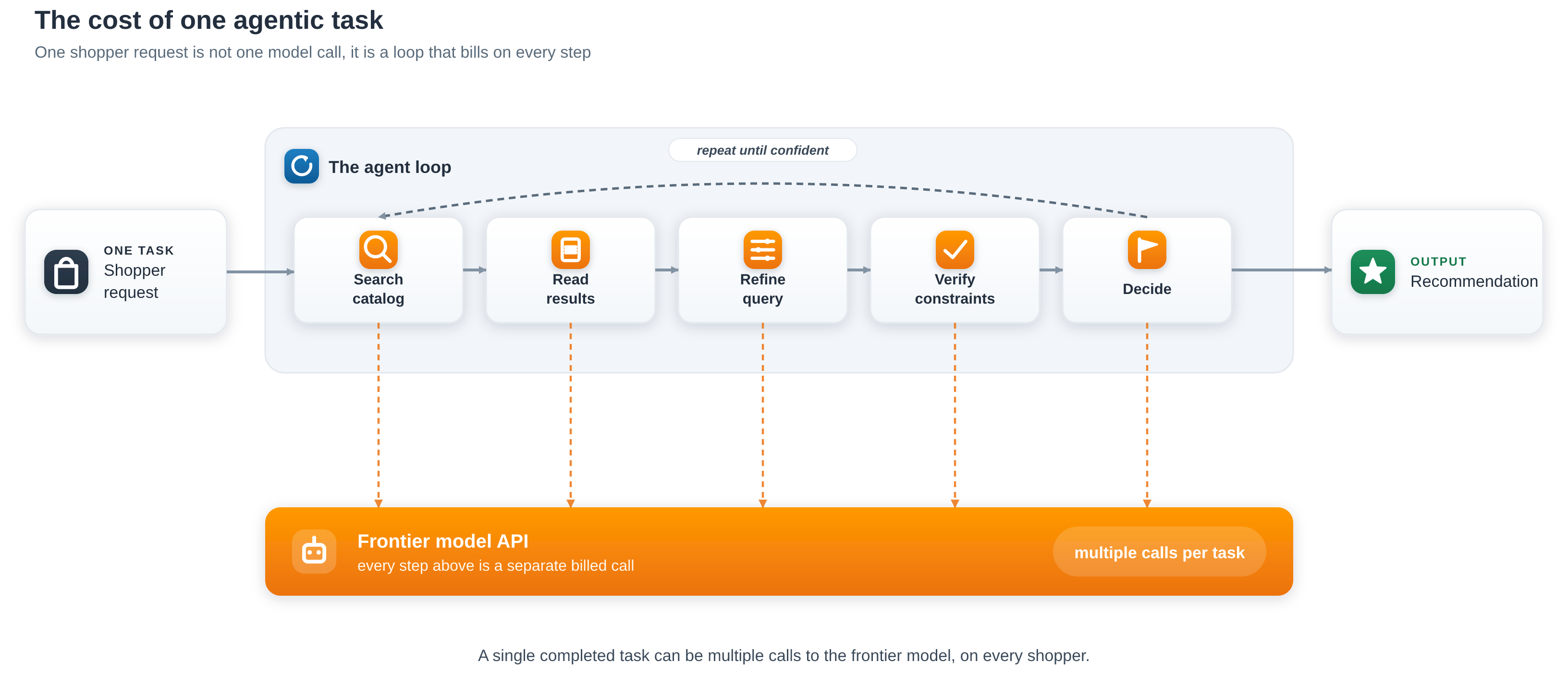
The concept of knowledge distillation is not new, but its application to agentic assistants marks a significant advancement in the field. Traditionally, deploying large language models or other complex AI systems for tasks that require multi-step reasoning has meant paying premium prices for every inference call. This can quickly escalate into unsustainable expenses, particularly for businesses that rely on AI for customer service, data analysis, or other critical functions. By leveraging SeqKD, developers can create a more efficient agent that mimics the behavior of its larger counterpart while operating at a fraction of the cost.
Key facts
| Field | Detail |
|---|---|
| Technology | Knowledge Distillation (SeqKD) |
| Platform | Amazon SageMaker AI |
| Purpose | To transfer agentic behavior from large models to smaller, cost-effective models |
| Cost Efficiency | Reduces operational costs associated with running frontier models |
| Target Users | Businesses deploying AI for multi-step reasoning tasks |
| Model Types | Teacher models (large, complex) and student models (small, efficient) |
| Implementation | Step-by-step guide provided in AWS Machine Learning post |
| Performance Maintenance | Aims to retain performance levels of teacher models in student models |
| Use Cases | Customer service, data analysis, and other AI-driven tasks |
| Release Date | October 2023 |
The players
Key players in this development include Amazon Web Services, the cloud computing giant that provides the infrastructure and tools necessary for machine learning applications. The AWS Machine Learning team has been instrumental in developing and promoting knowledge distillation techniques, particularly for use in their SageMaker platform. Additionally, organizations that rely on AI for operational efficiency and customer engagement are significant stakeholders in this advancement.
The introduction of SeqKD for agentic assistants is a noteworthy evolution in the AI field. Previously, the focus was primarily on enhancing the capabilities of large models without considering the cost implications of their deployment. The traditional approach often led to a trade-off between performance and affordability, forcing businesses to choose between investing heavily in AI or limiting their capabilities. With the advent of knowledge distillation, this dilemma may be alleviated, enabling more organizations to harness the power of AI without breaking the bank.
Knowledge distillation itself involves training a smaller model to replicate the behavior of a larger model. This process typically involves the larger model—acting as a teacher—guiding the smaller model—acting as a student—through the learning process. The student learns to approximate the teacher's outputs, thereby gaining the ability to perform similar tasks with significantly reduced computational requirements. This approach has been successfully implemented in various domains, including image recognition and natural language processing, but its application to agentic assistants is particularly promising due to the complex, multi-step reasoning required in these tasks.
How to read the numbers
While the AWS post does not provide specific numerical benchmarks for the performance of models using SeqKD, it emphasizes the qualitative benefits of this approach. The focus is on maintaining the agentic behavior of the teacher model while achieving a reduction in operational costs. The efficiency gains can be substantial, especially for businesses that deploy AI in high-frequency applications, where every inference call adds to the overall expense.
What you can do with it
- Implement SeqKD in your AI projects to reduce costs associated with running large models.
- Use Amazon SageMaker AI to build and deploy efficient agentic assistants tailored to your business needs.
- Explore the step-by-step guide provided by AWS to understand the implementation process of knowledge distillation.
- Evaluate the performance of your existing AI models and consider transitioning to distilled versions for improved cost efficiency.
What we're watching
As organizations begin to adopt SeqKD for their AI systems, we will be monitoring the real-world performance of these distilled models compared to their larger counterparts. Key questions include how well these smaller models can maintain the nuanced behaviors of their teachers and whether they can handle the complexities of multi-step reasoning tasks effectively. Additionally, the broader implications for the AI industry, particularly in terms of cost reduction and accessibility, will be crucial to observe.
The introduction of knowledge distillation on Amazon SageMaker AI represents a significant step forward in making advanced AI technologies more accessible to a wider range of organizations. As businesses increasingly seek to integrate AI into their operations, the ability to deploy efficient, cost-effective models will be a game-changer. The next steps will involve not only the adoption of these techniques but also the ongoing refinement of the models to ensure they meet the diverse needs of users across various industries. The potential for widespread application of SeqKD could reshape the landscape of AI, making it possible for smaller companies to compete with larger enterprises that have historically dominated the field.
Source: AWS Machine Learning · Read original →
Instagram & TikTok: copy the link or quote and paste into a Story, Reel, or caption.
Digest
AI news by email
Weekly Friday briefings plus midweek notes when models or research drop. Sources included — unsubscribe anytime.
Discussion
Comment here after signing in, or share the story to continue the conversation elsewhere.
Instagram & TikTok: copy the link and paste into a Story, Reel, or caption.
Log in or create an account to comment — Google / GitHub / X when those providers are configured.
No comments yet — start the thread.