Announcing New Dataset Search Features
Hugging Face unveils enhanced dataset search features to streamline data discovery for AI researchers.
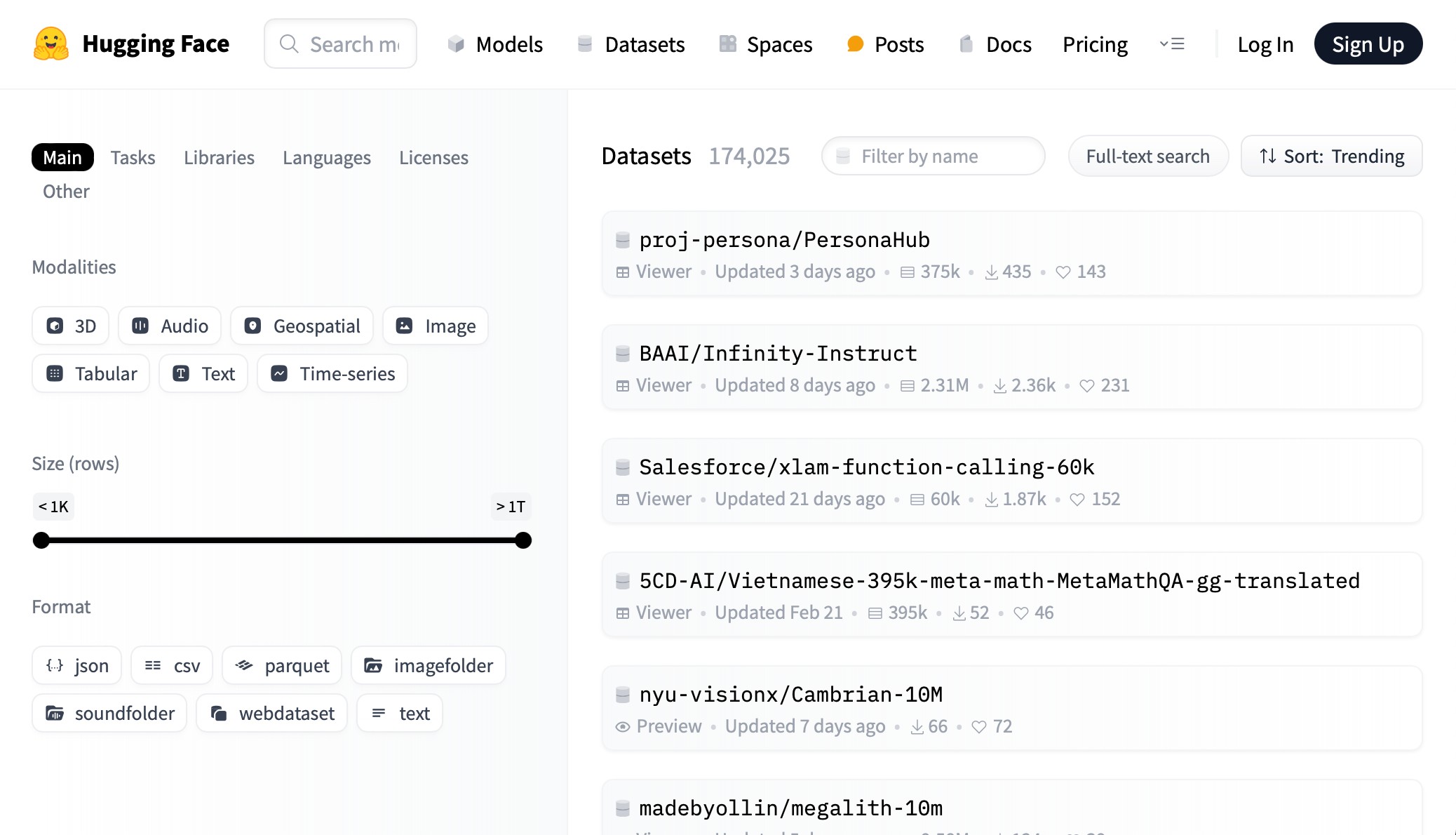
Hugging Face has announced a significant upgrade to its dataset search functionality, aimed at improving the way AI researchers discover and access datasets. The new features include enhanced filtering options that allow users to sort datasets based on relevance and type, making it easier to find the specific data they need for their projects. This update comes as part of Hugging Face's ongoing commitment to support the AI community by providing tools that facilitate research and development in machine learning.
In addition to improved filtering, the new dataset search features integrate seamlessly with popular AI frameworks, enabling users to access datasets directly within their preferred environments. This integration is designed to streamline the workflow for developers, reducing the time spent switching between platforms and allowing for a more cohesive experience. The user-friendly interface has also been revamped to ensure quick navigation, catering to both seasoned researchers and newcomers in the field.
Key facts
| Feature | Detail |
|---|---|
| Enhanced Filtering | Users can filter datasets by relevance and type. |
| Framework Integration | Seamless access with popular AI frameworks. |
| User Interface | Redesigned for quick and easy navigation. |
| Target Audience | AI researchers and developers. |
| Purpose | To improve dataset discovery processes. |
The evolution of dataset search capabilities comes at a time when the volume of available data is growing exponentially. As machine learning models become more complex and data-hungry, the need for efficient data discovery tools has never been more critical. Hugging Face's enhancements are particularly timely, given the increasing reliance on datasets for training AI models across various domains, including natural language processing, computer vision, and more. This move aligns with broader trends in the AI community, where platforms are increasingly focusing on user experience and accessibility.
Moreover, the integration of dataset search features with popular AI frameworks such as TensorFlow and PyTorch reflects a growing trend towards interoperability in the AI ecosystem. By allowing researchers to access datasets directly within these frameworks, Hugging Face is not only simplifying the data retrieval process but also encouraging more experimentation and innovation in AI research. This approach mirrors similar initiatives by other organizations, such as Google’s Dataset Search, which aims to provide comprehensive access to datasets across the web.
Looking ahead, it will be interesting to see how these new features impact the productivity of AI researchers and developers. As the demand for high-quality datasets continues to rise, platforms like Hugging Face will likely need to keep evolving their tools to meet user needs. Future updates may include even more advanced filtering options or enhanced collaboration features, further solidifying Hugging Face's role as a leading resource in the AI research community.
Source: Hugging Face Blog · Read original →
Discussion
Comment here after signing in, or share the story to continue the conversation elsewhere.
Instagram & TikTok: copy the link and paste into a Story, Reel, or post caption.
Log in or create an account to comment — Google / GitHub / X when those providers are configured.
No comments yet — start the thread.