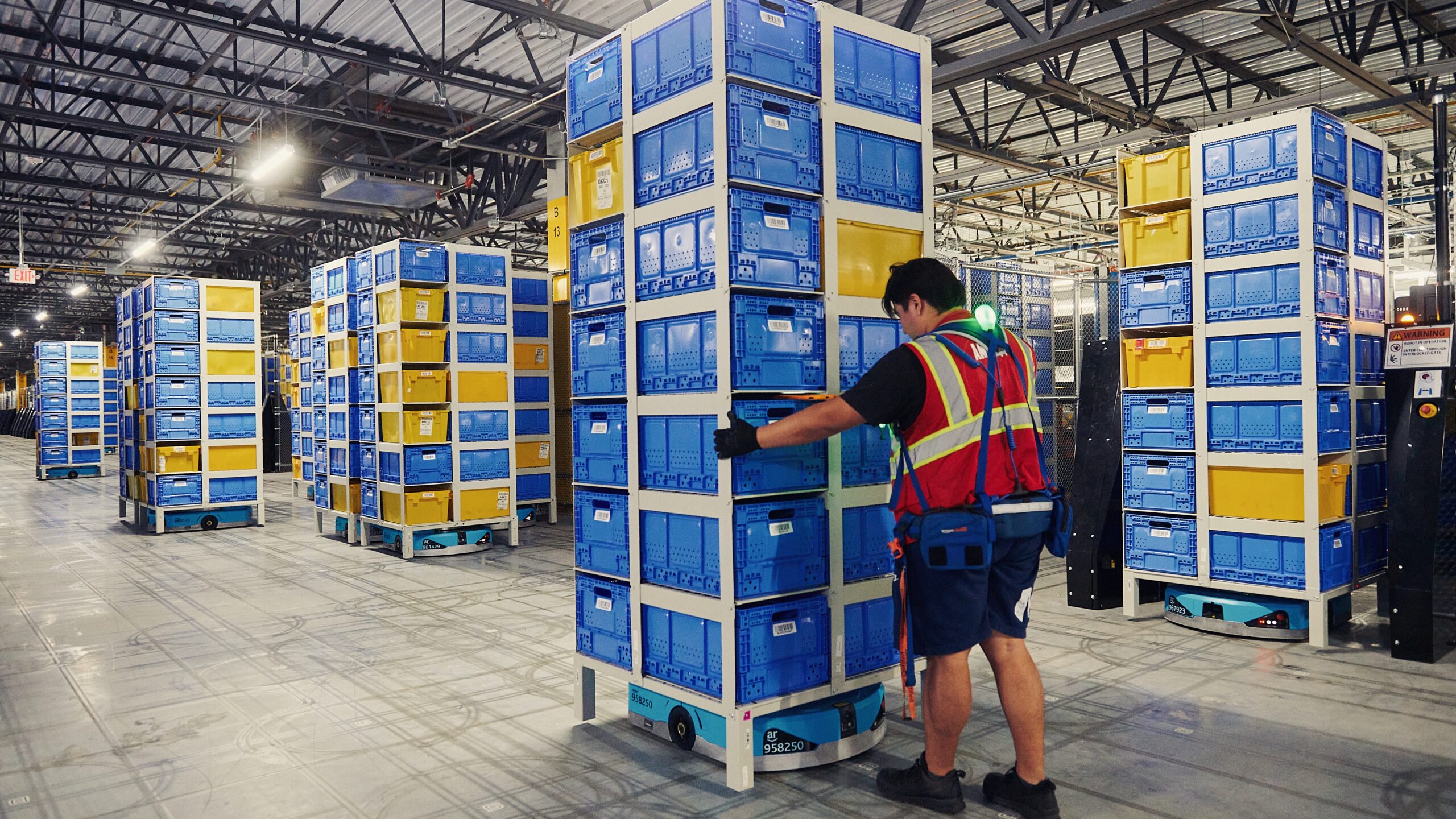
Amazon has over 1 million robot workers. What’s next for human employees?
Amazon's workforce now includes over 1 million robots, raising questions about the future of human employees in the company.
“As Amazon integrates more advanced robotics, the risk of job displacement for human workers looms larger, challenging traditional employment structures.”
Key takeaways
- Amazon's workforce now includes over 1 million robots, marking a significant shift in its operational strategy.
- The company aims to enhance efficiency and reduce costs through automation.
- Concerns about job displacement for human employees are growing as robotic capabilities expand.
- Amazon's investment in robotics has accelerated due to increased demand for rapid delivery services.
- The future workforce will likely require new skills to adapt to the changing landscape of work.
Amazon has reached a significant milestone in its automation journey, surpassing 1 million robot workers in its warehouses and fulfillment centers. This transformation is part of a broader strategy to enhance efficiency, reduce costs, and meet the ever-increasing demand for quick delivery services. The integration of robots into Amazon's operations has not only changed the landscape of its workforce but also raised important questions about the future roles of human employees within the company. As Amazon continues to invest heavily in robotics and artificial intelligence, the implications for its human workforce are becoming increasingly complex.
The robots used by Amazon range from autonomous mobile robots that transport goods around warehouses to robotic arms that assist in picking and packing items. These machines are designed to work alongside human employees, enhancing productivity and streamlining operations. However, the rapid adoption of robotic technology has led to concerns about job displacement and the potential for reduced employment opportunities for human workers. As Amazon expands its robotic capabilities, the company must navigate the delicate balance between leveraging technology for efficiency and maintaining a stable workforce.
Key facts
| Field | Detail |
|---|---|
| Total robot workers | Over 1 million |
| Company | Amazon |
| Industry | E-commerce and logistics |
| Automation strategy | Enhance efficiency and reduce costs |
| Human workforce impact | Concerns over job displacement |
| Types of robots | Autonomous mobile robots, robotic arms |
| Year of milestone | 2023 |
| Future plans | Continued investment in robotics |
Who's involved
- Amazon: The second-largest corporate employer globally, heavily investing in robotic technology.
- Robotic manufacturers: Companies that supply Amazon with the technology and equipment necessary for automation.
- Human employees: Current and potential future workers affected by the shift towards automation.
The rise of robotics in the workplace is not a new phenomenon. Companies across various industries have been integrating automated systems for years, but Amazon's scale and commitment to this technology are unprecedented. The company has been at the forefront of automation, utilizing robotics to optimize its supply chain and logistics operations. This trend has been accelerated by the COVID-19 pandemic, which has heightened the demand for online shopping and rapid delivery services. As a result, Amazon has made significant investments in robotic technology to keep pace with consumer expectations.
In previous years, Amazon's approach to automation was primarily focused on improving efficiency in its warehouses. The introduction of robots like Kiva Systems' autonomous mobile robots marked a turning point for the company. These robots can navigate complex warehouse environments, transporting items to human workers who then pick and pack orders. This synergy between human and robotic labor has allowed Amazon to scale its operations effectively, but it has also sparked debates about the future of work in the age of automation.
The current landscape of employment at Amazon is characterized by a mix of human workers and robots. While robots handle repetitive and physically demanding tasks, human employees are often tasked with more complex roles that require critical thinking and problem-solving skills. However, as the capabilities of robots continue to advance, there is growing concern that many of these human roles may become obsolete. The question remains: how will Amazon adapt its workforce to accommodate this shift?
How to read the numbers
| Benchmark | Detail |
|---|---|
| Total workforce at Amazon | Over 1.5 million employees |
| Percentage of robots | Approximately 66% |
| Average order fulfillment time | Less than 24 hours |
| Annual investment in robotics | Billions of dollars |
| Job openings in logistics | Thousands available |
What you can do with it
- Stay informed: Follow Amazon's developments in automation and robotics to understand how they may impact job opportunities.
- Upskill: Consider acquiring new skills that complement robotic technology, such as data analysis or robotics maintenance.
- Explore new roles: Look for job opportunities within Amazon that focus on managing or working alongside robotic systems.
- Engage in discussions: Participate in conversations about the implications of automation on the workforce and advocate for policies that support workers.
What we're watching
As Amazon continues to expand its robotic workforce, we are closely monitoring the company's strategies for integrating human workers with machines. The next milestone will likely involve the introduction of more advanced AI-driven robots capable of performing a wider range of tasks. Additionally, we are watching for potential regulatory responses to the growing automation trend, as lawmakers grapple with the implications for employment and economic stability.
The future of work at Amazon is poised for significant change as the company embraces automation. With over 1 million robots now part of its workforce, the challenge will be to create a harmonious environment where human employees can thrive alongside their robotic counterparts. As technology continues to evolve, Amazon's approach to workforce management will be a critical factor in shaping the future of employment in the logistics and e-commerce sectors. The company must not only focus on efficiency but also consider the social and economic implications of its automation strategy. The balance between technology and human labor will be essential for ensuring a sustainable and equitable future for all workers involved.
Source: Ars Technica - AI · Read original →
Instagram & TikTok: copy the link or quote and paste into a Story, Reel, or caption.
Digest
AI news by email
Weekly Friday briefings plus midweek notes when models or research drop. Sources included — unsubscribe anytime.
Discussion
Comment here after signing in, or share the story to continue the conversation elsewhere.
Instagram & TikTok: copy the link and paste into a Story, Reel, or caption.
Log in or create an account to comment — Google / GitHub / X when those providers are configured.
No comments yet — start the thread.