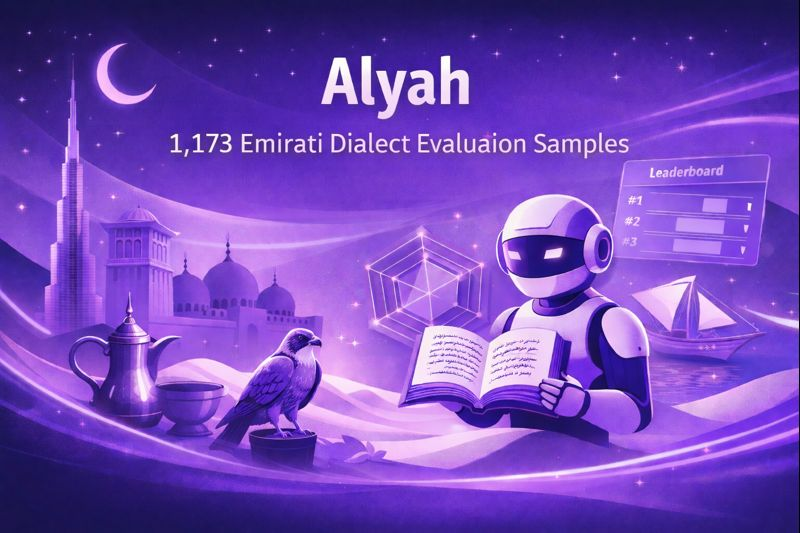
Alyah ⭐️: Toward Robust Evaluation of Emirati Dialect Capabilities in Arabic LLMs
Alyah ⭐️ introduces robust evaluation methods for Arabic LLMs, enhancing understanding of Emirati dialects.
Alyah ⭐️ has been launched as a new initiative aimed at enhancing the evaluation of Emirati dialect capabilities within Arabic language models. Developed by Hugging Face, this project seeks to address a significant gap in how Arabic language models understand and process local dialects, particularly the Emirati dialect. This is crucial as the Arabic language is not monolithic; it encompasses a wide array of dialects that vary significantly from one region to another. By focusing on Emirati dialects, Alyah ⭐️ aims to improve the overall performance of Arabic language models in real-world applications, ensuring they can communicate effectively in diverse Arabic-speaking communities.
The introduction of Alyah ⭐️ comes at a time when the demand for more nuanced and context-aware AI systems is increasing. As businesses and organizations expand their operations in Arabic-speaking regions, the need for AI models that can accurately interpret and generate local dialects becomes paramount. Hugging Face's initiative not only aims to enhance the linguistic capabilities of these models but also to foster better communication and understanding among users from different backgrounds. This project represents a significant step towards making AI more accessible and effective in regions where dialectal differences can pose challenges.
Key facts
| Field | Detail |
|---|---|
| Project Name | Alyah ⭐️ |
| Focus | Robust evaluation of Emirati dialects in Arabic LLMs |
| Developed by | Hugging Face |
| Objective | Improve understanding of local dialects in Arabic language models |
| Target Audience | Arabic-speaking communities and businesses operating in the region |
| Importance | Enhances AI's effectiveness in real-world Arabic applications |
The broader context of Alyah ⭐️ is rooted in the ongoing evolution of natural language processing (NLP) technologies, particularly in multilingual and multicultural settings. Arabic language models have historically struggled with dialectal variations, which can lead to misunderstandings and ineffective communication. Previous efforts, such as the development of multilingual models like mBERT and XLM-R, have made strides in addressing these issues, but they often fall short when it comes to specific dialects. Alyah ⭐️ aims to fill this gap by providing a tailored evaluation framework that focuses specifically on the Emirati dialect, which has unique linguistic features and cultural nuances.
As the project unfolds, it will be interesting to see how Alyah ⭐️ influences the development of future Arabic language models. The success of this initiative could pave the way for similar projects targeting other Arabic dialects, thereby enriching the overall landscape of Arabic NLP. Furthermore, the methodologies developed through Alyah ⭐️ could serve as a blueprint for evaluating dialect capabilities in other languages, expanding the reach and applicability of robust evaluation techniques across different linguistic contexts. The next steps will involve gathering feedback from the community and iterating on the evaluation methods to ensure they meet the needs of users effectively.
Source: Hugging Face Blog · Read original →
Discussion
Comment here after signing in, or share the story to continue the conversation elsewhere.
Instagram & TikTok: copy the link and paste into a Story, Reel, or post caption.
Log in or create an account to comment — Google / GitHub / X when those providers are configured.
No comments yet — start the thread.