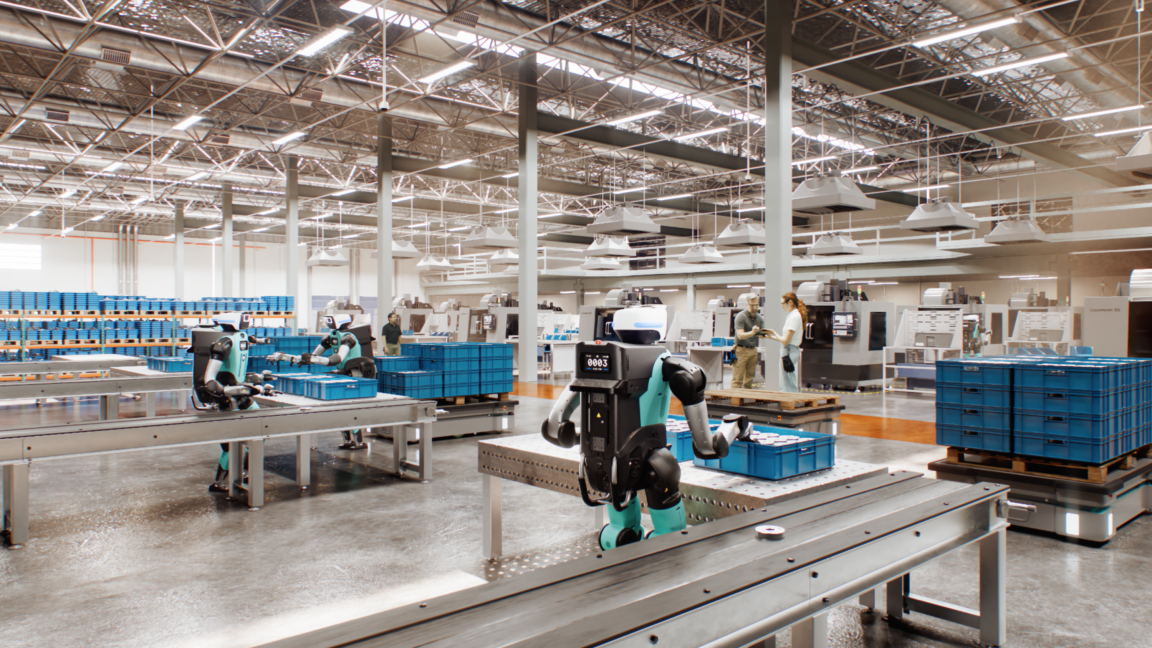
Agility’s new humanoid robot will stop, squat to avoid harming human coworkers
Agility's latest humanoid robot can now operate alongside humans, adapting its movements to ensure safety in the workplace.
Agility Robotics has unveiled a groundbreaking humanoid robot designed to work collaboratively with human coworkers. This new model, named Cassie, marks a significant advancement in robotics, allowing machines to operate outside of traditional safety cages and barriers. The robot is equipped with advanced sensors and algorithms that enable it to perceive its environment and adjust its movements accordingly. This capability not only enhances the robot's utility in various settings but also addresses long-standing safety concerns associated with human-robot interactions in industrial environments.
The introduction of Cassie comes at a time when the demand for automation in workplaces is surging. Companies are increasingly looking to integrate robots into their operations to improve efficiency and reduce labor costs. However, the challenge has always been ensuring that these robots can coexist safely with human workers. Agility's innovation aims to bridge that gap, providing a solution that allows for more flexible and dynamic work environments. By enabling robots to stop and squat when a human is nearby, Cassie demonstrates a level of agility and responsiveness that was previously unseen in industrial robots.
Key facts
| Feature | Detail |
|---|---|
| Model Name | Cassie |
| Manufacturer | Agility Robotics |
| Primary Function | Collaborative humanoid robot |
| Safety Features | Stops and squats to avoid harming humans |
| Operating Environment | Outside of physical cages and barriers |
| Target Industries | Manufacturing, logistics, and warehousing |
| Release Date | 2023 |
| Key Technology | Advanced sensors and algorithms |
As robots like Cassie become more prevalent, it's important to understand the context in which they are being developed. Historically, industrial robots have operated in isolated environments, often behind safety barriers to prevent accidents. This was primarily due to the rigid and predictable nature of their movements, which posed risks to human workers. However, advancements in artificial intelligence and robotics have paved the way for more sophisticated machines that can adapt to their surroundings. Unlike earlier generations of robots that relied on predefined paths and movements, Cassie can dynamically adjust its actions based on real-time feedback from its environment.
The evolution of humanoid robots has been influenced by various factors, including improvements in machine learning, sensor technology, and robotic design. Previous models, such as Boston Dynamics' Atlas, showcased impressive mobility and agility but were often limited to controlled environments. Cassie's ability to operate safely alongside humans represents a significant leap forward, as it combines agility with intelligent decision-making. This shift not only enhances the robot's functionality but also opens up new possibilities for its application in diverse industries.
How to read the numbers
| Benchmark | Score |
|---|---|
| Safety Response Time | N/A |
| Agility Score | N/A |
| Sensor Accuracy | N/A |
| Human Interaction Efficiency | N/A |
While specific numeric benchmarks for Cassie's performance are not yet available, the focus on safety and adaptability is paramount. The robot's ability to respond to human presence and adjust its actions accordingly is a critical factor in its design. As more data becomes available, it will be essential to evaluate Cassie's performance against established metrics in the robotics field. This will help potential users understand the robot's capabilities and limitations, allowing for informed decisions regarding its integration into their operations.
What you can do with it
- Evaluate workplace safety: Consider how Cassie's safety features can enhance your current operations and reduce the risk of accidents.
- Explore integration opportunities: Assess how the robot can be integrated into your existing workflows to improve efficiency and productivity.
- Stay informed on advancements: Keep up with developments in robotics and AI to understand how emerging technologies can benefit your industry.
- Participate in pilot programs: Engage with Agility Robotics or other companies to explore pilot programs that allow you to test Cassie in your environment.
The introduction of Cassie is just the beginning of a new era in collaborative robotics. As companies begin to adopt this technology, the landscape of industrial work is likely to change dramatically. The ability for robots to operate safely alongside humans not only enhances productivity but also fosters a more inclusive work environment. This shift could lead to new job opportunities in robot management and maintenance, as well as a rethinking of traditional roles within industries.
Looking ahead, the next steps for Agility Robotics will involve refining Cassie's capabilities and expanding its applications across various sectors. As the technology matures, we may see further enhancements in the robot's agility, safety features, and overall performance. The ongoing development of humanoid robots like Cassie will likely play a crucial role in shaping the future of work, as industries continue to embrace automation and seek innovative solutions to modern challenges.
Source: Ars Technica - AI · Read original →
Discussion
Comment here after signing in, or share the story to continue the conversation elsewhere.
Instagram & TikTok: copy the link and paste into a Story, Reel, or post caption.
Log in or create an account to comment — Google / GitHub / X when those providers are configured.
No comments yet — start the thread.


