Accelerating Stable Diffusion Inference on Intel CPUs
Intel CPUs double the inference speed for Stable Diffusion, enhancing AI application responsiveness.
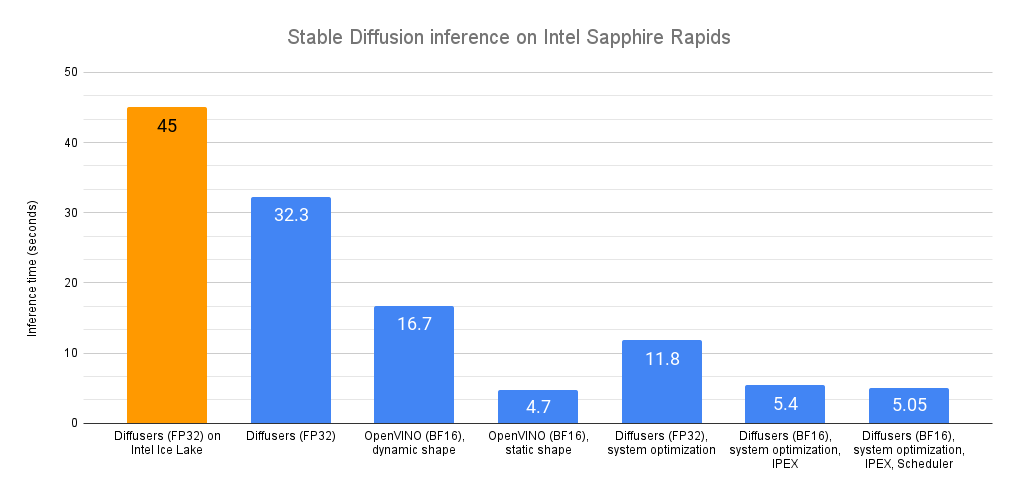
Stable Diffusion, a popular AI model for generating images from text prompts, has seen a significant performance boost thanks to optimizations for Intel CPUs. The latest updates indicate that inference speed can now be up to two times faster on these processors, which is a game-changer for developers looking to enhance the responsiveness of their AI applications. This improvement is particularly relevant as the demand for real-time image generation continues to grow across various sectors, including gaming, advertising, and content creation.
The optimizations leverage Intel's latest architecture and instruction sets, allowing developers to tap into the full potential of their hardware. By supporting a range of Intel CPU models, this update ensures that a broader audience can benefit from the enhanced performance. This move not only highlights Intel's commitment to advancing AI capabilities but also reflects the increasing importance of hardware-software integration in the AI landscape. As developers seek to create more sophisticated applications, the ability to process requests faster becomes crucial.
Key facts
| Field | Detail |
|---|---|
| Model | Stable Diffusion |
| Performance Improvement | 2x faster inference on Intel CPUs |
| Optimization Focus | Intel's latest architecture and instruction sets |
| Supported Hardware | Various Intel CPU models |
| Application Areas | Gaming, advertising, content creation |
The advancements in Stable Diffusion's performance come at a time when the AI industry is rapidly evolving. Generative models like Stable Diffusion have gained immense popularity due to their ability to create high-quality images from textual descriptions. This has opened up new avenues for creativity and innovation, making it essential for developers to have access to tools that can handle demanding tasks efficiently. The collaboration between software and hardware developers is crucial in ensuring that these models can run smoothly and effectively, especially as the complexity of AI applications increases.
Looking ahead, the implications of this speed boost are significant. Developers can now create more interactive applications that respond to user inputs in real-time, enhancing user experience. As the demand for faster and more efficient AI tools grows, it will be interesting to see how other hardware manufacturers respond and whether similar optimizations will be made available for their products. The competitive landscape of AI hardware is likely to intensify, pushing for continuous improvements in performance and accessibility for developers everywhere.
Source: Hugging Face Blog · Read original →
Discussion
Comment here after signing in, or share the story to continue the conversation elsewhere.
Instagram & TikTok: copy the link and paste into a Story, Reel, or post caption.
Log in or create an account to comment — Google / GitHub / X when those providers are configured.
No comments yet — start the thread.


