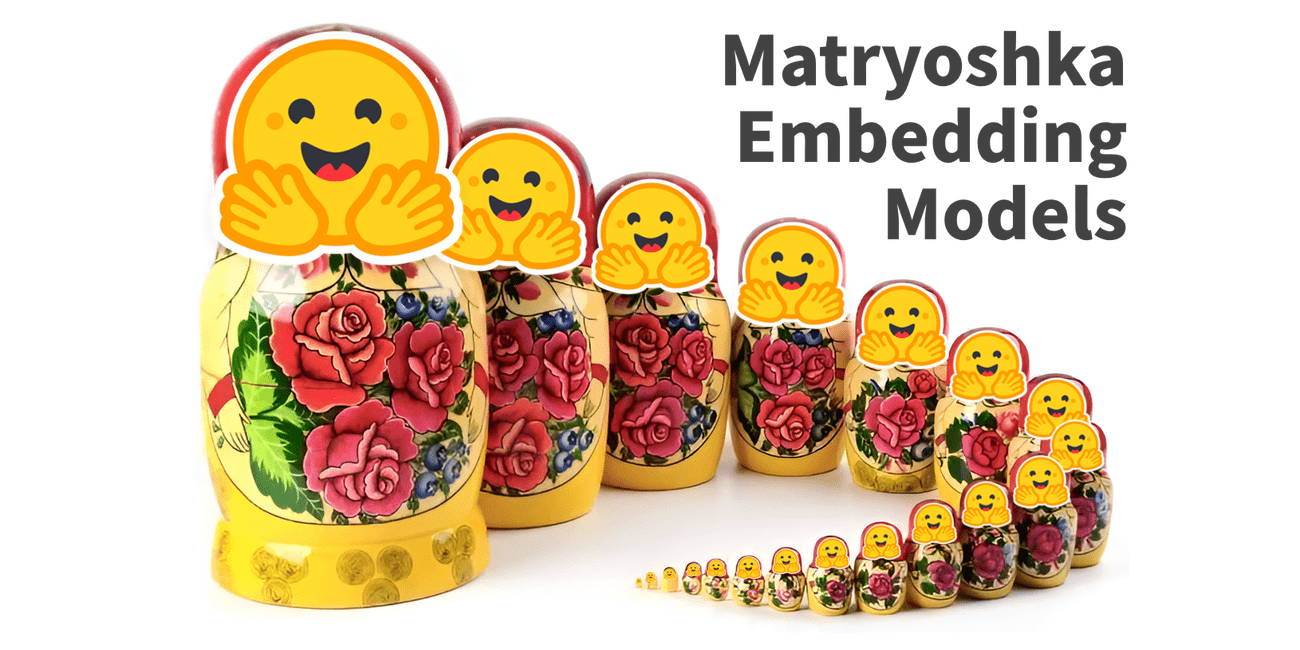
🪆 Introduction to Matryoshka Embedding Models
Hugging Face unveils Matryoshka Embedding Models, a new architecture designed to optimize representation learning for complex data.
Hugging Face has introduced a groundbreaking architecture known as Matryoshka Embedding Models, aimed at enhancing the performance of AI applications. This innovative model focuses on optimizing representation learning, particularly for intricate data structures that have traditionally posed challenges in the field of artificial intelligence. The Matryoshka architecture is designed to support multi-layered embeddings, which can significantly improve the accuracy of AI systems when processing complex datasets.
The introduction of Matryoshka Embedding Models marks a significant advancement in the way AI systems handle data representation. By utilizing a multi-layered approach, these models can capture nuanced relationships within data, allowing for a more sophisticated understanding of the underlying structures. This is particularly relevant in fields such as natural language processing and computer vision, where the complexity of data can often lead to suboptimal performance in traditional models. Hugging Face's latest offering promises to bridge this gap, providing developers with a powerful tool to enhance their AI applications.
Key facts
| Field | Detail |
|---|---|
| Model Name | Matryoshka Embedding Models |
| Architecture | Multi-layered embeddings |
| Focus | Optimizing representation learning |
| Target Use Cases | Complex data structures in AI applications |
| Developer | Hugging Face |
The development of the Matryoshka Embedding Models is particularly timely, given the increasing complexity of datasets in various domains. As AI continues to evolve, the need for more sophisticated models that can accurately represent and learn from intricate data structures becomes paramount. This new architecture is reminiscent of previous advancements in embedding techniques, such as the introduction of BERT and GPT models, which revolutionized natural language processing by enabling deeper contextual understanding. The Matryoshka model builds upon these principles, pushing the boundaries of what is possible in representation learning.
Looking ahead, the Matryoshka Embedding Models are set to play a crucial role in the future of AI development. As more developers adopt this architecture, we can expect to see significant improvements in the performance of applications that rely on complex data analysis. The real test will be how effectively these models can be integrated into existing workflows and whether they can deliver on their promise of enhanced accuracy and efficiency. With the AI landscape rapidly changing, the introduction of such innovative models could redefine best practices in data representation and machine learning.
Source: Hugging Face Blog · Read original →
Discussion
Comment here after signing in, or share the story to continue the conversation elsewhere.
Instagram & TikTok: copy the link and paste into a Story, Reel, or post caption.
Log in or create an account to comment — Google / GitHub / X when those providers are configured.
No comments yet — start the thread.


