🇵🇭 FilBench - Can LLMs Understand and Generate Filipino?
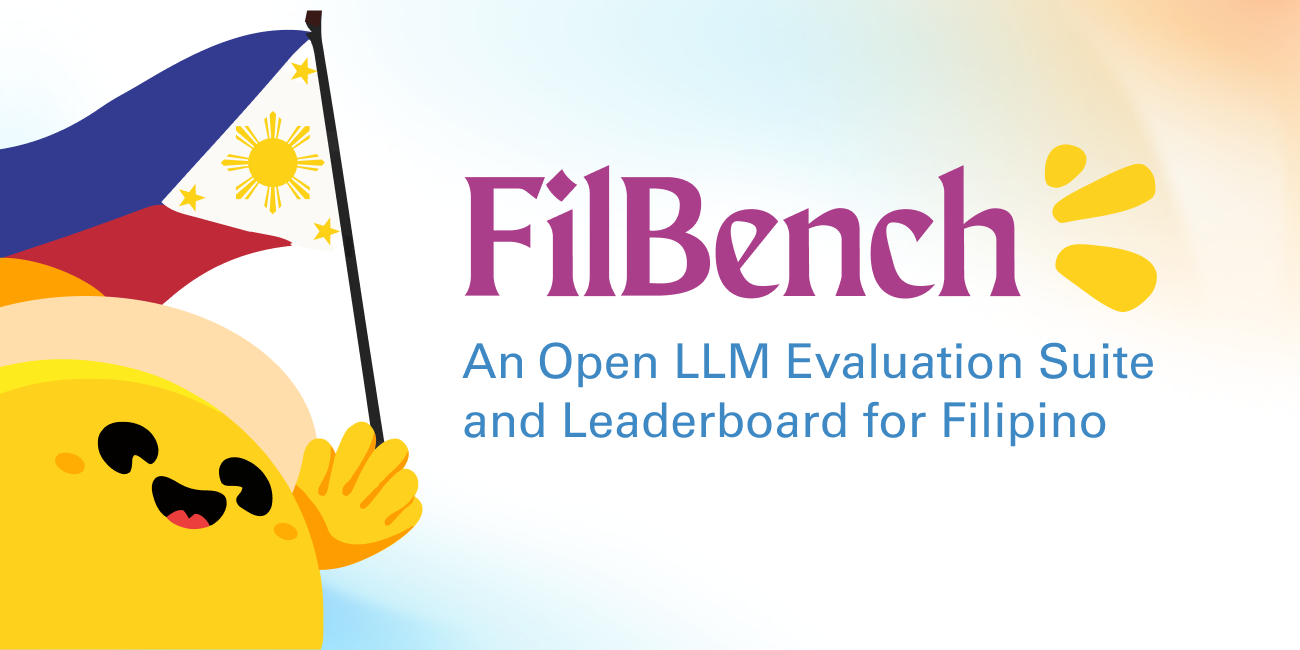
FilBench evaluates LLMs for their ability to understand and generate the Filipino language, aiming for greater accessibility.
FilBench, a new benchmarking tool, has been launched to assess the capabilities of large language models (LLMs) in understanding and generating the Filipino language. This initiative is spearheaded by Hugging Face, a prominent player in the AI and machine learning community, known for its commitment to making AI technologies more accessible. The FilBench project specifically targets the comprehension and generation tasks associated with the Filipino language, which has historically been underrepresented in AI development. By focusing on these areas, FilBench aims to enhance the performance of LLMs for Filipino speakers, thereby improving their overall user experience.
The testing framework evaluates multiple LLMs, providing a comprehensive analysis of how well these models can handle Filipino language tasks. This includes not only basic comprehension but also more complex generation capabilities, such as crafting coherent and contextually relevant sentences. The initiative reflects a growing recognition of the need for AI tools that cater to diverse linguistic communities, particularly in regions where English and other dominant languages have overshadowed local languages in technology applications. As a result, FilBench is poised to play a crucial role in bridging the gap between advanced AI technologies and Filipino speakers.
Key facts
| Field | Detail |
|---|---|
| Project Name | FilBench |
| Focus | Filipino language understanding and generation |
| Organization | Hugging Face |
| Evaluation Criteria | Comprehension and generation capabilities |
| Target Audience | Filipino speakers and AI developers |
| Objective | Improve AI accessibility for Filipino speakers |
The development of FilBench comes at a time when there is increasing demand for AI systems that can engage with users in their native languages. Historically, many AI models have been trained predominantly on English datasets, which limits their effectiveness in multilingual contexts. The introduction of benchmarks like FilBench is essential for ensuring that LLMs can accurately understand and generate content in languages that are less represented in the training data. This is not only beneficial for Filipino speakers but also sets a precedent for other languages that may similarly lack robust AI support.
As the AI community continues to expand its focus on inclusivity, the outcomes of FilBench could influence future model training and development strategies. The results from this benchmarking tool may lead to improvements in existing LLMs or inspire the creation of new models specifically designed for Filipino language tasks. The ongoing evaluation of these models will be crucial in determining how effectively they can serve the needs of Filipino speakers, potentially paving the way for more inclusive AI applications in various sectors, including education, healthcare, and customer service.
Source: Hugging Face Blog · Read original →
Discussion
Comment here after signing in, or share the story to continue the conversation elsewhere.
Instagram & TikTok: copy the link and paste into a Story, Reel, or post caption.
Log in or create an account to comment — Google / GitHub / X when those providers are configured.
No comments yet — start the thread.