Google releases Gemini 4 Argon, called its most powerful model yet
Google's Gemini 4 Argon emerges as a formidable tool for coding and cybersecurity, promising enhanced capabilities for developers and security experts alike.
“With Gemini 4 Argon, Google is setting a new standard for AI in coding and cybersecurity, promising enhanced efficiency and security.”
Key takeaways
- Gemini 4 Argon is Google's most powerful AI model yet, tailored for coding and cybersecurity.
- The model promises improved performance in generating code and identifying vulnerabilities.
- Integration with existing development tools is a key feature for users.
- User feedback will be crucial in assessing the model's real-world effectiveness.
- The competitive landscape will evolve as other AI models respond to Argon's capabilities.
Google has officially launched its latest AI model, Gemini 4 Argon, which the tech giant touts as its most powerful model to date. This release marks a significant advancement in the Gemini series, which has been developed to address the growing demands of coding and cybersecurity tasks. With Argon, Google aims to provide a robust solution that not only enhances productivity for developers but also fortifies security measures in an increasingly complex digital landscape. The introduction of this model is particularly timely, given the rising concerns surrounding cybersecurity threats and the need for more sophisticated coding tools.
Gemini 4 Argon is designed to be a versatile workhorse, capable of handling a wide range of tasks from generating code snippets to identifying vulnerabilities in software systems. Google has emphasized that this model is not just an incremental upgrade but a substantial leap forward in terms of performance and efficiency. The company has invested significant resources into refining the underlying architecture of the Gemini series, ensuring that Argon can meet the rigorous demands of modern software development and cybersecurity practices. As organizations increasingly rely on AI to streamline operations, the implications of this release could be far-reaching.
Key facts
| Field | Detail |
|---|---|
| Model Name | Gemini 4 Argon |
| Release Date | October 2023 |
| Developer | |
| Primary Use Cases | Coding, Cybersecurity |
| Key Features | Enhanced performance, improved coding assistance, vulnerability detection |
| Target Audience | Developers, Security Professionals |
| Architecture | Advanced AI architecture (specifics not disclosed) |
| Availability | Cloud-based access, integration with existing tools |
| Competitive Edge | Superior handling of complex coding tasks |
| Market Position | Leading AI model for coding and cybersecurity tasks |
Who's involved
The key players in this release are Google, the tech giant responsible for the development of the Gemini series, and its dedicated AI research teams. These teams have been working on the Gemini models to ensure they meet the evolving needs of developers and cybersecurity experts. Additionally, the broader tech community will play a crucial role in adopting and integrating Gemini 4 Argon into their workflows.
The Gemini series has been positioned as a competitor to other leading AI models in the market, such as OpenAI's Codex and Microsoft's Copilot, both of which have made significant inroads in coding assistance. With Argon, Google aims to carve out a substantial share of this growing market.
To understand the significance of Gemini 4 Argon, it is essential to consider the context of its development. The Gemini series is part of a broader trend in AI where models are increasingly specialized for specific tasks. Prior iterations of the Gemini model focused on general-purpose AI capabilities, but as the demand for tailored solutions has grown, Google has pivoted towards creating models that excel in particular domains. This shift reflects a recognition of the unique challenges faced by developers and cybersecurity professionals, who require tools that can adapt to their specific needs.
Historically, AI models have struggled with the nuances of coding and cybersecurity. Early models often produced code that was syntactically correct but semantically flawed, leading to vulnerabilities and inefficiencies. With the introduction of Gemini 4 Argon, Google claims to have addressed these shortcomings by enhancing the model's understanding of context and intent in coding tasks. This improvement is expected to reduce the time developers spend debugging and refining their code, ultimately leading to more secure and efficient software.
How to read the numbers
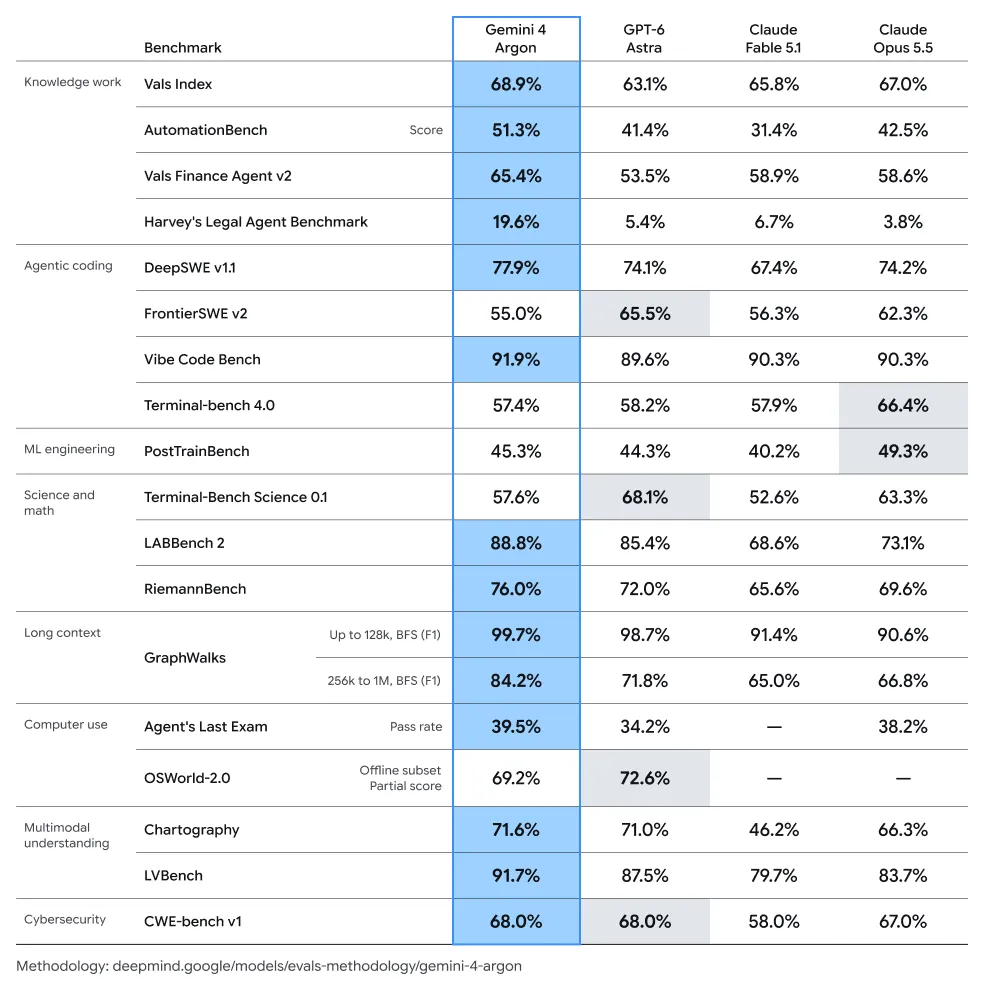
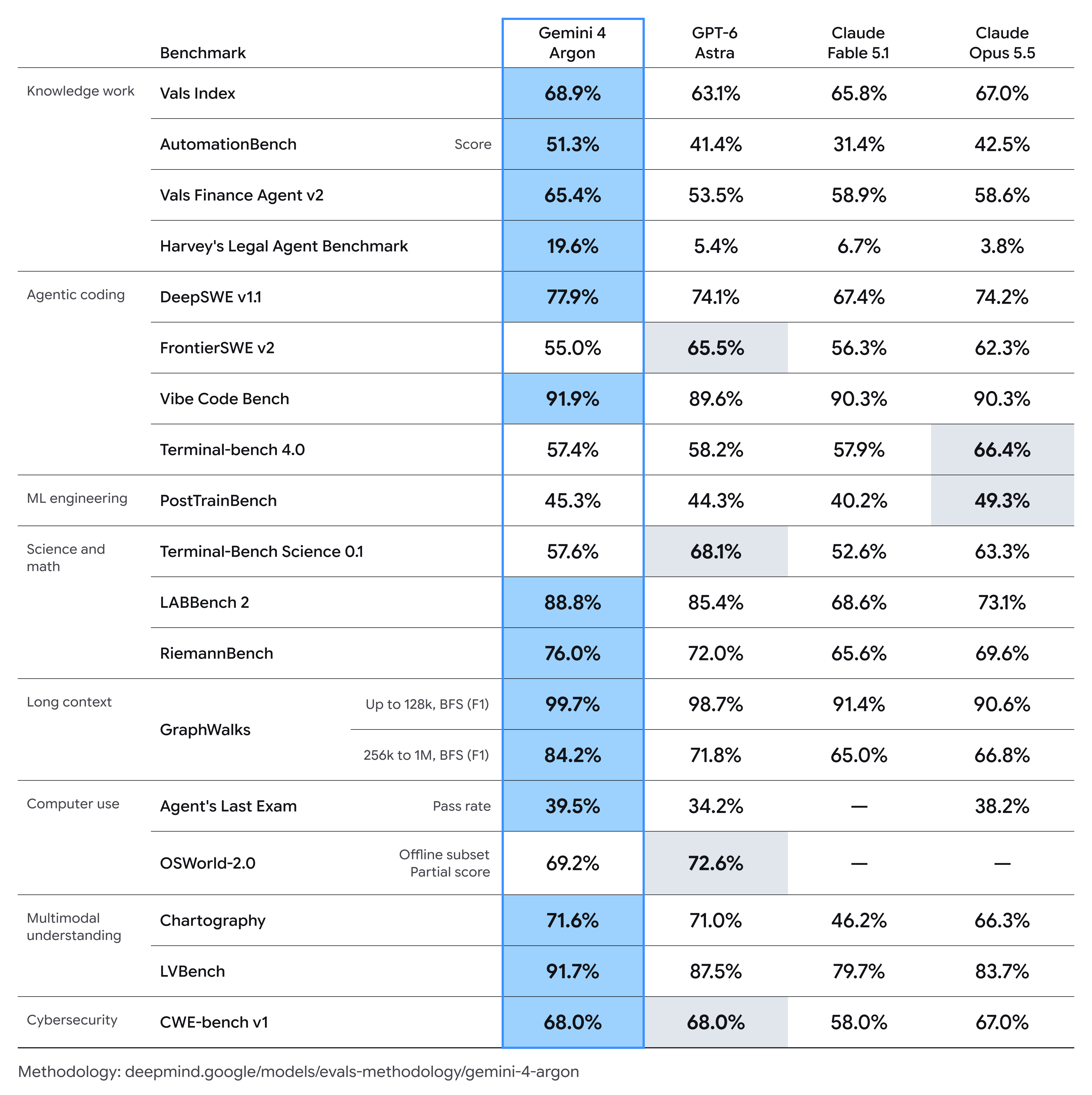
While specific performance metrics for Gemini 4 Argon have not been disclosed, the model is expected to outperform its predecessors in various benchmarks related to coding and cybersecurity tasks. This section will be updated as more detailed performance data becomes available.
What you can do with it
- Integrate into Development Environments: Developers can incorporate Gemini 4 Argon into their existing IDEs to enhance coding efficiency.
- Utilize for Cybersecurity Audits: Security professionals can leverage Argon to conduct thorough vulnerability assessments and identify potential threats in their systems.
- Experiment with Custom Applications: Users can explore building custom applications that utilize Argon’s capabilities for specific coding challenges or security needs.
- Stay Updated with New Features: Regularly check for updates from Google regarding new features and improvements to maximize the utility of the model.
What we're watching
As the adoption of Gemini 4 Argon begins, we will be closely monitoring user feedback and performance in real-world applications. Key questions include how well the model integrates with existing tools and workflows, as well as its effectiveness in identifying and mitigating cybersecurity threats. Additionally, the competitive landscape will be interesting to observe, particularly how other AI models respond to the capabilities introduced by Argon.
Looking ahead, the next milestone for Google will likely be the release of performance benchmarks that can provide a clearer picture of how Gemini 4 Argon stacks up against its competitors. As organizations increasingly turn to AI for coding and cybersecurity, the effectiveness of Argon in real-world scenarios will be critical in determining its long-term success and adoption.
In conclusion, Gemini 4 Argon represents a significant advancement in AI capabilities tailored for coding and cybersecurity tasks. As Google continues to refine its Gemini series, the implications for developers and security professionals could reshape how these fields operate. The focus on specialized models like Argon may set a new standard in the industry, prompting other companies to follow suit in developing targeted AI solutions. The future of AI in coding and cybersecurity looks promising, with Gemini 4 Argon at the forefront of this evolution.
Source: TechCrunch - AI · Read original →
Instagram & TikTok: copy the link or quote and paste into a Story, Reel, or caption.
Digest
AI news by email
Curated stories with sources and takeaways. Confirm once — unsubscribe anytime.
Discussion
Comment here after signing in, or share the story to continue the conversation elsewhere.
Instagram & TikTok: copy the link and paste into a Story, Reel, or caption.
Log in or create an account to comment — Google / GitHub / X when those providers are configured.
No comments yet — start the thread.