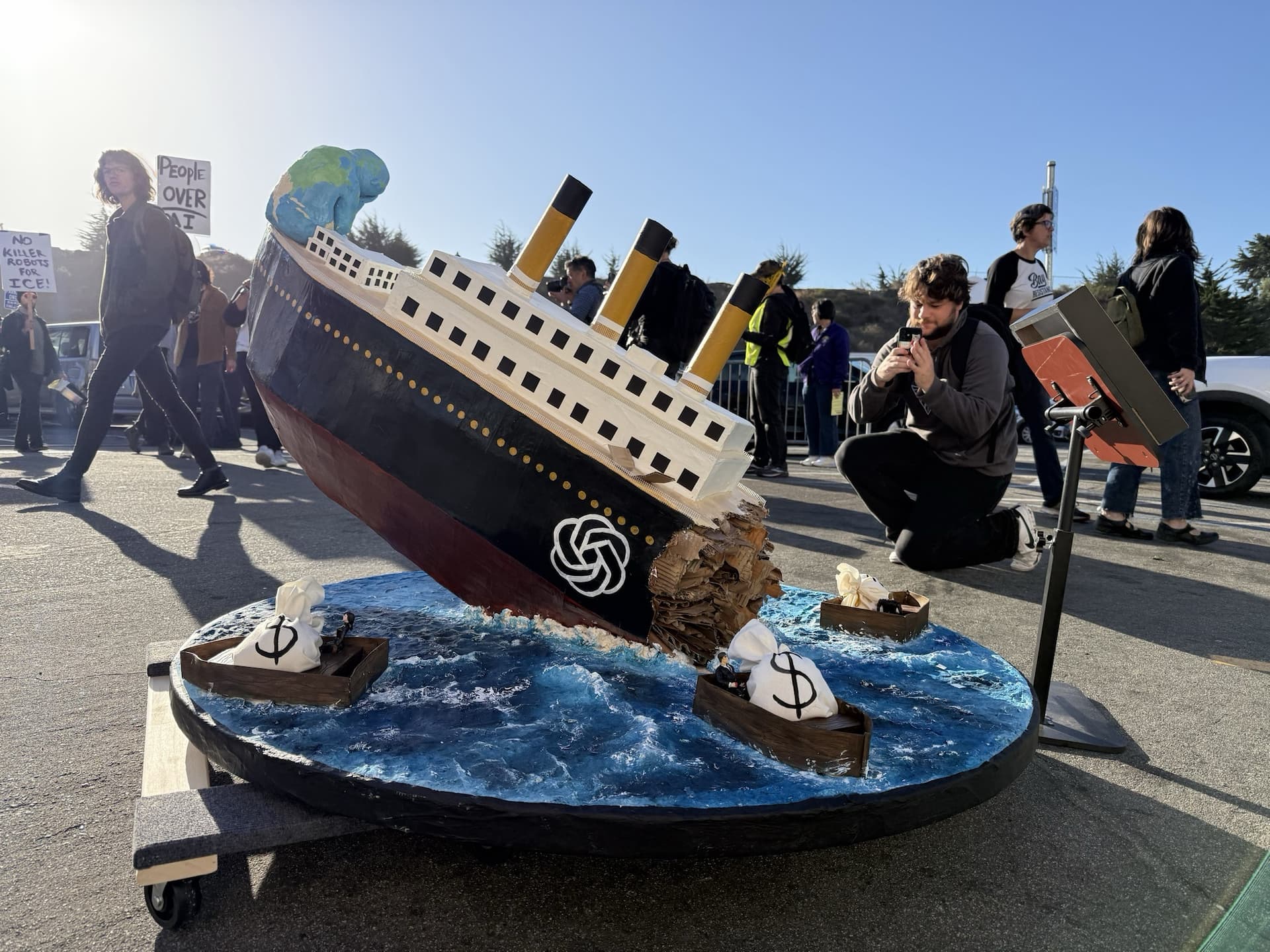
What Iceberg?: Bay Area artists target OpenAI with Titanic-themed protest art
Artists in the Bay Area are using Titanic-themed protest art to challenge OpenAI's impact on creativity and the future of art.
“The Titanic metaphor serves as a stark reminder that the ship of AI innovation is heading towards an iceberg of ethical dilemmas.”
Key takeaways
- A new sculpture in San Francisco critiques AI's impact on the creative sector.
- Artists are voicing concerns about AI overshadowing human creativity.
- The Titanic theme symbolizes the ethical challenges facing AI development.
- Engaging in dialogue and collaboration is crucial for artists navigating AI's rise.
- The response from tech companies like OpenAI will shape future discussions on AI ethics.
In a striking display of artistic protest, a group of Bay Area artists has unveiled a new sculpture that metaphorically critiques the leadership of OpenAI amidst growing concerns about the implications of artificial intelligence on creative professions. The sculpture, which depicts AI leaders escaping a sinking ship reminiscent of the Titanic, serves as a powerful commentary on the perceived recklessness of tech companies in their pursuit of innovation without considering the broader consequences for artists and creators. This artistic endeavor reflects a broader movement among creatives who feel marginalized by the rapid advancements in AI technologies that threaten to overshadow human artistry.
The protest art installation, located in a prominent public space in San Francisco, has garnered significant attention from both the local community and the media. The artists involved aim to spark a dialogue about the ethical responsibilities of AI developers and the potential consequences of their technologies on the creative landscape. As AI-generated content becomes increasingly prevalent, many artists express concerns that their unique contributions may be devalued or rendered obsolete. The Titanic metaphor resonates deeply, suggesting that the ship of AI innovation is heading towards an iceberg of ethical dilemmas and societal impact.
Key facts
| Field | Detail |
|---|---|
| Location | San Francisco, California |
| Sculpture Theme | Titanic-themed protest art depicting AI leaders escaping a sinking ship |
| Artists Involved | A collective of Bay Area artists focused on the intersection of technology and creativity |
| Purpose | To critique the impact of AI on the creative professions and spark public dialogue |
| Public Reaction | Mixed responses, with some supporting the message while others criticize the approach |
Who's involved
The artists behind this provocative installation include a diverse group of creators from various backgrounds, united by their shared concerns about the implications of AI on their work. Notable figures in the collective include visual artists, musicians, and writers who have all experienced the encroachment of AI technologies in their respective fields. Their collaborative effort aims to raise awareness and provoke thought about the ethical considerations surrounding AI development, particularly in the creative sector.
Background
The emergence of AI technologies has revolutionized numerous industries, but the creative sector has faced unique challenges. As AI tools become more sophisticated, they are increasingly capable of generating art, music, and literature, leading to fears among human creators that their skills and contributions may be undervalued. This sentiment is not new; similar concerns arose during the industrial revolution when mechanization threatened traditional craftsmanship. However, the rapid pace of AI advancement has intensified these fears, prompting artists to take a stand.
In recent years, high-profile AI projects have raised eyebrows within the artistic community. For instance, OpenAI's DALL-E and ChatGPT have demonstrated remarkable capabilities in generating visual and textual content, respectively. While these technologies showcase the potential of AI, they also highlight the ethical dilemmas surrounding authorship, originality, and the role of human creativity. The Titanic-themed sculpture serves as a metaphor for the precarious position of artists in this evolving landscape, emphasizing the need for responsible AI development that considers the impact on human creators.
How to read the numbers
While the protest art does not lend itself to numerical evaluation, it is essential to consider the broader context of AI's impact on the creative industry. The following table outlines key developments in AI technologies relevant to the artistic community:
| AI Development | Impact on Creativity |
|---|---|
| DALL-E | Generates images from textual descriptions |
| ChatGPT | Produces human-like text and assists in writing |
| Music Generation AI | Composes original music based on user input |
| Style Transfer AI | Alters existing artworks to mimic different styles |
What you can do with it
For artists and creators looking to navigate the evolving landscape shaped by AI, here are some practical takeaways:
- Engage in Dialogue: Participate in discussions about the ethical implications of AI in the creative sector, advocating for responsible practices.
- Explore AI Tools: Experiment with AI technologies to enhance your creative process, using them as tools rather than replacements.
- Collaborate: Work with fellow artists to create collective works that address the challenges posed by AI, fostering community and solidarity.
- Educate Yourself: Stay informed about developments in AI and their potential impact on your field, ensuring you are equipped to adapt to changes.
What we're watching
As the conversation around AI and creativity continues to evolve, we are closely monitoring the responses from major tech companies like OpenAI regarding the concerns raised by artists. The potential for regulatory frameworks governing AI development is also a topic of interest, as policymakers grapple with how to balance innovation with ethical considerations. Additionally, the ongoing dialogue within the artistic community about the role of AI in creative expression will shape future protests and artistic responses.
The unveiling of this Titanic-themed protest art marks a pivotal moment in the ongoing discourse surrounding AI and creativity. As artists continue to voice their concerns, the question remains: how will tech companies respond to the growing calls for accountability and ethical responsibility? The future of creativity in an AI-driven world hangs in the balance, and the artistic community is determined to ensure that human expression remains at the forefront of this technological evolution.
Source: Ars Technica - AI · Read original →
Instagram & TikTok: copy the link or quote and paste into a Story, Reel, or caption.
Digest
AI news by email
Curated stories with sources and takeaways. Confirm once — unsubscribe anytime.
Discussion
Comment here after signing in, or share the story to continue the conversation elsewhere.
Instagram & TikTok: copy the link and paste into a Story, Reel, or caption.
Log in or create an account to comment — Google / GitHub / X when those providers are configured.
No comments yet — start the thread.