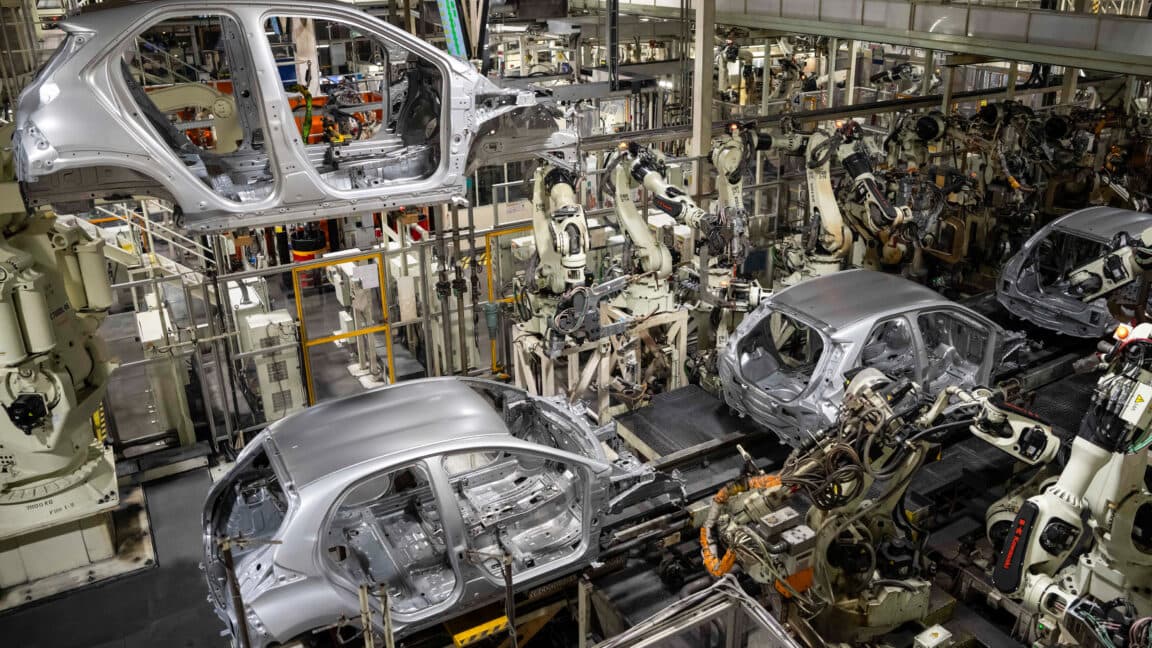
Toyota orders workers to train humanoid robots but says humans won't be replaced
Toyota is ramping up efforts to train humanoid robots while assuring workers that their jobs are safe amid automation advancements.
“Toyota's initiative to train workers alongside humanoid robots signals a new era of collaboration, where technology enhances human capabilities rather than replaces them.”
Key takeaways
- Toyota is training workers to operate humanoid robots, emphasizing collaboration over replacement.
- The initiative aims to enhance productivity while ensuring job security for employees.
- Other automakers are also exploring robotics, but Toyota's focus on human interaction is unique.
- The integration of humanoid robots could reshape the future of work across various industries.
Toyota has recently announced a strategic initiative to enhance its workforce by integrating humanoid robots into its operations. This move comes at a time when the automotive industry is increasingly investing in robotics and automation technologies to improve efficiency and productivity. The company aims to train its employees to work alongside these robots, emphasizing that the introduction of such technology will not lead to job losses for human workers. Instead, Toyota envisions a collaborative environment where humans and robots can coexist, leveraging each other's strengths to achieve greater outcomes.
The decision to train workers in the use of humanoid robots reflects Toyota's commitment to innovation and adaptation in a rapidly changing market. As automakers globally race to develop and deploy advanced robotics, Toyota is positioning itself at the forefront of this technological shift. The company has stated that the training will focus on equipping employees with the necessary skills to operate and interact with these robots effectively, ensuring a seamless integration into the workforce. This proactive approach aims to alleviate fears surrounding job displacement and highlight the potential for enhanced productivity through human-robot collaboration.
Key facts
| Field | Detail |
|---|---|
| Company | Toyota |
| Initiative | Training workers to operate humanoid robots |
| Industry | Automotive |
| Focus | Human-robot collaboration |
| Job Impact | No job losses anticipated for human workers |
| Training Purpose | Equip employees with skills for robot interaction |
| Global Context | Increasing investments in robotics by automakers |
| Timeline | Ongoing initiative |
| Technology Type | Humanoid robots |
| Market Position | Leading in robotics integration in automotive sector |
Who's involved
Toyota is the primary player in this initiative, taking a proactive stance in the integration of humanoid robots into its workforce. The company has a long history of innovation in the automotive sector, and this latest move underscores its commitment to staying ahead in the race towards automation. Other automakers are also involved in similar efforts, but Toyota's approach to training workers sets it apart as a leader in the field. Notably, companies like Honda and Tesla are also exploring robotics, but Toyota's emphasis on human collaboration is a unique aspect of its strategy.
The automotive industry as a whole is witnessing a surge in interest in robotics, with many companies investing heavily in research and development to create advanced robotic solutions. This trend is driven by the need for increased efficiency and productivity in manufacturing processes, as well as the desire to enhance safety and reduce labor costs.
Toyota's initiative is not an isolated case; it reflects a broader trend in the industry where companies are recognizing the potential of robotics to complement human labor rather than replace it. This shift in perspective is crucial as it addresses the concerns of workers who fear job losses due to automation.
As the automotive landscape evolves, the integration of humanoid robots is becoming increasingly relevant. In recent years, companies have begun to explore the capabilities of robots not just for manufacturing tasks but also for customer service, logistics, and even research and development. This expansion of robotic applications signifies a transformative phase in the industry, where robots are seen as valuable partners rather than mere tools.
How to read the numbers
While this initiative does not provide specific numerical benchmarks or performance scores, it is essential to understand the broader implications of Toyota's approach. The focus on training workers to interact with humanoid robots suggests a shift in how companies will measure success in automation. Instead of solely relying on productivity metrics, there will likely be an increased emphasis on employee satisfaction, collaboration efficiency, and overall workplace harmony.
What you can do with it
- Stay informed: Keep up with developments in robotics and automation within the automotive industry to understand how these changes may impact your work.
- Upskill: Consider taking courses or training programs that focus on robotics and automation to enhance your skill set and remain competitive in the job market.
- Engage in discussions: Participate in conversations about the future of work and the role of robots in various industries to gain insights and share perspectives.
- Explore collaboration opportunities: If you are in a position to influence workplace practices, advocate for initiatives that promote human-robot collaboration and training programs.
What we're watching
As Toyota continues to roll out its training programs for humanoid robots, industry observers will be keenly watching the outcomes of this initiative. Key questions include how effectively workers adapt to collaborating with robots and whether this model can be replicated across other sectors. Additionally, the response from other automakers will be crucial in determining whether this approach becomes a standard practice in the industry.
Looking ahead, the success of Toyota's initiative may set a precedent for how companies approach automation and workforce integration. If the training proves effective, it could lead to a broader acceptance of humanoid robots in various industries, ultimately reshaping the future of work.
In conclusion, Toyota's commitment to training its workforce in the use of humanoid robots marks a significant step forward in the automotive industry's approach to automation. By prioritizing human-robot collaboration, the company aims to create a more efficient and harmonious work environment. As the initiative unfolds, it will be interesting to see how it influences not only Toyota's operations but also the broader landscape of robotics in the automotive sector and beyond.
Source: Ars Technica - AI · Read original →
Instagram & TikTok: copy the link or quote and paste into a Story, Reel, or caption.
Digest
AI news by email
Curated stories with sources and takeaways. Confirm once — unsubscribe anytime.
Discussion
Comment here after signing in, or share the story to continue the conversation elsewhere.
Instagram & TikTok: copy the link and paste into a Story, Reel, or caption.
Log in or create an account to comment — Google / GitHub / X when those providers are configured.
No comments yet — start the thread.