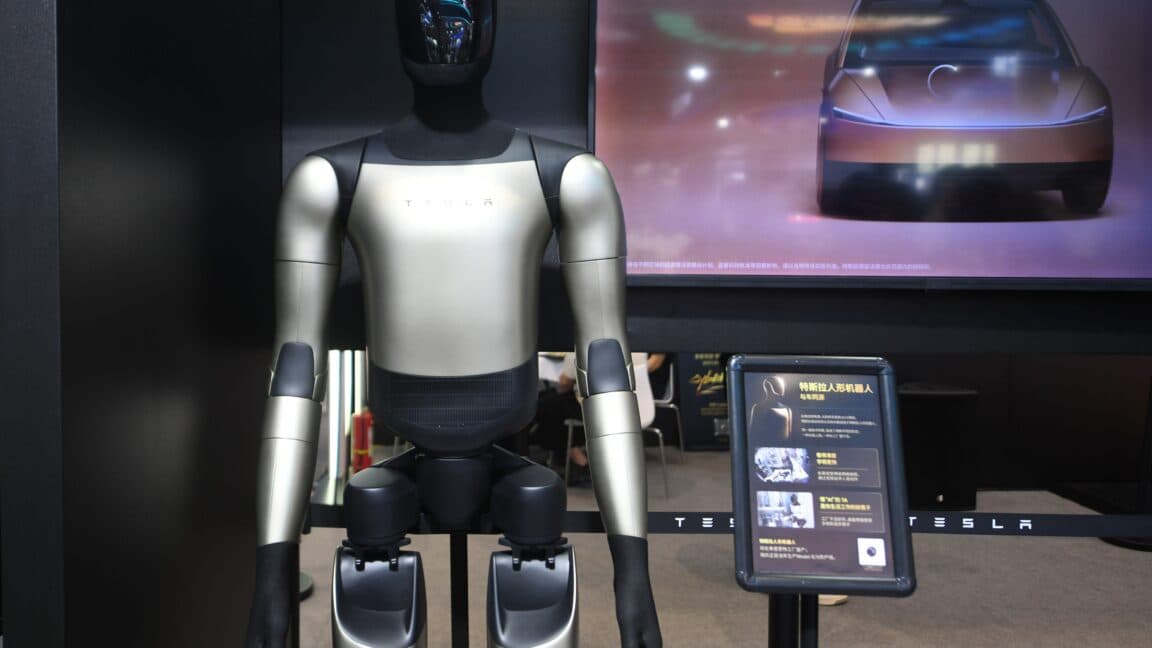
Tesla workers balk at training Optimus humanoid robots as replacements
Tesla's ambitious plan to produce 1,000 Optimus humanoid robots weekly faces resistance from its workforce over training and job security concerns.
“Tesla's ambitious goal of producing 1,000 Optimus robots weekly faces employee resistance over training and job security issues.”
Key takeaways
- Tesla aims to produce 1,000 Optimus robots per week by the end of 2026.
- Employee resistance highlights concerns over job security and training responsibilities.
- The Optimus project reflects broader trends in automation and workforce dynamics.
- Successful integration of AI in manufacturing relies on workforce cooperation and support.
- Ongoing discussions about automation's impact on jobs are crucial for future developments.
Tesla's vision for the future of automation is taking a significant turn with its ambitious goal of producing 1,000 Optimus humanoid robots per week by the end of 2026. However, this plan has encountered unexpected pushback from Tesla workers who are hesitant to train these robots, fearing that their roles may be jeopardized. The Optimus robot, which has been in development for several years, is designed to perform a variety of tasks, potentially replacing human labor in certain sectors. As Tesla pushes forward with its production timeline, the company must navigate the complexities of workforce sentiment while also meeting its ambitious manufacturing goals.
The Optimus project is part of Tesla's broader strategy to integrate artificial intelligence into its operations, enhancing efficiency and productivity. The humanoid robot is intended to assist with tasks ranging from assembly line work to household chores, showcasing Tesla's commitment to innovation. Despite the excitement surrounding the potential of the Optimus robot, the reality of its implementation has raised concerns among employees who fear that their jobs could be at risk. This tension between technological advancement and job security is a critical issue that Tesla must address as it moves forward with its plans.
Key facts
| Field | Detail |
|---|---|
| Project Name | Optimus humanoid robot |
| Production Goal | 1,000 robots per week by end of 2026 |
| Current Status | Development phase with workforce resistance |
| Key Concerns | Job security and training responsibilities |
| Company | Tesla, Inc. |
| Industry | Robotics and automation |
| Employee Sentiment | Resistance to training robots |
| Future Outlook | Ongoing discussions with workforce |
| Potential Applications | Assembly line work, household tasks |
| Innovation Focus | Integration of AI in manufacturing processes |
Who's involved
The key players in this scenario include Tesla, Inc., the electric vehicle and clean energy company founded by Elon Musk. The company has been at the forefront of innovation in both automotive and robotics sectors. The development of the Optimus robot involves a dedicated team of engineers and researchers within Tesla, who are tasked with bringing this ambitious project to fruition. Additionally, the workforce at Tesla, which includes assembly line workers and engineers, plays a crucial role in the implementation of the Optimus project, as their cooperation is essential for training and operational success.
Background
The concept of humanoid robots is not new, but Tesla's approach to creating a practical and functional robot for everyday tasks is groundbreaking. Previous attempts by various companies to develop humanoid robots have often fallen short due to technological limitations and high costs. However, Tesla's focus on leveraging its existing AI capabilities and manufacturing prowess sets it apart from competitors. The company's experience in producing electric vehicles and its advancements in AI technology provide a solid foundation for the Optimus project.
Historically, automation has been met with mixed reactions from the workforce. While some view it as a means to enhance productivity and reduce labor costs, others express concerns about job displacement. The introduction of robots into the workforce has often led to fears of unemployment, as machines take over tasks traditionally performed by humans. Tesla's current situation reflects this ongoing tension, as employees grapple with the implications of training robots that could potentially replace them.
How to read the numbers
While specific performance metrics for the Optimus robot are not yet available, the production goal of 1,000 robots per week by 2026 serves as a benchmark for Tesla's ambitions. The success of this initiative will depend on several factors, including technological advancements, workforce cooperation, and market demand. The following table outlines the key production goals and milestones for the Optimus project:
| Milestone | Target Date |
|---|---|
| Prototype Development | Completed 2024 |
| Initial Production Start | Early 2025 |
| Full Production Capacity | End of 2026 |
| Workforce Training Program | Ongoing |
| Market Launch | 2027 |
What you can do with it
For those interested in the implications of the Optimus project, here are some practical takeaways:
- Stay Informed: Follow updates from Tesla regarding the Optimus project to understand its impact on the workforce and industry.
- Engage with Workforce Discussions: Participate in conversations about the role of automation in the workplace and how it affects job security.
- Explore AI Integration: Consider how AI and robotics can be integrated into your own business or projects to enhance efficiency.
- Advocate for Workforce Training: Support initiatives that promote training and upskilling for workers in industries affected by automation.
- Monitor Market Trends: Keep an eye on market trends related to robotics and automation to identify potential opportunities or challenges.
What we're watching
As Tesla continues to develop the Optimus robot, the next significant milestone will be the completion of the prototype, expected in 2024. This phase will be crucial in determining the robot's capabilities and functionality. Additionally, how Tesla addresses the concerns of its workforce regarding job security and training will be pivotal in shaping the project's success. The ongoing dialogue between management and employees will be essential in fostering a collaborative environment that embraces innovation while ensuring job stability.
Looking ahead, the resolution of workforce concerns and the successful training of employees to work alongside the Optimus robots will be critical factors in achieving Tesla's production goals. The company's ability to balance technological advancement with employee satisfaction will ultimately determine the success of the Optimus project and its impact on the future of automation in the workforce.
Source: Ars Technica - AI · Read original →
Instagram & TikTok: copy the link or quote and paste into a Story, Reel, or caption.
Digest
AI news by email
Curated stories with sources and takeaways. Confirm once — unsubscribe anytime.
Discussion
Comment here after signing in, or share the story to continue the conversation elsewhere.
Instagram & TikTok: copy the link and paste into a Story, Reel, or caption.
Log in or create an account to comment — Google / GitHub / X when those providers are configured.
No comments yet — start the thread.