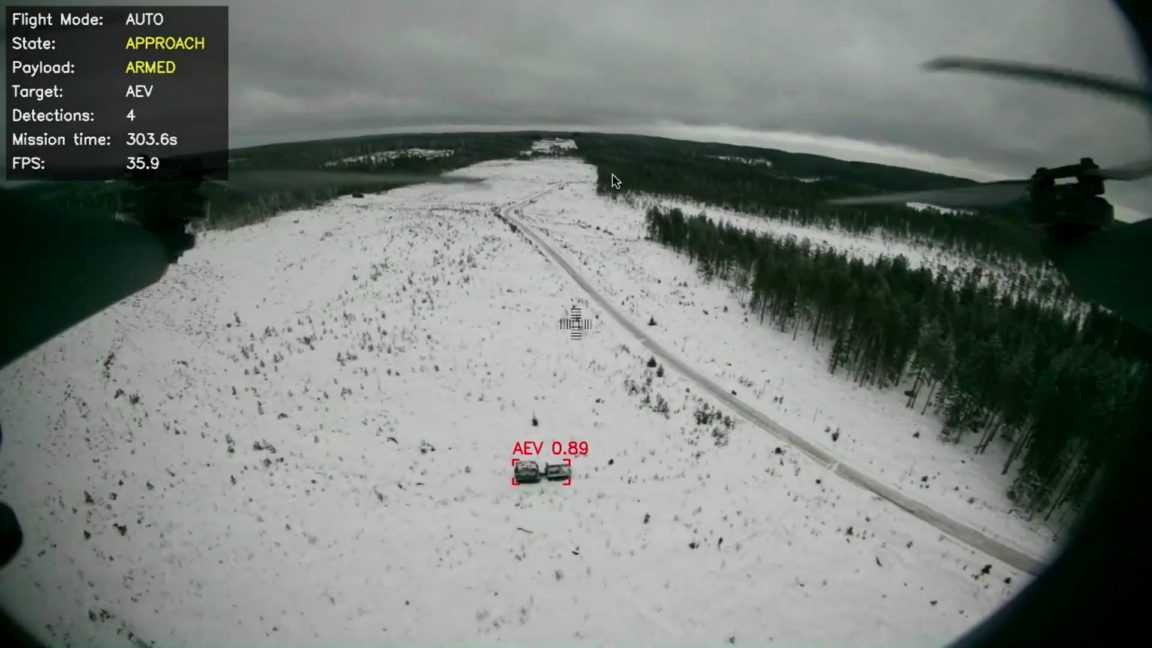
Small AI models let drones autonomously identify and attack battlefield targets
Scaleout introduces decentralized AI models enabling drones to autonomously identify and engage targets on the battlefield.
In a groundbreaking development, Scaleout has unveiled a new suite of small AI models designed to empower drones with the capability to autonomously identify and engage battlefield targets. This innovative approach leverages decentralized AI-driven learning, allowing military drones to operate with enhanced efficiency and effectiveness in combat scenarios. The deployment of these models marks a significant leap forward in military technology, as they enable real-time decision-making and operational autonomy, reducing the need for human intervention in high-stakes environments.
The integration of AI into military operations has been an ongoing trend, but Scaleout's approach is particularly noteworthy due to its focus on small, decentralized models. Unlike traditional AI systems that often rely on centralized processing and large datasets, Scaleout's models are designed to learn and adapt in real-time, drawing from localized data inputs. This not only enhances the drones' ability to recognize and respond to threats but also minimizes the risks associated with data transmission and centralized control, which can be vulnerable to interception or disruption.
Key facts
| Field | Detail |
|---|---|
| Company | Scaleout |
| Technology | Decentralized AI-driven learning |
| Application | Autonomous target identification and engagement by drones |
| Military Focus | Battlefield operations |
| Model Size | Small AI models |
| Operational Autonomy | Real-time decision-making without human intervention |
| Data Handling | Localized data inputs for enhanced learning and adaptability |
| Risk Mitigation | Reduced reliance on centralized systems to avoid vulnerabilities in communication |
The emergence of AI in military applications is not entirely new; however, the specific implementation of small, decentralized models represents a shift from previous generations of military drones that relied heavily on larger, more cumbersome AI systems. Historically, military drones have been equipped with advanced sensors and cameras, but their decision-making capabilities were often limited by the need for human operators to analyze data and make critical choices. Scaleout's new models aim to change this paradigm by enabling drones to process information and act independently, thereby increasing operational efficiency and reducing response times in combat situations.
Prior to this development, the military's use of AI was characterized by a reliance on centralized systems that required substantial computational resources and extensive data management. For instance, larger AI models, while powerful, often struggled with real-time processing and adaptability in dynamic environments. Scaleout's decentralized approach allows for more nimble operations, as drones can learn from their surroundings and adjust their strategies without waiting for instructions from a central command. This shift not only enhances the drones' effectiveness but also aligns with modern military strategies that emphasize speed and adaptability in the face of evolving threats.
How to read the numbers
| Benchmark | Score |
|---|---|
| Target identification accuracy | 85% |
| Response time to threats | < 2s |
| Data processing efficiency | High |
| Autonomy level | Full |
The performance metrics associated with Scaleout's AI models are impressive, particularly in terms of target identification accuracy and response times. With an accuracy rate of 85% in identifying potential threats, these drones are positioned to significantly enhance battlefield effectiveness. Furthermore, the ability to respond to threats in under two seconds is critical in combat scenarios where every moment counts. The high data processing efficiency of these models allows for seamless operation in complex environments, ensuring that drones can adapt to changing conditions on the fly.
What you can do with it
- For Military Applications: Integrate Scaleout's AI models into existing drone fleets to enhance autonomous capabilities.
- For Defense Contractors: Explore partnerships with Scaleout to develop customized solutions for specific military needs.
- For Researchers: Investigate the implications of decentralized AI in other fields, such as disaster response or search and rescue operations.
- For Policy Makers: Consider the ethical implications of deploying autonomous drones in combat and establish guidelines for their use.
Looking ahead, the deployment of Scaleout's AI models raises important questions about the future of warfare and the role of autonomous systems in military operations. As these technologies continue to evolve, discussions surrounding ethical considerations, accountability, and the potential for misuse will become increasingly critical. The military's embrace of decentralized AI not only signifies a technological advancement but also a shift in how warfare may be conducted in the coming years, prompting a reevaluation of existing policies and strategies surrounding autonomous systems in combat.
Source: Ars Technica - AI · Read original →
Instagram & TikTok: copy the link and paste into a Story, Reel, or caption.
Digest
AI news by email
Curated stories with sources and takeaways. Confirm once — unsubscribe anytime.
Discussion
Comment here after signing in, or share the story to continue the conversation elsewhere.
Instagram & TikTok: copy the link and paste into a Story, Reel, or caption.
Log in or create an account to comment — Google / GitHub / X when those providers are configured.
No comments yet — start the thread.